
The UK has snagged the dubious title of the world’s worst offender for allowing fossil fuel drilling in protected areas. This alarming trend threatens marine habitats, affects essential species like cod and mackerel, and risks the integrity of ecosystems. With 75% of the public opposing these developments, regulatory shortcomings come into sharp focus. As the country grapples with fossil fuel reliance and biodiversity promises, the future remains uncertain. Grab some popcorn; this story has plenty more twists to unfold!
Quick Overview
- The UK is criticized for allowing fossil fuel drilling in marine protected areas, raising environmental concerns.
- Eight potential drilling sites threaten critical habitats like Dogger Bank, risking marine biodiversity.
- Public opposition to fossil fuel developments is high, with three-quarters of the population against them.
- Regulatory frameworks permit oil and gas licenses to overlap with significant marine protected zones.
- The government’s commitment to biodiversity protection is viewed as inadequate, contributing to ongoing ecological risks.
UK Fossil Fuel Permits: An Alarming Overview
How alarming is the state of fossil fuel permits in the UK? Quite alarming, it turns out! The North Sea Shift Authority oversees oil and gas production, but the UK has gained notoriety as the world’s worst offender for permitting fossil fuel drilling in protected areas. With a court ruling demanding assessments of combustion emissions, the landscape is altering. However, the Labour government plans no new licenses post-2024, leaving a murky future for existing operations. While the UK impressively reduced emissions over 50% since 1990, the dance between fossil fuels and environmental protection remains a complicated two-step that leaves many scratching their heads. Additionally, the government’s commitment to achieving £725 billion funding for sustainable infrastructure highlights the tension between fossil fuel reliance and the transition to cleaner energy sources. Notably, the UK has set a legal net-zero target for 2050, which complicates its ongoing fossil fuel investments. The evolving regulatory approach may influence future energy policy and permit practices across marine and protected areas.
The Impact on Marine Ecosystems: What’s at Stake?
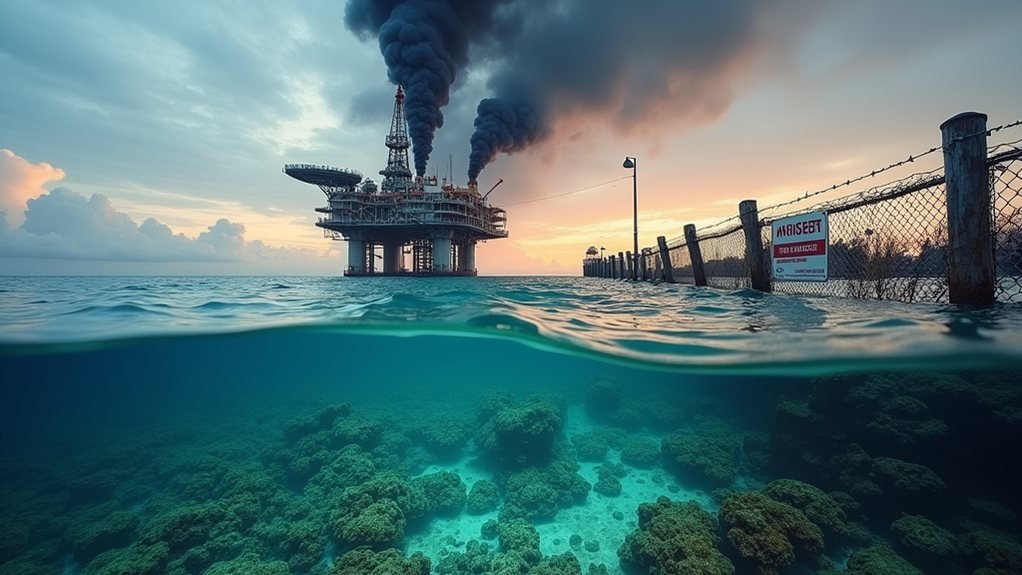
The stakes for marine ecosystems in the UK are alarmingly high as fossil fuel drilling creeps into protected waters. With eight potential drilling sites near marine protected areas (MPAs), the danger looms large. Critical habitats, like Dogger Bank—home to cod and mackerel—face collapse. Imagine a dinner party where key guests—whales, sharks, and seabirds—are suddenly missing. Pollutants from spills disrupt food chains and weaken biodiversity, while noise pollution turns echolocating dolphins into confused party crashers. Furthermore, key spawning areas for fish are under threat, intensifying the risk to already vulnerable species. If this continues, the oceans could transform from thriving ecosystems into ecological ghost towns, leaving a deep-sea graveyard of what once was vibrant marine life. Moreover, the UK has been labeled the ‘worst offender’ for allowing fossil fuel drilling in marine protected areas, raising urgent concerns over the persistence of these practices.
Evaluating Regulatory Shortcomings and Their Consequences for Environmental Protection
While many might assume that environmental protection laws are robust enough to guard precious marine ecosystems, the reality paints a more troubling picture.
The UK’s regulatory framework allows oil and gas licences to overlap with 13,500 square kilometres of protected marine spaces, like a toddler running through a carefully arranged Lego city.
The UK’s regulatory framework permits oil and gas operations to intrude upon vast protected marine areas, threatening fragile ecosystems.
With three-quarters of the public opposing these developments, the government’s commitment to safeguarding biodiversity feels like a half-hearted wave at a sinking ship.
Moreover, the total area of PAs and OECMs in the UKOTs reflects a concerning trend, with only 75.0% of marine areas currently protected.
As emissions data remains incomplete, the true impact of drilling on nature remains a mystery, leaving a gaping hole in the quest for environmental protection.
Increased transparency about lifecycle emissions and the reliability of monitoring would help close the gap between policy promises and ecological outcomes environmental accountability.