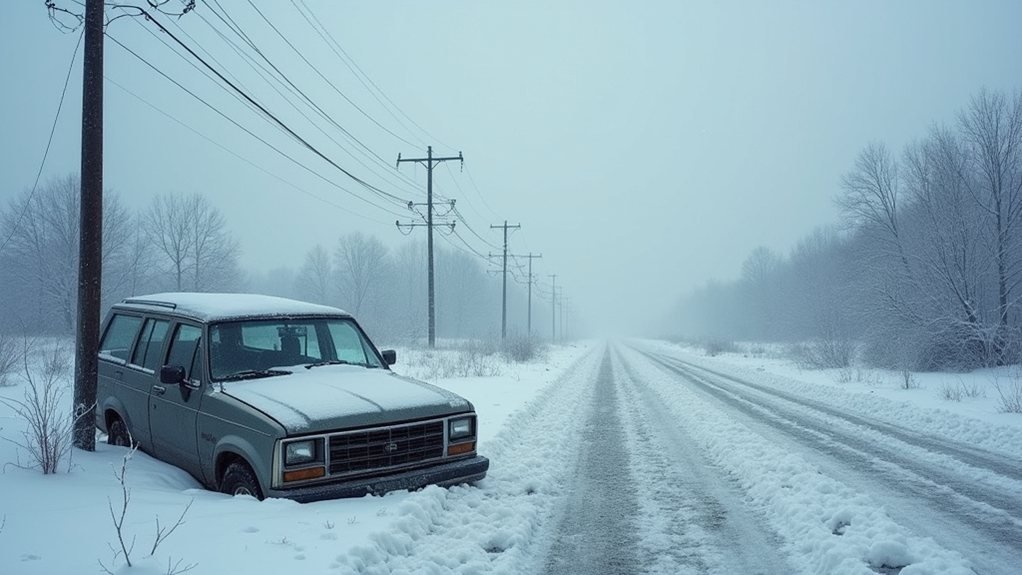

Winter Storm Gianna hit the U.S. like an uninvited guest, wreaking havoc with over 85 fatalities and costs soaring into the billions. This storm, fueled by a dramatic clash between Arctic air and warm Gulf moisture, brought record-breaking snowfall, particularly in the Southeast, leaving countless homes powerless and roads treacherous. Officials scrambled into action, declaring emergencies and mobilizing resources. Curious about how it all unfolded? There’s more to this storm story that packs a punch.
Quick Overview
- Winter Storm Gianna resulted in over 85 fatalities across the United States due to severe weather conditions and hazardous travel.
- The storm caused approximately 100,000 power outages, affecting homes and businesses, particularly in the Southeast.
- Economic losses from the storm are estimated in the billions due to flight cancellations and infrastructure damage.
- Record snowfall, including 14.5 inches in Kannapolis, led to significant traffic collisions and a major 100-vehicle pile-up.
- States of emergency were declared, with governors activating resources and FEMA preparing for potential assistance in affected areas.
Overview of Winter Storm Gianna and Its Effects
As the weather gods released their fury, Winter Storm Gianna swept across the United States, leaving a trail of chaos in her wake.
This meteorological beast, fueled by explosive cyclogenesis, saw Arctic air collide with warm Gulf Stream moisture, creating a perfect storm.
Preceded by the Sudden Stratospheric Warming, Gianna intensified fiercely, following in the footsteps of Winter Storm Fern. Approximately 100,000 homes and businesses are without power as a direct result of her devastating impact.
The aftermath? A staggering economic toll in billions, flight cancellations galore, and blizzard conditions that turned roads into ice rinks.
The aftermath of Winter Storm Gianna: billions lost, countless flights grounded, and roads transformed into treacherous ice rinks.
With fatalities mounting, Gianna was more than a storm; she was a reminder of nature’s raw, unyielding power.
Record Snowfall and Power Outages in the Southeast
Winter Storm Gianna didn’t just knock on the door of the Southeast; it barged in with snow boots and a snow shovel, leaving an impressive—and quite record-breaking—amount of snow in its wake. Charlotte tied its 1880 record with 11 inches, while nearby Kannapolis boasted over 14.5 inches. Cities like Greenville and Gastonia joined the snowy parade, with power outages cascading across the Carolinas due to heavy snow load. In a chaotic weekend, over 2,800 flights were canceled, and traffic accidents soared, including a staggering 100-vehicle pile-up on Interstate 85. Gianna’s frigid grip left a lasting, snowy impression, creating a significant impact on local infrastructure. The storm also led to over a thousand traffic collisions in North Carolina due to hazardous road conditions. Additionally, record snowfall and power outages highlight the broader need for resilient infrastructure and water management to withstand extreme weather events to be addressed by sustainable solutions.
How Did Officials Respond to the Storm?
While heavy snow blanketed the Southeast, officials sprang into action, determined to tackle the challenges posed by Winter Storm Gianna.
Governors swiftly declared states of emergency, urging residents to hunker down—think of it as a snow day, but with a serious twist. Texas Governor Greg Abbott activated resources, while Arkansas deployed the National Guard, transforming them into real-life superheroes for stranded motorists. State agencies are monitoring the power grid to ensure that essential services remain operational during the storm’s impact. As the storm approaches, over 190 million people are under winter weather alerts, illustrating the widespread nature of the impending chaos.
Meanwhile, the federal government readied FEMA, ensuring help was just a snowflake away. Local agencies pre-treated roads, like icing a cake, and advised everyone to stock up on essentials—because no one wants to venture out in a winter wonderland gone rogue.
Critical infrastructure resilience measures are being prioritized to maintain service continuity across regions, including hospital readiness, utility stability, and emergency communications.