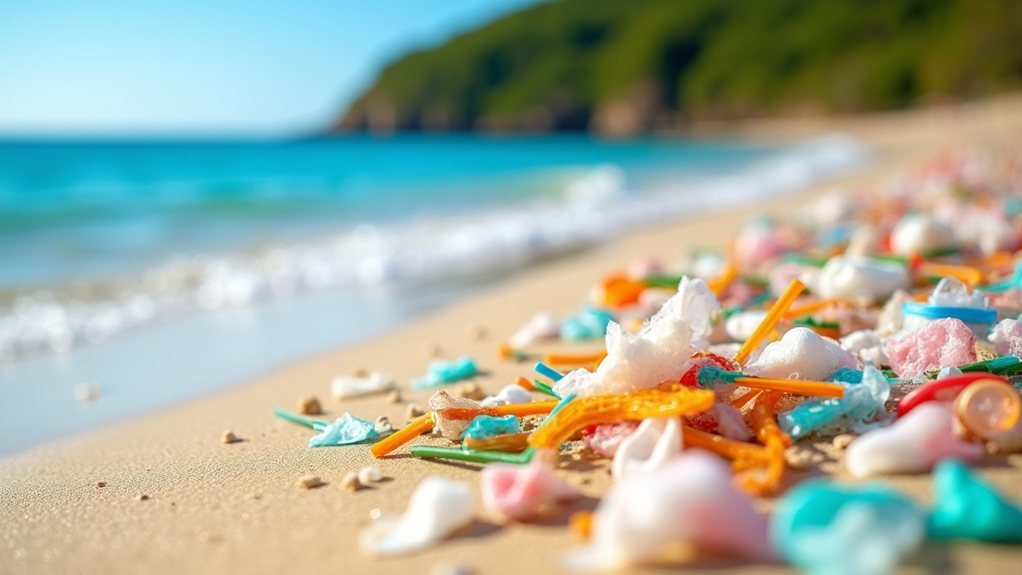

A recent court ruling confirmed the federal government’s decision to label specific single-use plastics as toxic, reinforcing the fight against plastic pollution. This judgment backs regulations on items like grocery bags and straws under the Canadian Environmental Protection Act. With single-use plastics taking centuries to decompose, this ruling empowers efforts to reduce their usage considerably. In short, this isn’t just about banning plastic—it’s about nurturing a cleaner future. Curious about the broader implications? More insights await!
Quick Overview
- The Federal Appeals Court upheld the government’s right to regulate plastic waste, affirming the toxic label on certain single-use plastics.
- The ruling reinstated a toxic designation for six plastic items, including grocery bags and straws, under the Canadian Environmental Protection Act.
- Industry claims against the federal regulation were dismissed, allowing the continued ban on toxic single-use plastics.
- The decision supports new standards for site rehabilitation practices following the disposal of toxic plastics.
- This ruling reflects a broader commitment, including state-level actions, to mitigate plastic pollution and protect the environment.
Environmental Impact of the Plastic Ban and Its Future
As communities across the globe embrace the ban on single-use plastics, it becomes increasingly clear that these policies are not just a fleeting trend but a critical step toward a healthier planet.
These bans have slashed plastic bag consumption by a staggering 6 billion bags annually, drastically reducing shoreline litter.
Plastic bag bans have cut consumption by 6 billion bags each year, leading to a remarkable decrease in shoreline litter.
Imagine fewer bags choking our oceans, where 90% of seabirds now harbor plastic in their stomachs! Plastic debris was first observed in oceans during the 1960s, highlighting the urgent need for action. Single-use plastics often take hundreds of years to decompose, further emphasizing the importance of these bans.
While the journey has sparked unintended consequences, like increased paper bag use, the future glows with promise.
Compostable alternatives may be the ultimate game-changer, offering a sustainable solution that nourishes the earth instead of suffocating it. A growing number of communities are adopting waste reduction programs to complement bans and improve outcomes.
What You Need to Know About the Court’s Ruling on Plastic Toxicity
How exactly does a court ruling shape the future of plastic regulation?
In a recent unanimous decision, a Federal Appeals Court reinstated the toxic label on plastics, affirming Ottawa’s right to regulate plastic waste. This ruling not only reverses a 2023 Federal Court decision but also empowers the government to implement measures aimed at reducing single-use plastics. The court dismissed industry claims contesting the regulation, highlighting the serious environmental concerns associated with a staggering 29,000 tonnes of annual plastic waste. With this favorable ruling, Ottawa strengthens its position, paving the way for a more sustainable future—one less burdened by plastic. The court’s ruling allows the government to continue its ban on single-use plastics, ensuring that harmful items are phased out of circulation. Many eco-friendly alternatives such as biodegradable materials are being explored to reduce plastic pollution.
Key Regulations on Toxic Single-Use Plastics
In a world where single-use plastics seem to multiply faster than rabbits, key regulations are stepping in to put a lid on this environmental menace.
The Canadian federal government has labeled six notorious culprits, including grocery bags and straws, as toxic under the Canadian Environmental Protection Act. The ruling allows the continuation of the ban on these items, reflecting a growing commitment to reduce plastic pollution. New standards also encourage site rehabilitation practices that reduce long-term environmental harm after disposal or contamination events.
Meanwhile, California is eyeing microplastics for its Candidate Chemicals List, while the California Department of Toxic Substances Control (DTSC) tackles pesky toiletry bottles and PFAS in food packaging.
States like New York and Virginia are tightening the noose on polystyrene foam, and Washington is charging for plastic bags. It’s a plastic-free showdown, and the stakes couldn’t be higher!