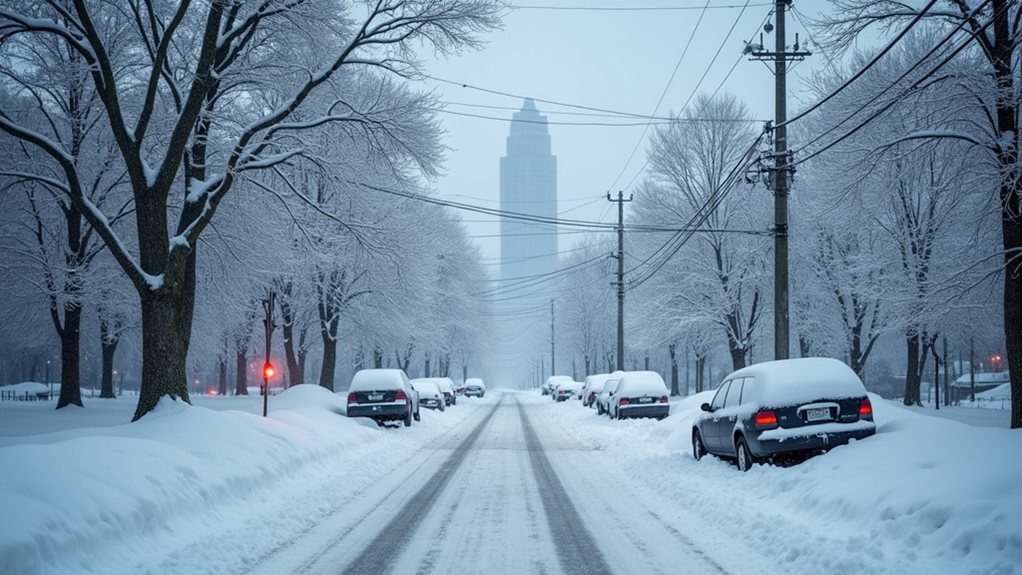

In January 2026, eastern Canada was hit by a record-breaking snowstorm that left chaos in its wake. Toronto alone saw 46 cm of snow, shattering nearly a century-old record. Though Ottawa reported 154 accidents, and nationwide fatalities reached at least 108, Toronto itself remained unscathed regarding loss of life. With over a million residents facing power outages and transportation grinding to a halt, this storm showcased the harsh realities of severe winter weather. There’s much more to unpack about its impact and preparation measures!
Quick Overview
- A historic nor’easter on January 25, 2026, blanketed Toronto with 46 cm of snow, breaking an 89-year-old snowfall record.
- The storm caused significant disruptions, including over 560,000 power outages and grounded flights from Toronto to Halifax.
- Nationally, estimated fatalities reached at least 108 across various states due to hazardous conditions and accidents.
- Ottawa reported 154 accidents in one day, highlighting the storm’s severe impact on transportation safety.
- Emergency preparedness is crucial, emphasizing the need for supplies, safe home heating, and reliable weather alerts.
Understanding the Impact of Eastern Canada’s Record-Breaking Snowstorm
How did a single snowstorm manage to rewrite the history books in Eastern Canada? On January 25, 2026, a tempestuous nor’easter blanketed Toronto with a staggering 46 cm of snow, shattering an 89-year-old record. The storm didn’t stop there; it released chaos across the region, grounding flights and closing schools from Toronto to Halifax. With peak accumulation rates hitting 9 cm per hour, residents faced a winter wonderland that quickly turned into a winter nightmare. Frigid temperatures guaranteed the snow was light and fluffy, but it also meant serious disruption, leaving infrastructure and services buried under the white stuff. This storm is classified among the top five worst in Toronto’s recorded history. The storm was part of a larger system that affected up to 230 million people across North America. Such extreme events can worsen air quality due to increased emissions from emergency generators and heating as well as altered pollutant dispersion.
How to Prepare for Severe Weather: Essential Tips
When the skies turn dark and the winds start howling, having a plan in place can mean the difference between a minor inconvenience and a full-blown disaster. To stay ahead, stock two weeks of non-perishable food and water—think of it as your personal survival buffet. Insulate your home to keep out the chill, and trim those rebellious trees that might want to crash your party. Additionally, ensure home heating is safe and effective before winter, as safe heating is crucial during severe weather. Also, have at least three ways to receive weather warnings, such as TV, radio, apps, to stay informed. It’s also wise to practice water conservation habits to extend supplies during prolonged outages.
Don’t forget safety gear like smoke detectors and fire extinguishers; they’re your trusty sidekicks. When the storm hits, hunker down, unplug electronics, and fill that bathtub—because who doesn’t love a multi-purpose water source?
Fatalities and Disruptions From the Snowstorm in Eastern Canada
As the snowstorm swept across Eastern Canada, it didn’t just blanket the region in a picturesque layer of white; it released significant chaos that left a troubling mark on the area.
In Toronto, schools closed under 60 cm of snow, yet miraculously, no fatalities were reported. Meanwhile, Ottawa faced 154 accidents in one day, illustrating the storm’s perilous grip. Halifax felt the impact too, with 21 flights grounded. With transportation at a standstill and power outages affecting over a million, the storm’s ferocity was evident. Over 560,000 power outages were reported nationwide, further exacerbating the chaos in the region. Additionally, the storm’s impact was felt nationwide, as it resulted in an estimated fatalities range of at least 108 across many states.
This winter wonderland quickly turned into a treacherous environment, reminding everyone of nature’s unpredictable fury. The event also highlighted the need for sustainable transportation planning to reduce vulnerability in future extreme weather.