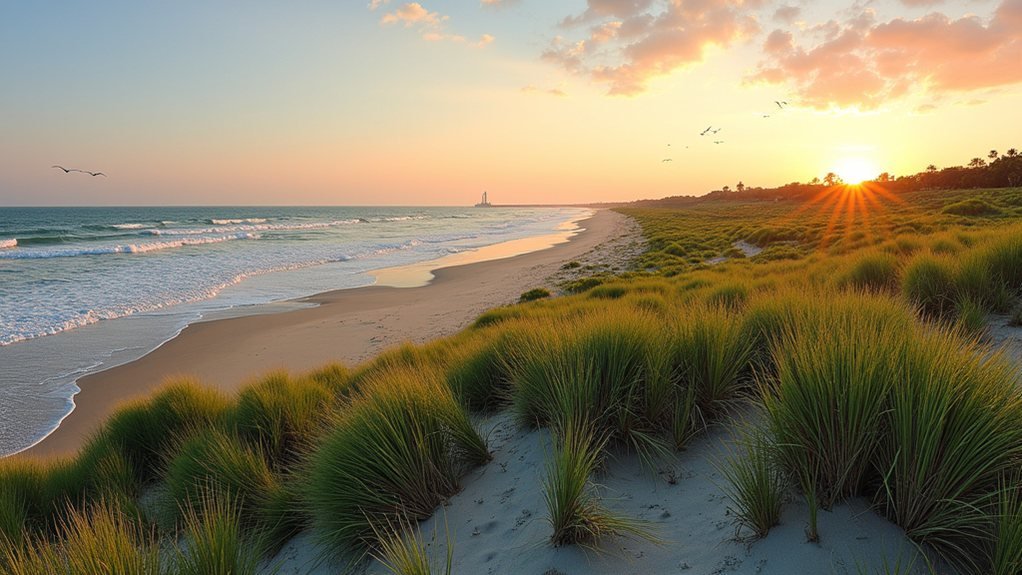

The £30 million Coastal Adaptation Initiative is like a superhero cape for England’s coastal communities, swooping in to combat the relentless tide of erosion and rising sea levels. Funded projects in East Riding, Norfolk, and Suffolk focus on community-driven solutions and innovative strategies. From property purchases in risky zones to homeowner support, local partnerships are key. It’s a collaborative approach that not only fights the waves but aims to boost ecosystem resilience too. Curious about the clever tactics in play?
Quick Overview
- The £30 million funding initiative aims to support coastal communities in England facing the challenges of rising sea levels and erosion.
- East Riding will utilize funds for property purchases in high-risk areas to enhance community safety and resilience.
- Norfolk’s Coastwise project encourages community-driven solutions to combat coastal erosion through collaborative efforts.
- Great Yarmouth is developing innovative strategies specifically targeted at addressing ongoing coastal erosion issues.
- Suffolk is providing essential support to homeowners impacted by coastal hazards, enabling them to adapt to environmental challenges.
What You Need to Know About the £30 Million Coastal Adaptation Initiative
The £30 million Coastal Adaptation Initiative is like a lifebuoy tossed to communities along England’s rapidly eroding coastline—an urgent response to the mounting pressures of climate change. Announced by the Environment Agency, this funding allocates £18 million for advanced coastal projects in East Riding, Norfolk, and Suffolk, while £12 million supports smaller-scale readiness actions through Regional Flood and Coastal Committees. £30 million allocated for coastal communities With a local funding contribution of 10%, communities can access over £3 million more. The initiative also acknowledges that climate change is accelerating coastal erosion pressures, further emphasizing the need for immediate action. Set to begin in April 2026, these pilots aim to mitigate the risks posed by rising sea levels, proving that even in tough times, teamwork can make waves. Communities chosen for funding will be supported to address environmental justice issues tied to unequal exposure to coastal hazards.
Innovative Projects Addressing Coastal Erosion in East Riding, Norfolk, and Suffolk
Communities along the coast of East Riding, Norfolk, and Suffolk are rolling up their sleeves and getting creative in the face of coastal erosion, a phenomenon that’s not just a bad hair day for the beach but a serious threat to homes and livelihoods. East Riding has earmarked £18 million for advanced adaptation efforts, including selective property purchases in high-risk areas. Meanwhile, Norfolk’s Coastwise project is extending through 2029, fostering community-driven solutions. The new Coastal Adaptation Pilots initiative aims to help areas at risk from climate change, including Great Yarmouth’s innovative strategies that tackle erosion’s relentless grip, while Suffolk focuses on meaningful support for homeowners. To further bolster these efforts, the initiative includes £30 million allocated to combat coastal erosion across England. Community-led planning is increasingly drawing on water conservation and sustainable management practices to reduce pressure on coastal ecosystems and support long-term resilience. Together, they’re pioneering a collaborative approach toward safeguarding their shores and futures.
Driving Sustainable Solutions Through Local Partnerships
While steering through the choppy waters of climate change and coastal erosion, local partnerships have emerged as the lifebuoy that communities desperately need. This £30 million government package is like a superhero team-up—bringing together local governments, environmental agencies, and universities. Their collaborative efforts, such as revitalizing Shoreline Management Plans, are essential for managing 6,000 kilometers of coast over the next century. The funding £30m Government package aims to support communities facing climate impacts, allowing for innovative adaptation strategies to flourish. Notably, the region’s challenges with sea-level rise emphasize the urgency of these collective actions. With tools like the CoCliCo platform, they explore various adaptation futures. By integrating high-resolution data and addressing interconnected risks, these partnerships are not just surviving the storm; they’re crafting sustainable solutions that could outlast even the most stubborn of tides. Restoring degraded habitats also improves resilience by enhancing ecosystem function and biodiversity.