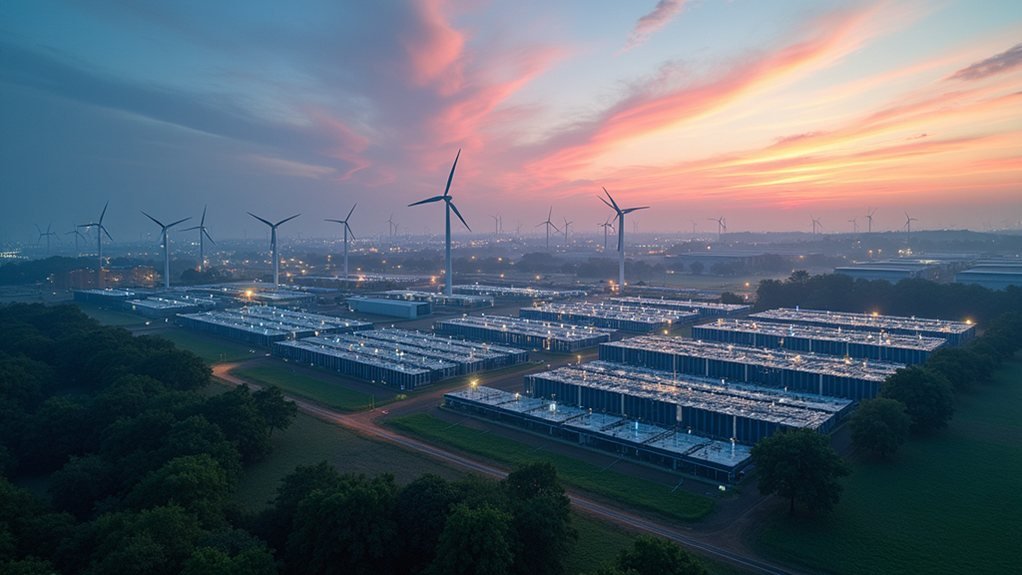

Cryptocurrency and AI are gearing up to consume 2% of global electricity by 2027, like a hungry teenager raiding the fridge. To put this in perspective, that’s about 460 Terawatt hours—a vast amount! Bitcoin’s mining emissions alone compare to New Zealand’s entire output. With growing electricity demands, the industry faces sustainability challenges. The urgency to address these emissions is like finding a leaky faucet—fix it now or risk a flood of environmental trouble. Curious about solutions? Keep exploring!
Quick Overview
- By 2026, the electricity demand from cryptocurrency and AI is projected to double, potentially reaching 4% of global electricity consumption.
- Bitcoin mining alone consumed 173.42 TWh of electricity during 2020-2021, comparable to the energy use of a small nation.
- In 2022, cryptocurrency and AI collectively accounted for 2% of global electricity use, highlighting their growing impact on energy resources.
- The electricity demand from AI could exceed 9% of US electricity by 2030, significantly contributing to global consumption.
- Ignoring the rising electricity demands of crypto and AI may strain existing power grids and hinder sustainability efforts.
Understanding the CO2 Emissions From Crypto and AI
How does the world of cryptocurrency and artificial intelligence stack up regarding carbon emissions, and why should anyone care?
Well, it’s a bit like comparing a hot air balloon to a rocket ship—both are flying high, but one is a lot more carbon-happy.
Bitcoin alone emits 37 megatons of CO2 annually, rivaling New Zealand. Bitcoin’s carbon footprint is comparable to the emissions of entire countries, highlighting the significant environmental impact of its mining operations. In fact, global Bitcoin mining consumed 173.42 Terawatt hours of electricity during 2020–2021, underscoring the massive energy demand of this digital currency.
Ethereum isn’t innocent either, with a single transaction belching out over 102 kilograms of CO2. Energy efficiency strategies could significantly reduce these emissions across the digital economy.
By 2027, these digital beasts could munch through 0.7% of global emissions.
If we ignore this, we might just find ourselves in a climate pickle that no amount of blockchain can solve.
Electricity Demand Surge From Crypto and AI
Despite the hefty carbon footprints of cryptocurrency and artificial intelligence, the real shocker lies in their electricity consumption.
In 2022, these digital powerhouses collectively guzzled 2% of global electricity, approximately 460 TWh—enough to rival France! With projections suggesting this demand could double by 2026, one can’t help but wonder if Bitcoin transactions will soon require more energy than a small nation. As AI algorithms and crypto mining surge, they threaten to strain power grids faster than upgrades can catch up. AI’s electricity consumption could account for 3.5% of US electricity today, potentially exceeding 9% by 2030. The energy consumption of AI is increasing significantly due to generative AI, further intensifying this demand. Understanding your personal carbon impact through calculation can help individuals make more environmentally conscious choices about technology usage.
Addressing CO2 Emissions: Strategies for Sustainable Growth in Data Centers and AI
As the digital age accelerates, the urgent need to address CO2 emissions from data centers and AI is becoming increasingly critical. Currently, these centers account for 0.5% of global emissions, with projections showing a rise to 1% by 2030. Research indicates that AI electricity demand is counteracting the efficiency gains needed for net-zero, further complicating efforts to reduce emissions. To combat this, companies can invest in renewable energy, shifting from a 60% fossil fuel mix to a cleaner mix by 2035. Similar to aviation’s path toward decarbonization, the tech sector could explore sustainable fuel alternatives that provide cleaner energy sources for powering vast server farms. Innovative cooling techniques and direct funding for green projects can also help. Furthermore, as data centers are expected to double their electricity use by 2030, it is crucial to balance growth with sustainability. After all, nobody wants their data to come at the expense of a livable planet!