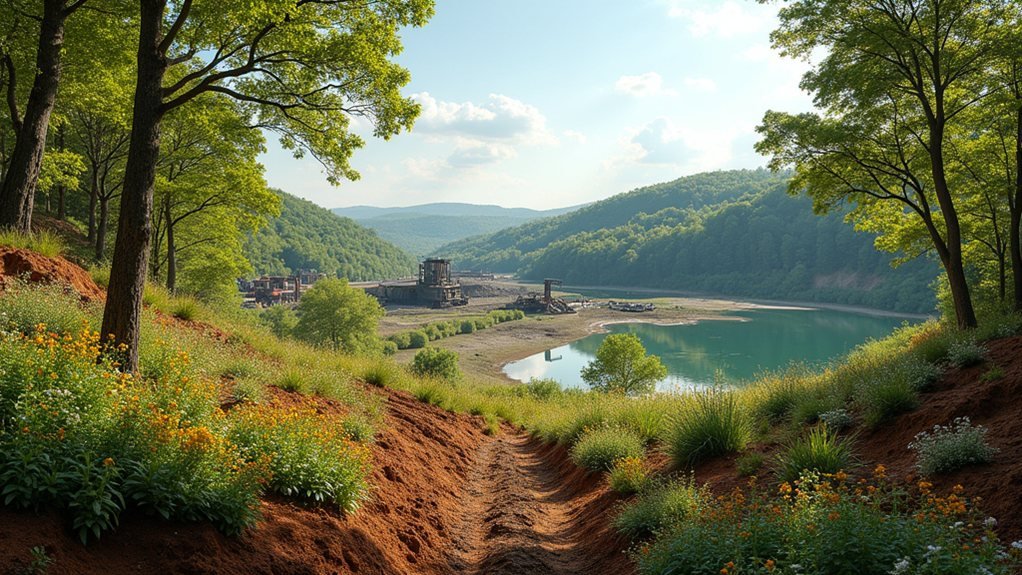

Starting February 12, 2024, mining projects in England must achieve a minimum 10% biodiversity net gain. This means developments need to improve local ecosystems, not just tread lightly on them. Companies will face new challenges, like conducting biodiversity assessments and creating plans that detail how they’ll enhance habitats. It’s a bit like turning a bustling construction site into a thriving nature park, but with careful planning, it’s totally doable. Curious about the specifics? There’s more to uncover!
Quick Overview
- Effective February 12, 2024, most planning permissions in England require a minimum 10% biodiversity net gain (BNG).
- Developers must conduct pre-development biodiversity assessments to identify impacted habitats for compliance.
- On-site habitat creation is preferred for achieving cost-effective biodiversity gains, with off-site credits available at higher costs.
- Mining projects must incorporate habitat protection strategies and collaborate with local authorities to ensure compliance.
- Nationally Significant Infrastructure Projects must meet BNG requirements by May 2026, with plans approved within eight weeks.
Key Facts About 10% Biodiversity Net Gain in Mining Law
In the world of mining law, the introduction of a 10% Biodiversity Net Gain (BNG) requirement is like adding a splash of color to a black-and-white film—exciting and necessary.
Starting February 12, 2024, most planning permissions in England will mandate this uplift, with small sites joining the fun by April 2, 2024. Developers must also check local plans for specific BNG requirements to ensure compliance. This requirement ensures that at least 10% uplift in biodiversity is achieved through onsite solutions, contributing directly to the development area.
Beginning February 12, 2024, planning permissions in England will embrace a vibrant 10% Biodiversity Net Gain uplift!
By May 2026, even Nationally Significant Infrastructure Projects must comply. Developers must submit a Biodiversity Gain Plan, approved within eight weeks.
This law applies to all habitats within the project area, ensuring that mining activities contribute positively to biodiversity.
Effective implementation of these requirements aligns with sustainable management principles that balance resource extraction with conservation needs.
It’s a green revolution, one habitat at a time!
Implications of Biodiversity Net Gain for Future Mining Projects
While the prospect of a 10% Biodiversity Net Gain (BNG) requirement may seem intimidating for future mining projects, it actually opens up a treasure trove of opportunities for innovation and sustainability. Mining companies will need to navigate increased site selection costs and longer timelines, particularly in biodiversity hotspots. However, this challenge could stimulate creative solutions like renaturing quarries into rich ecosystems. Emphasizing transparent biodiversity reporting could also boost Environmental, Social, and Governance (ESG) ratings, attracting investors. Ultimately, adapting to BNG can transform compliance hurdles into stepping stones for a more environmentally responsible mining industry, benefiting both nature and business. Moreover, addressing the decline of nature is crucial for the long-term viability of these projects, underscoring the importance of BNG in fostering a healthier ecosystem. Additionally, mining operations often disrupt ecosystems in biodiversity-rich regions, highlighting the urgent need for effective biodiversity management. Strategic habitat protection initiatives must be incorporated into mining plans from the earliest stages to ensure sustainable operations while preserving critical natural environments.
Steps for Mining Companies to Achieve BNG Compliance
Mining companies stand at a pivotal crossroads, where the challenge of achieving Biodiversity Net Gain (BNG) compliance transforms into an opportunity for environmental stewardship. To start, they must assess pre-development biodiversity using statutory metrics, identifying impacted habitats and documenting irreplaceable ones. Once planning permission is granted, detailed Biodiversity Gain Plans are essential, showcasing strategies to achieve the 10% gain. On-site habitat creation is the gold standard, offering cost-effective benefits. If that’s not feasible, off-site credits may be purchased, albeit at a higher price. These approaches align with broader ocean conservation principles that emphasize habitat protection and restoration for maintaining ecosystem health. Ultimately, successful compliance hinges on thorough planning and collaboration with local authorities, ensuring a greener future for all. Compliance requires consideration from planning and design to 30-year management. Additionally, all planning permissions in England are deemed subject to the biodiversity gain condition, emphasizing the importance of integrating biodiversity considerations early in the development process.