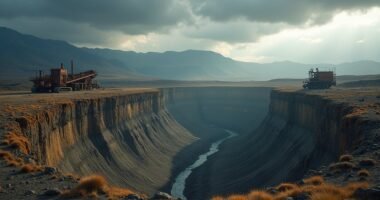
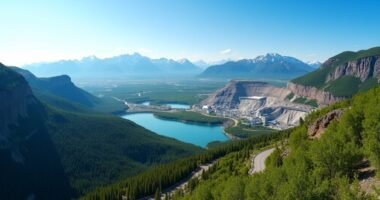
The Cobre Panamá mine closure spotlights a clash between environmental activism and mining operations, particularly impacting Canadian companies. Nationwide protests erupted over concerns about water resources and biodiversity, leading to an economic ripple effect that cost Panama around $1.7 billion. The community’s outcry, fueled by feelings of exclusion and inequality, ultimately led to the government mandating a safe closure. This saga raises larger questions about mining practices and the balance between economic growth and environmental protection. Curious to reveal more?
Quick Overview
- Protests against Cobre Panamá erupted over environmental concerns and lack of democratic transparency, leading to the mine’s closure.
- The Supreme Court ruled Law 406 unconstitutional, prompting the government to enforce an “orderly and safe closure” of the mine.
- Local communities, particularly Indigenous groups, expressed discontent over foreign corporations benefiting at their expense, fueling nationwide protests.
- The closure resulted in significant job losses and a projected GDP decline for Panama, highlighting economic challenges.
- Grassroots activism played a crucial role in advocating for environmental justice and sustainable practices in response to mining operations.
Background of Cobre Panamá Mine Closure
In the vibrant landscape of Panama, the Cobre Panamá mine stands as both a beacon of economic potential and a flashpoint for environmental activism.
The mine’s closure followed the Supreme Court’s unanimous ruling declaring Law 406 unconstitutional, a decision that resonated across the nation. Originally established under an overly generous contract in 1997, the mine faced mounting legal challenges during its renewal process. This culminated in a government order for “orderly and safe closure,” spurring protests from citizens concerned about environmental impacts. Conservationists argue that implementing sustainable forest management practices could have mitigated some of the environmental damage caused by mining operations. The ruling was seen as a triumph in the fight for “defense of life in Panama,” highlighting the power of grassroots activism. Additionally, the project was projected to create 7,500 jobs for local communities, emphasizing the complex balance between economic development and environmental stewardship. The closure has led to a significant downturn in the economy, with Cobre Panamá previously accounting for 5% of Panama’s GDP.
Economic Impact of Cobre Panamá Mine Closure
While the closure of the Cobre Panamá mine has stirred up a whirlwind of protests and environmental concerns, the economic implications of this decision are equally profound. Contributing nearly 5% to Panama’s GDP, its shutdown has led to a significant slowdown, with GDP growth plummeting to 2.9% in 2024. Imagine losing a prized player from your favorite team, and you get the picture. Additionally, the mine accounted for 75% of mineral exports, resulting in a staggering $1.7 billion in forgone economic contributions. Job losses ripple through the community, leaving a gaping hole that even the most robust recovery might struggle to fill. Creating fair pathways for displaced workers must be central to any transition plan toward a more sustainable economy. As the IMF suggests a cabinet-approved spending reduction plan could meet the 2025 fiscal target, the government faces pressing challenges in balancing fiscal discipline and growth-promoting initiatives. The government has emphasized the importance of a comprehensive independent environmental audit to guide decisions on resuming operations.
What Sparked the Nationwide Protests?
Protests erupted across Panama like a sudden summer storm after the controversial approval of the Cobre Panamá mine’s operational contract, leaving many to wonder what sparked such a widespread outcry.
Concerns about environmental degradation loomed large, as mining operations threatened essential water resources and biodiversity. The lack of democratic transparency infuriated citizens, especially Indigenous communities excluded from the decision-making process. The protests featured slogans like “protect our natural resources” as social and economic inequality only added fuel to the fire, with foreign corporations reaping profits while locals faced the fallout. This historical backdrop of mining disputes made the quick contract approval feel like a betrayal, igniting widespread unrest across the nation. The Supreme Court identified multiple constitutional violations in the original concession framework, highlighting the legal crisis that has deepened public discontent.