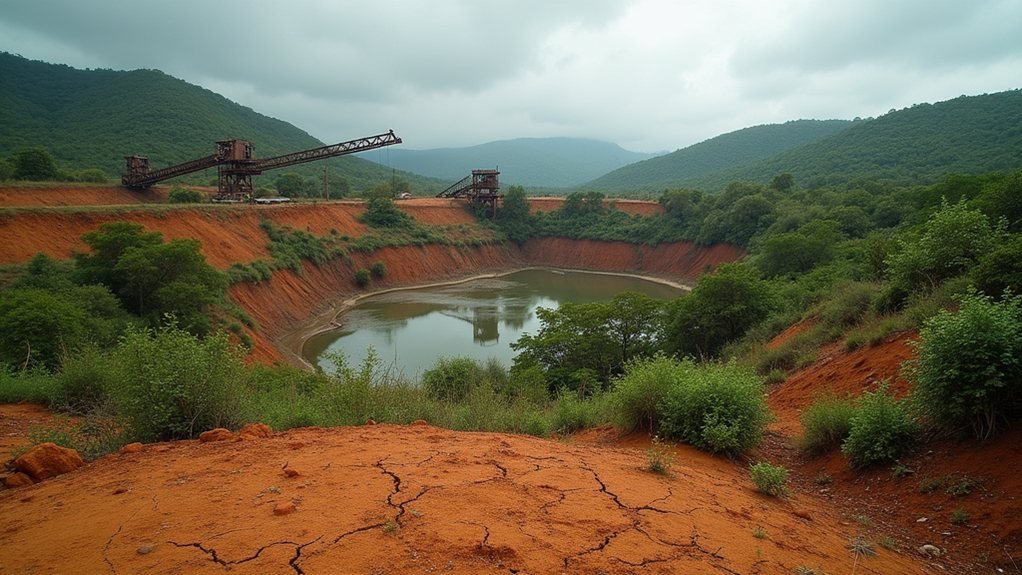

The Kabwe lead scandal reveals a staggering legacy of pollution from the UK-linked Broken Hill mine in Zambia. After over 90 years of mining, lead contamination saturated the soil, with children absorbing it at alarming rates. This has led to a health crisis, where nearly all youngsters have unsafe blood lead levels, facing severe consequences like learning disabilities. It’s a heavy reminder of profit’s cost on community health. Curious about the ongoing battles for justice? There’s much more to uncover.
Quick Overview
- Kabwe, once a mining hub, has become notorious for lead contamination, severely impacting public health, especially among children.
- Anglo American South Africa faces a class action lawsuit for its role in historical lead poisoning affecting approximately 140,000 Zambian women and children.
- Over 95% of local children show elevated blood lead levels, highlighting the devastating effects of lead pollution on community health.
- UN experts have called the situation a human rights violation, emphasizing the need for accountability and remediation efforts.
- The ongoing legal battles underscore the ethical responsibility of corporations towards environmental justice and community welfare in polluted regions like Kabwe.
Kabwe’s Lead Pollution Legacy
While it may seem hard to believe, the legacy of lead pollution in Kabwe is not just a tale of the past—it’s a vivid reminder of humanity’s sometimes reckless relationship with nature.
Established during colonial times, the Broken Hill mine operated for over 90 years, producing alarming levels of lead while ignoring the health risks to workers. Despite warnings dating back to the 1930s, pollution festered, with soil lead levels reaching up to 60,000 milligrams per kilogram! Lead exposure can result in profound and permanent health impacts, particularly in children, including intellectual disability, coma, and death. The situation in Kabwe exemplifies environmental injustice where the distribution of pollution burdens disproportionately affects vulnerable populations. Today, Kabwe’s once-thriving community grapples with lingering contamination, a grim reflection of the consequences of neglecting environmental health for profit, as the town is recognized as one of the world’s most polluted due to lead mining activities.
Health Crisis: The Impact of Lead Poisoning on Children and Communities
As if living in a real-life horror movie, the children of Kabwe navigate a landscape tainted by lead poisoning, where every playful scoop of soil could be a ticket to serious health issues.
With 95% exceeding safe blood lead levels, these kids absorb lead four to five times more than adults, jeopardizing their developing brains. Approximately 50% of children in affected areas have elevated blood lead levels, highlighting the severity of the crisis. The study found that higher blood lead levels were especially pronounced in infants and children, indicating the urgent need for intervention.
The consequences are grim—behavioral problems, learning disabilities, and even life-threatening conditions lurk behind each innocent game.
Behavioral issues and learning disabilities threaten these children, hidden behind their innocent play in a toxic world.
The stark reality is that without proper testing or treatment, thousands remain vulnerable, trapped in an invisible health crisis that disproportionately impacts the poorest among them. This environmental tragedy represents a significant threat to ecosystem services that support community health and wellbeing in the region.
Corporate Accountability: Legal Battles Over Lead Poisoning in Kabwe
In the midst of a legal storm brewing over the Kabwe lead scandal, a class action lawsuit has emerged as a beacon of hope for approximately 140,000 Zambian women and children.
Filed in March 2022 against Anglo American South Africa, the case highlights corporate accountability for historical lead poisoning. Despite Anglo’s claims of minor investor status and adherence to past regulations, experts argue that the company should have recognized contamination risks much earlier. Over 95% of children near the former mine have elevated blood lead levels, indicating the severe health impact of lead exposure on the community. The case raises profound questions about our ethical responsibility toward environmental protection and the communities affected by industrial activities. Additionally, UN experts have been involved in the case as amici curiae, stressing the importance of addressing the human rights violations linked to lead pollution. With the Supreme Court of Appeal set to hear the appeal in 2025, the battle for justice continues, drawing global attention from organizations like Amnesty International and UN Special Rapporteurs.