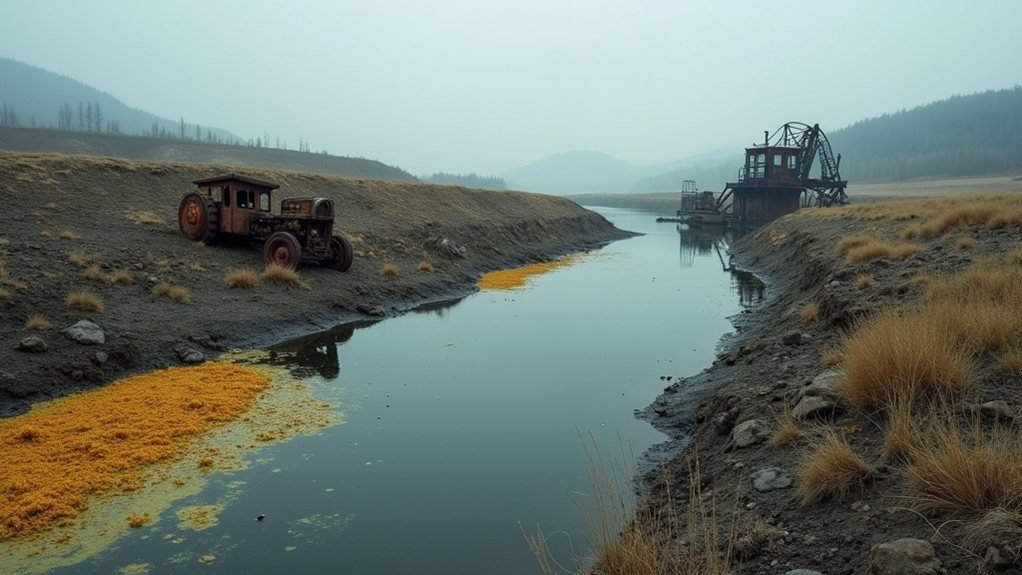

A staggering 4 million tonnes of toxic lead waste in the UK creates a real danger for children. Lead poisoning doesn’t just make kids feel blue; it can cause life-long damage to their brains, with reduced IQ and behavioral challenges. And guess where much of this lead comes from? Abandoned mines, leaching nasty stuff into rivers and the food chain. It’s like a bad sequel to a horror movie. The good news? There are government strategies in place to turn the tide. Want to know how?
Quick Overview
- Over 6,000 abandoned lead mines in the UK contribute to significant lead contamination, impacting children’s health.
- Lead poisoning can cause permanent neurological damage, reduced IQ, and behavioral issues in children.
- Approximately 557,000 people live on floodplains affected by lead contamination from these mines.
- The UK government has implemented measures, including blood testing and monitoring, to combat lead exposure in children.
- Public awareness and education campaigns are essential for informing communities about lead risks and prevention strategies.
Government Solutions to Lead Exposure
When it comes to protecting children from the perils of lead exposure, the UK government has rolled out a robust game plan that’s as intricate as a chess match—but thankfully, without the existential dread.
With intervention thresholds lowered for children and pregnant women, they’ve put safety first. Their protocol mandates blood testing for suspected cases, ensuring swift action to remove exposure sources. Monitoring for behavioral changes in children is crucial and is part of their comprehensive approach to tackle lead exposure. Additionally, health concerns regarding lead exposure should be addressed with a GP or NHS 111, especially for those with high lead levels.
Lowered intervention thresholds for children and pregnant women prioritize safety, ensuring prompt blood testing and swift action against lead exposure.
Surveillance systems keep an eagle eye on lead levels, while local water companies offer free testing for households. Environmental authorities analyze the product lifecycle impacts of lead-containing materials to identify and mitigate pollution sources before they reach communities.
It’s all about creating a safer environment, turning the tide against lead one clever strategy at a time—like a superhero in a lab coat!
How Does Lead Poisoning Affect Children’s Health?
While the world may often perceive childhood as a time of boundless joy and discovery, lurking in the shadows is a formidable foe: lead poisoning.
This insidious threat can inflict permanent neurological damage, reducing IQ and hindering academic achievement. Even modest blood lead levels can spark attention problems and antisocial behaviors, turning bright futures into cautionary tales. Approximately 590,000 U.S. children aged 1-5 had elevated blood lead levels in 2016—imagine a child’s potential, diminished by something as invisible as lead. With symptoms ranging from anemia to slowed growth, the consequences extend well into adulthood. Exposure to lead can affect multiple body systems, particularly harming young children and women of child-bearing age. Lead poisoning represents a serious threat to ecosystem services that support human health and well-being through contamination of soil and water resources.
In this battle against lead, knowledge is power—and every child deserves a fair shot at a healthy life.
The Scale of Lead Contamination From Abandoned Mines in the UK
Abandoned mines in the UK might seem like forgotten relics of the past, but their hidden legacy continues to seep into the environment, leaving a toxic mark on rivers and communities alike.
With over 6,000 abandoned lead mines leaking hundreds of tons of metals annually, the contamination is staggering. Approximately 1,500 km of rivers are tainted, with pollutants like lead and cadmium making their way into water supplies. Lead exposure is a preventable public health issue that disproportionately impacts communities with less political power. Furthermore, the baseline length of polluted rivers in the catchment highlights the extensive reach of this contamination.
Addressing this issue requires implementing waste prevention strategies at the highest level of the waste management hierarchy to stop further contamination before it occurs. Shockingly, up to 557,000 people live on floodplains affected by this legacy. As these heavy metals infiltrate the food chain, the implications for health and safety become alarmingly clear, making cleanup urgent.