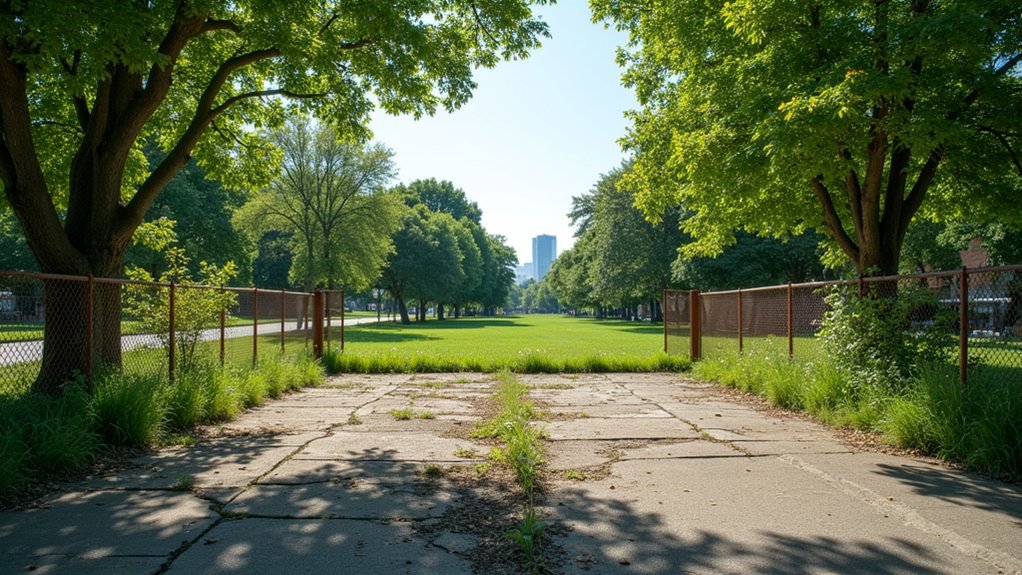
The recent report highlights a troubling trend in the U.S. called “nature access apartheid,” where communities of color and low-income neighborhoods are often left high and dry when it comes to green spaces. Historical practices like redlining have contributed to this issue, leading to significant disparities in access to parks. Without these natural oases, health and well-being suffer. Luckily, creative strategies are underway to guarantee everyone can enjoy a new perspective. Curious about the solutions?
Quick Overview
- Nature access apartheid refers to the unequal availability of parks and green spaces, disproportionately affecting communities of color and low-income neighborhoods.
- Historical policies like redlining have contributed to the exclusion of marginalized communities from natural spaces, exacerbating health disparities.
- Lack of access to green spaces results in higher risks of obesity and mental health issues, particularly impacting disadvantaged groups.
- Equitable standards and community-led initiatives are essential for ensuring all neighborhoods have access to public green spaces and nature.
- Transforming vacant lots and developing urban forests can enhance community engagement and promote healthier lifestyles by increasing access to nature.
Understanding the Nature Gap and Its Historical Roots
While the beauty of nature often beckons to all, the truth is that not everyone has equal access to its wonders, especially in the United States.
The “nature gap” reveals a stark reality: communities of color and low-income neighborhoods often lack nearby parks, forests, and streams. Historical redlining and discriminatory policies have confined these groups to areas devoid of green spaces, while wealthier, primarily white neighborhoods flourish. Imagine this: families with children of color are three times more likely to live far from nature. This disparity highlights a legacy of exclusion, where access to nature feels like a privilege, not a right. Nature deprivation is a significant issue for affected communities, impacting their overall health and well-being. Moreover, people of color often face historic discrimination that further limits their access to outdoor recreation opportunities. This uneven distribution of environmental benefits and burdens is a central concern of environmental justice, which seeks to ensure all communities have fair treatment regardless of demographics.
The Health and Social Impacts of Green Space Inequality
Access to green spaces isn’t just a matter of convenience; it can considerably shape the health and well-being of communities. For lower-income groups, a nearby park can be a health superhero, reducing risks of diseases like obesity and diabetes while boosting mental health. Imagine stress melting away like ice cream on a hot day—just two hours a week in nature can do that! Additionally, research indicates that disadvantaged individuals show more beneficial effects from public green spaces than affluent individuals. However, without access to these green havens, disadvantaged communities miss out on essential benefits, leaving them in a health equity pickle. Essentially, green space isn’t just grass; it’s a lifeline for those who need it most. Furthermore, evidence suggests that green spaces can reduce all-cause mortality rates, highlighting their critical role in promoting public health. These urban green spaces also provide crucial ecosystem services that support both human communities and local biodiversity.
Strategies for Addressing Nature Access Apartheid
Many communities find themselves on the wrong side of what some are calling “nature access apartheid,” where the greenery and fresh air that should be a given are instead a rare luxury. To tackle this, strategies include equitable green space standards to guarantee everyone has nearby parks, and anti-displacement policies to prevent “green gentrification.” Community-led design empowers locals to co-create spaces that reflect their culture. Targeted investments focus on neighborhoods lacking trees and parks, transforming vacant lots into green havens. Urban forests can be developed using sustainable management practices that preserve biodiversity while providing valuable resources to the community. Ultimately, these strategies aim to blend nature with community, making fresh air a shared right rather than a privilege. Furthermore, initiatives that repurpose stormwater ponds for multifunctional uses not only enhance community amenities but also promote access to nature, which is essential for health and well-being.