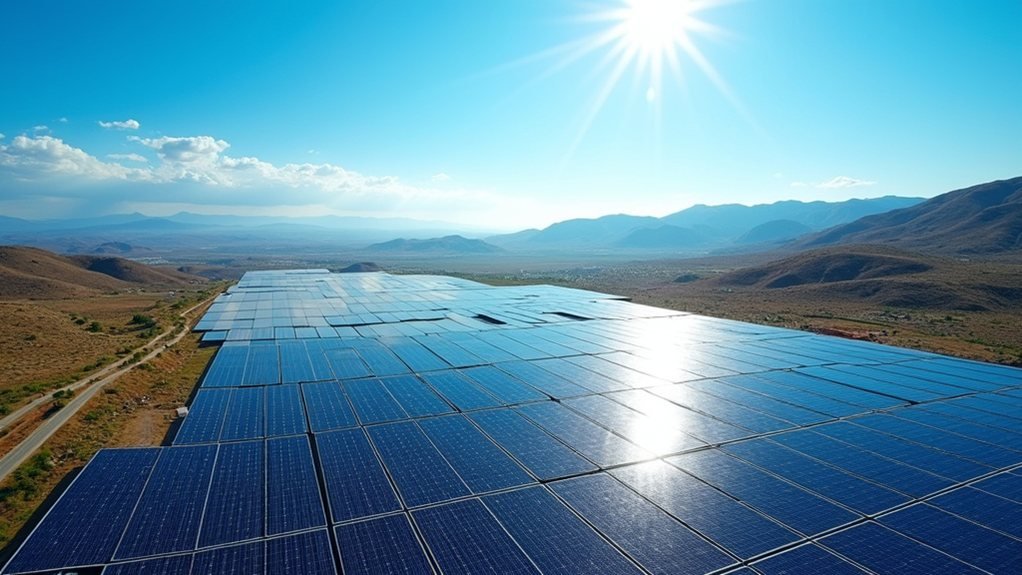

In 2025, the U.S. solar energy sector is gearing up to add a whopping 32 gigawatts of utility-scale capacity, eclipsing 2024’s achievements. This impressive growth will reshape the energy landscape, moving us away from coal and gas like an astute chess player making a strategic move. With Texas and the Southeast at the forefront, challenges like tariffs and grid delays loom large, yet innovative solutions promise a bright, clean future. Stick around to glimpse more exciting developments on the horizon!
Quick Overview
- The U.S. is expected to add 33 GW of solar capacity in 2025, surpassing the 31 GW added in 2024.
- Solar energy accounted for 81% of new U.S. power sources in 2024, continuing to reshape the energy generation mix.
- The EIA forecasts a total of 63 GW in utility-scale solar additions by 2025, indicating significant growth.
- Major regions like Texas and the Southeast are projected to see substantial solar capacity growth, contributing to national totals.
- Despite challenges such as policy rollbacks and grid connection delays, the solar industry shows resilience and growth potential.
Record Growth in Utility-Scale Solar Capacity
In the ever-evolving landscape of energy generation, the United States is witnessing a remarkable surge in utility-scale solar capacity, and it’s not just a flash in the pan.
With a staggering 31 GW added in 2024, solar has become the superstar of new U.S. power sources, accounting for 81% of capacity additions. The trend continues, as developers plan another 33 GW for 2025, potentially outshining 2024. This growth doesn’t just replace old energy sources; it reshapes the entire generation mix, pushing coal and gas aside like last season’s fashion. Natural gas is also experiencing a shift as the market adapts to the rising dominance of solar energy. In fact, US solar share rose from 5.6% in 2023 to 6.9% in 2024, indicating a broader acceptance of solar power. The transition to solar offers significant environmental advantages compared to traditional fossil fuel sources, including reduced carbon emissions and minimal water usage. Solar is not just brightening our world; it’s revolutionizing it!
Regional Contributions and Key Players
The landscape of solar energy in the United States is not just growing; it’s blossoming into a vibrant tapestry of regional contributions and key players.
Texas leads the charge with a forecast of 11.6 GW of new capacity, nearly quadrupling California’s 2.9 GW. Meanwhile, the MISO and PJM regions are stepping up with 11 GW and 7 GW, respectively, proving that solar isn’t just a coastal affair. Even the Southeast is getting in on the action, projecting 17 GW from solar alone. This surge is part of the EIA’s forecast projecting a total of 63GW in utility-scale additions by 2025. It’s a collaborative effort, showcasing how diverse regions are uniting under the sun’s warm embrace—no sunscreen required! This collaboration reflects the rise of megawatt-scale solar, which is transforming how energy is generated across the nation. This shift toward renewable energy demonstrates a decisive move away from carbon-intensive sources and toward a more sustainable energy future for America.
Challenges and Opportunities Ahead for Solar Expansion
As the sun shines brightly on the promising future of solar energy, an array of challenges looms on the horizon, ready to test the mettle of this blossoming industry.
Policy rollbacks and soaring tariffs can feel like uninvited guests crashing a solar party, complicating project costs and timelines. Meanwhile, grid connections resemble a long, winding queue at a popular theme park, with many projects waiting years for approval. Despite these challenges, the industry managed to install 10.8 GWdc capacity in Q1 2025, showcasing its resilience. Yet, amidst these hurdles lie opportunities—reshoring supply chains and innovative technologies could transform the landscape, especially as utility-scale solar installations are expected to rise significantly in the coming years. Recent COP29 commitments have bolstered the renewable energy sector’s growth potential, providing additional policy support for large-scale solar development.
With determination, the solar sector might just turn challenges into stepping stones for a brighter, greener future.