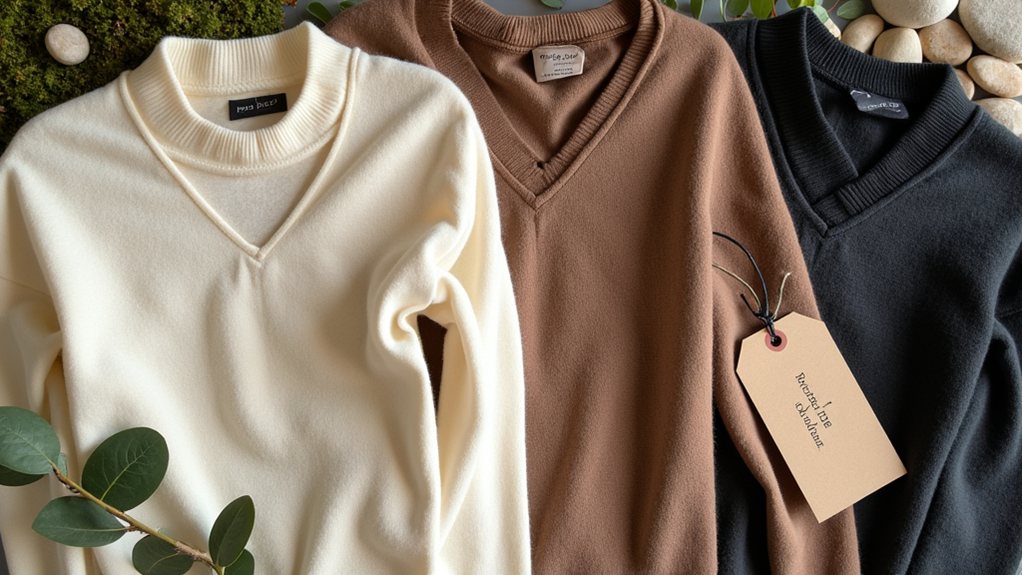

Rebalance has introduced its stylish Everyday Knit line in Toronto, made from 100% traceable alpaca yarn. This boxy, vintage-inspired design isn’t just chic; it also boasts eco-friendly credentials. Alpacas, the stars of this show, require less water and food, making them kinder to our planet. Handmade in family-run facilities in Peru, these pieces celebrate craftsmanship while prioritizing ethical sourcing. Intrigued by the intersection of sustainability and fashion? There’s more to explore in this evolving landscape!
Quick Overview
- Rebalance has introduced a new line of women’s knitwear made from 100% traceable alpaca yarn in Toronto.
- The knitwear features a boxy, vintage-inspired design and is available in a versatile light grey hue.
- Handmade in Peru, the products support local family-owned facilities and ethical sourcing practices.
- Alpaca farming is environmentally friendly, requiring less water and food compared to traditional livestock.
- The launch aligns with the growing demand for sustainable fashion, catering to Toronto’s eco-conscious consumers.
The Everyday Knit: A New Era for Rebalance
The Everyday Knit is not just another sweater; it’s a cozy revolution for Rebalance Knitwear, marking a fresh chapter in their journey. Crafted from 100% traceable alpaca yarn, this debut offering showcases the brand’s commitment to quality and comfort. With a boxy, vintage-inspired design, it promises versatility, fitting seamlessly into any wardrobe. The light grey hue is as neutral as a Switzerland vacation, appealing to urban women seeking style without sacrificing durability. This design represents a step toward addressing the fashion industry’s impact on environmental degradation through mindful production choices. Handmade in Peru by a family-owned facility, the Everyday Knit celebrates both craftsmanship and modern fashion, making it a must-have for anyone who values ethical chic. This launch expands the Everyday Line to include women’s knitwear for the first time. As part of a broader movement, Rebalance aligns itself with emerging sustainable brands focusing on eco-friendly materials and practices.
Commitment to Sustainability and Ethical Sourcing
Sustainability isn’t just a buzzword for Rebalance Alpaca Knitwear; it’s the very fabric of their identity.
Alpacas, with their soft feet that leave soil untouched, require far less water and food than traditional livestock. These gentle creatures have a lower environmental impact compared to other livestock, making them a sustainable choice for farming. This means that efficient use of water and feed allows farmers to maintain healthy ecosystems while producing high-quality fiber.
Alpacas tread lightly on the earth, consuming less water and food than conventional livestock, making them a sustainable choice for our planet.
Imagine a farm that helps the planet by promoting healthy soil and sequestering carbon—this is alpaca farming in action!
Their fiber is renewable and biodegradable, shedding annually without harm.
Plus, alpaca garments are long-lasting, reducing the need for constant replacements.
The practices used in alpaca farming align with soil conservation principles that are essential for sustainable agriculture and food security.
Rebalance’s commitment to ethical sourcing guarantees these gentle creatures thrive, making every knitwear purchase a step toward a greener future.
Who knew fashion could be this responsible?
Navigating the Evolving Fashion Landscape
How can one keep pace in a fashion landscape that seems to shift faster than the trends themselves?
In Toronto, where 50,000 fashion jobs thrive, diversity reigns supreme. With no single style dominating, consumers explore gender-neutral clothing and vintage finds, making thrift shops their new treasure chests. The rise of athleisure blends comfort and creativity, while flare pants make a nostalgic comeback. This growing interest in sustainable fashion has sparked demand for eco-friendly fabrics that minimize environmental impact. Furthermore, the Canadian fashion market is projected to reach US$22.45 billion in 2025, highlighting the industry’s growth potential. Yet, amidst this vibrant chaos, economic pressures loom large. Brands must balance quality and affordability, as consumers increasingly favor sustainable choices that reflect their values. In this ever-evolving scene, adaptability is key—like a chameleon at a fashion show, always ready to pivot.