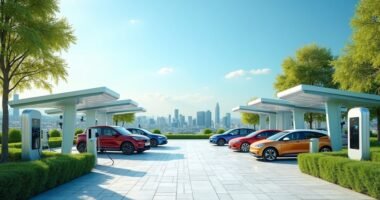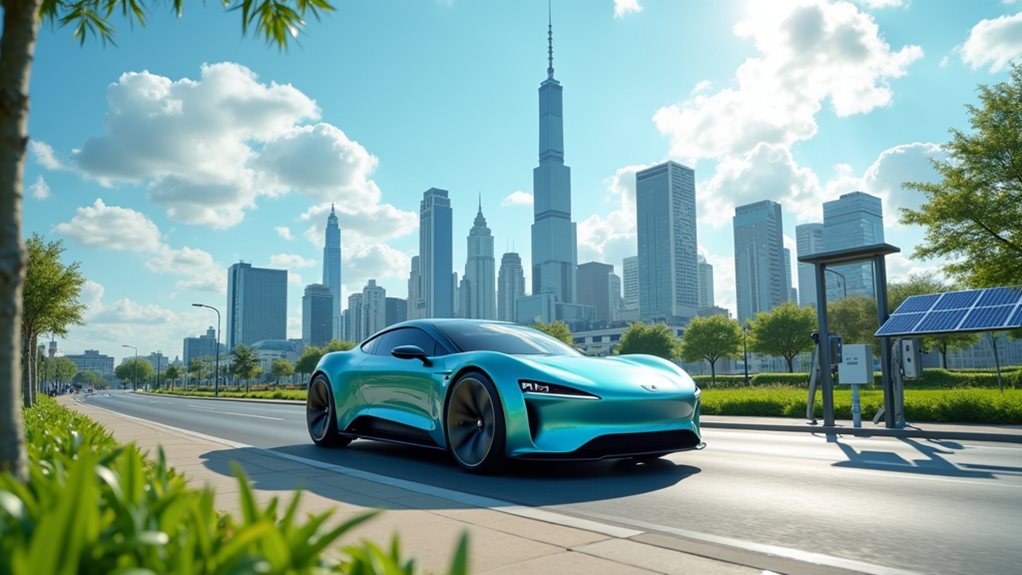

Electric vehicle (EV) sales are soaring, with a record 4.1 million units sold globally in Q1 2025—up 29% from last year! This surge, driven by consumers shifting away from internal combustion engines, signals a stronger commitment to a low-carbon future. China leads the charge, while Europe and North America follow suit. As manufacturers ramp up production and consumers demand cleaner options, the world marches toward electrification and sustainability. Stick around to see how this transformation unfolds!
Electric Vehicles Surge in Sales and Popularity
In a world racing toward sustainability, electric vehicles (EVs) are not just cruising; they’re breaking records at a speed that would make even the fastest sports cars envious.
In the first quarter of 2025, global EV sales skyrocketed to 4.1 million units, a remarkable 29% increase from the previous year.
Global EV sales soared to 4.1 million units in Q1 2025, marking an electrifying 29% increase from last year.
March alone witnessed a staggering 1.7 million EVs flying off dealership lots, proving that the world is not just warming up to EVs; it’s in full-blown love.
Leading the charge is China, which accounted for 2.4 million sales, reflecting a 36% year-over-year growth.
Meanwhile, Europe showed its own sparks of enthusiasm, with 900,000 units sold, a 22% increase that highlights the growing popularity of battery electric vehicles (BEVs).
North America, though trailing, still managed a commendable 500,000 sales, marking a 16% rise. Global YTD sales of 4.1 million units demonstrate the overall momentum in the EV market.
Diving deeper into specific countries reveals even more exciting trends.
Germany saw a 37% increase in BEV sales, while Italy celebrated a jaw-dropping 64% growth.
On the other hand, France faced a reality check, experiencing an 18% drop in overall EV sales, largely due to reduced subsidies.
It’s like watching a thrilling game where some players are sprinting ahead while others stumble over policy hurdles.
As EVs gain market share from traditional internal combustion engine (ICE) vehicles, the momentum is palpable.
Monthly sales surged by 40% in March compared to February, signaling an electrifying shift in consumer preference.
Many major manufacturers have committed to phase out timelines for combustion engines, accelerating the transition to an all-electric future.
However, the landscape is not without its challenges.
Policy uncertainty in North America, particularly concerning tariffs on imports, could drive up retail prices and complicate supply chains.
It’s a bit like trying to bake a cake with half the ingredients missing.
Despite these hurdles, the underlying consumer trend toward electrification remains strong, as sales tracking data shows that automotive professionals are increasingly utilizing EV Volumes registration and forecast data.
With automakers ramping up production and infrastructure investments, the future is looking bright—electric, even.