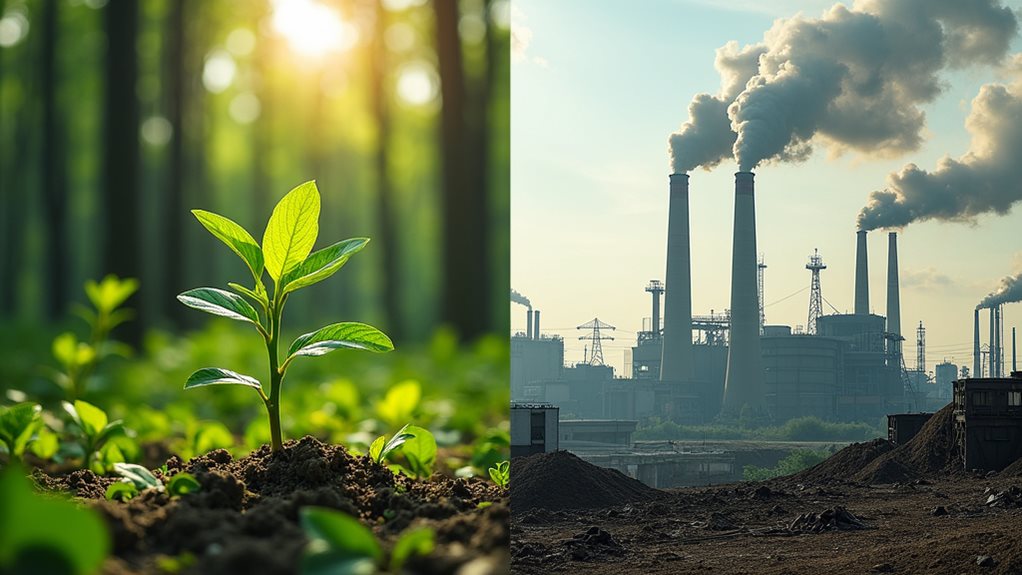

Corporate green initiatives often sound impressive, but many, like tree-planting pledges, can be a smokescreen for ongoing pollution. While they offer a charming image of sustainability, these initiatives may distract from the real task at hand: reducing emissions where they start. Think of them as fancy window dressing on a drafty old house. To truly fight climate change, companies need to focus on real changes, not just leafy photo ops. There’s much more to uncover about this growing trend.
The Illusion of Corporate Green Initiatives
What if the trees we plant are merely a smokescreen for our carbon-heavy habits?
In the world of corporate sustainability, tree planting has become a popular trend, akin to wearing a trendy eco-friendly shirt while driving a gas-guzzling SUV.
Many companies tout their tree-planting initiatives as a badge of honor, yet these green gestures often mask ongoing carbon-intensive operations.
The reality is that one in four climate-related risks globally is linked to greenwashing—an alarming statistic that suggests many businesses are more about image than action.
One in four climate risks is tied to greenwashing, revealing a troubling focus on image over genuine action.
While 68% of U.S. corporate leaders confess to engaging in greenwashing, the banking and financial sectors saw a staggering 70% rise in these misleading practices over just a year. Recent cases of companies like Innocent Drinks and Keurig highlight the prevalence of misleading claims in their marketing strategies.
This means that while companies happily announce their commitment to planting trees, they may very well be emitting more greenhouse gases than ever.
Under the new CSRD requirements, companies are facing heightened scrutiny and must provide verifiable data to support their environmental claims.
Unfortunately, these tree pledges often lack transparency and fail to address the time lag between planting a sapling and its eventual capacity to soak up carbon.
Moreover, many organizations inflate the carbon sequestration potential of their tree-planting projects, akin to claiming that a single cupcake can sustain a marathon runner.
The result? A diversion from genuine operational changes that could yield real emission reductions—like shifting to renewable energy or addressing supply chain emissions, which typically account for most of a corporate carbon footprint.
As consumer skepticism grows, fueled by increased media coverage of greenwashing, companies face mounting pressure to back up their environmental claims.
Governments are stepping in, enforcing stricter regulations and requiring scientific evidence for sustainability assertions.
The EU’s Green Claims Directive is a prime example, demanding accountability from companies that wish to flaunt their green credentials.
In the end, while planting trees can be a step in the right direction, it should not be the sole strategy for combating climate change.
Authentic action requires a serious commitment to reducing emissions at the source—not just a charming photo op in a forest.