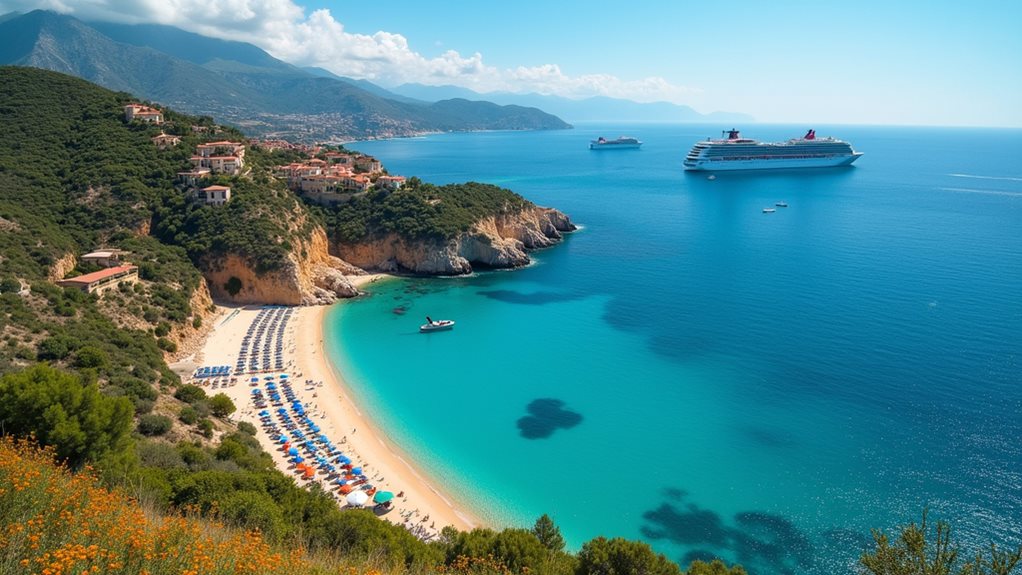

Mallorca is in a tug-of-war between its booming tourism and the need for sustainability. With 22 million visitors flooding in, it’s like trying to fit a beach ball in a backpack. The island’s economy thrives on tourism, but locals are feeling the pinch from rising costs and overcrowding. Responsible tourism could be the lifebuoy needed to save its charm. But will it be enough, or just a temporary fix? There’s more to the story unfolding on the horizon.
Balancing Tourism and Sustainability in Mallorca
As tourists flock to Mallorca like seagulls to a beach picnic, the island finds itself grappling with the delicate balance of reaping economic rewards while maintaining a sustainable environment.
With tourism accounting for an astonishing 45% of its GDP and supporting around 200,000 jobs, it’s no wonder the local economy feels like a cash register on Black Friday. Yet, this financial boon comes with strings attached, as the island faces challenges like overcrowding and environmental strain.
In 2023, Mallorca welcomed a staggering 22 million passengers, including 14.4 million tourists, generating €17.22 billion. Curiously, the shift towards luxury tourism has led to American visitors splurging almost twice as much as their British and German counterparts, making wallets heavier but further stressing local resources. In fact, the growth of international air passengers by 12% in 2024 indicates a continued influx of visitors. Recent data shows that 17.2 million arrivals were recorded by October 2023, highlighting the ongoing popularity of the island.
With over 2.5 million cruise passengers descending upon its shores, the island’s freshwater reserves are feeling the pinch—each ship guzzles an average of 628 cubic meters of water. Picture a giant sponge that’s soaking up more than it can handle.
With 2.5 million cruise passengers, Mallorca’s freshwater reserves are stretched thin, like a sponge overwhelmed by too much water.
But the economic windfall has a dark side. Residents, feeling the squeeze of rising living costs and housing shortages, are increasingly vocal. A 2024 survey revealed that nearly everyone believes tourism is driving up expenses. Implementing blue economy principles could help Mallorca balance tourism’s economic benefits while preserving its coastal ecosystems.
It’s like living in a bustling café where you can’t find a seat, and the prices keep climbing. The locals are starting to wonder if they should hang a “No Vacancy” sign for tourists.
Governmental efforts to manage this influx include the Strategic Tourism Plan and a Sustainable Tourism Tax, which aim to promote off-season activities and fund environmental restoration.
However, critics argue these measures are like putting a Band-Aid on a leaky dam. As the island endeavors to balance its economic lifeblood with the need for sustainability, the question remains: can responsible tourism help preserve Mallorca’s charm amid rising crowds?
Only time will tell, but the stakes are higher than a beach umbrella in July.