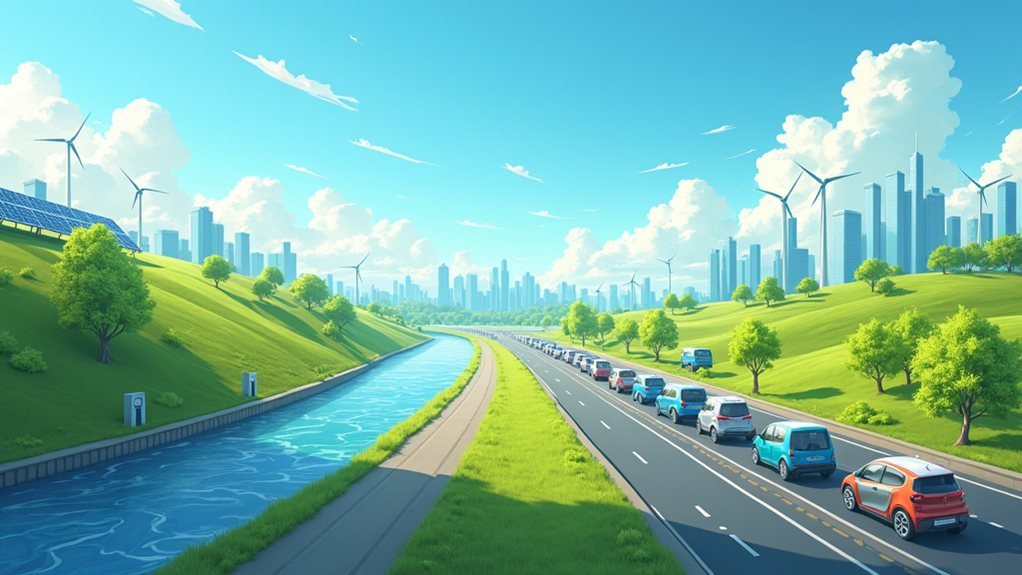

As US states gear up for 2026, they’re stirring the pot with exciting climate strategies. California is sweetening the deal with electric vehicle incentives, while New Jersey is shining a spotlight on community solar. But wait, there’s more! States are tackling grid reliability challenges and enhancing transportation policies focused on those zippy EVs. It’s like a climate puzzle, with pieces moving towards a greener future. Curious about how it all fits together? Stick around for more insights!
Quick Overview
- States are implementing innovative electric vehicle incentives, with California’s $200 million program as a leading example for increased adoption by 2026.
- New Jersey’s community solar initiative aims for a capacity of 3,000 MW, promoting renewable energy access for more residents and businesses.
- The growing demand for electricity, particularly from data centers, stresses the need for advanced grid technologies to ensure reliability amid resource shortages.
- Collaborative state efforts are vital for comprehensive decarbonization, as they pursue coal-to-nuclear conversions and robust EV charging infrastructure.
- Policies are evolving to support renewable energy integration, addressing intermittent supply challenges and emphasizing research and educational initiatives.
Promising State-Level Climate Strategies for 2026
As the clock ticks toward 2026, states across America are gearing up to reveal a trove of innovative climate strategies, proving that with a little creativity and courage, they can take bold steps toward a greener future.
From California’s $200 million electric vehicle incentive program to New Jersey’s ambitious 3,000 MW community solar initiative, states are raising the bar.
Bipartisan support is gaining momentum, fostering pro-renewable policies across territories.
Meanwhile, streamlined permitting processes in places like Maryland promise to supercharge solar projects—almost like giving them a caffeine shot!
These efforts illustrate ambition; a united front against federal rollbacks is brewing.
States are increasingly conducting materiality assessments to identify which environmental and social issues should be prioritized in their climate action plans.
Tackling Grid Reliability Challenges Amid Load Growth
Grid reliability challenges are shaping up to be a hot topic as states navigate the delicate balance between growing demand and aging infrastructure. Over the next decade, demand from data centers and artificial intelligence is set to outpace resource availability, pushing the electric grid to the edge.
More than half of U.S. regions may experience resource shortages, creating a perfect storm for families and businesses facing blackout risks. Meanwhile, interconnection bottlenecks and an increasing reliance on renewable energy complicate matters further.
It’s a race against time, and states must innovate quickly to prevent their power systems from short-circuiting under pressure. Implementing advanced electrical grid technologies will be essential to managing intermittent renewable sources while maintaining system stability and meeting surging electricity demands.
How Are Electric Vehicles Shaping Transportation Policies?
The landscape of transportation is evolving rapidly, and electric vehicles (EVs) are taking center stage, much like a star performer stealing the show.
With federal policies pushing for domestic manufacturing and states scrambling to craft their own incentives, the debate is heating up.
While Democratic-led states are expanding infrastructure and rebates, Republican-led counterparts are ensuring that traditional gas guzzlers remain a choice.
Innovative road funding ideas are emerging, such as mileage fees for EVs.
As states pursue comprehensive decarbonization strategies, some are exploring coal-to-nuclear conversion projects to provide reliable clean energy for growing EV charging infrastructure.
Electric vehicles are transforming not just what we drive, but how states approach transportation, fueling progress in charging networks and ensuring road fairness for all users.