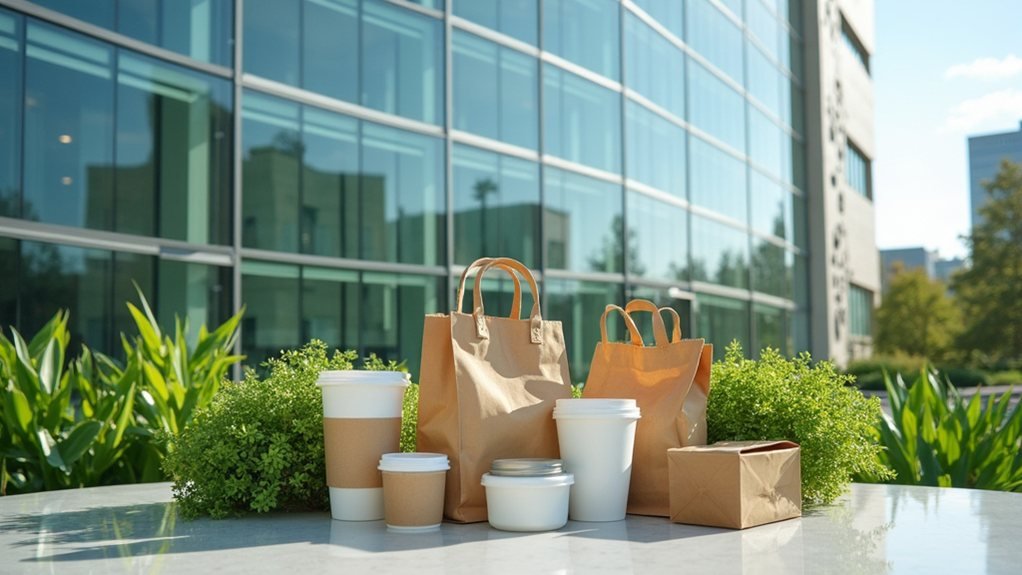

The U.S. Federal Building will enforce a ban on single-use plastics starting in 2026, joining the battle against plastic pollution. This initiative is part of a broader strategy aimed at phasing out items like plastic straws, bags, and food containers. The goal? To swap these plastics for sustainable alternatives. Think beeswax wraps and bamboo utensils—way cooler than your old plastic forks! Stay tuned, because there’s a lot more shaping up in this eco-friendly journey.
Quick Overview
- The federal government plans to phase out single-use plastics in federal buildings by 2035, with specific bans on certain products by 2026.
- Single-use plastic bags will face restrictions under the phase-out initiative, aligning with California’s SB 1053 legislation.
- Polystyrene foam will be banned in federal facilities as part of the initiative to reduce plastic pollution.
- The initiative emphasizes environmental justice and partnerships with Tribal Nations to address plastic pollution equitably.
- Sustainable alternatives, such as compostable bags and reusable containers, are promoted to replace single-use plastics in federal buildings.
Overview of the Federal Phase-Out of Single-Use Plastics
As the world increasingly grapples with the plastic pollution crisis, the U.S. federal government is gearing up for a monumental shift in its purchasing practices by phasing out single-use plastics by 2035.
This ambitious initiative, spearheaded by the Biden-Harris Administration, aims to transform how federal agencies procure materials. Over the next several years, departments will replace single-use plastics with sustainable alternatives, enhancing environmental protection and compliance standards. The strategy emphasizes the federal government’s role in addressing plastic pollution effectively. Additionally, this initiative aligns with upcoming state regulations, such as California’s SB 1053, which will prohibit plastic bags at grocery store checkouts starting in 2026. Individuals can support these efforts through conscious consumption practices, making environmentally responsible choices in their daily lives.
Think of it as a collective New Year’s resolution for the government—an eco-friendly makeover that requires coordination among countless agencies and suppliers, all while balancing the needs of the defense industrial base.
Products Targeted for Phase-Out Under the New Strategy
A sweeping transformation is on the horizon as the U.S. federal government gears up to tackle its single-use plastic problem.
Targeted for phase-out are plastic and polystyrene food containers, straws, and beverage cups by 2027. Cutlery and stirrers are also on the chopping block, with a clear aim to reduce pollution on public lands. Additionally, single-use plastic bags and beverage bottles will face restrictions, while polystyrene foam finds itself banned in federal facilities. This ambitious strategy is like a well-planned diet for the planet, aiming to shed harmful waste and foster a cleaner, greener future for all. These measures address the growing crisis of plastic pollution that threatens marine ecosystems and wildlife globally. The strategy also emphasizes environmental justice and partnerships with Tribal Nations to ensure equitable solutions in combating plastic pollution. The initiative aligns with the goals of the Farewell to Foam Act, which seeks to ban harmful polystyrene foam in federal facilities, reducing non-recyclable waste.
Sustainable Alternatives to Single-Use Plastics
While the quest for sustainable alternatives to single-use plastics may seem intimidating, the landscape is brimming with innovative options that are ready to take center stage.
Beeswax wraps can easily replace cling film, while bamboo utensils offer a sturdy, eco-friendly dining experience.
Compostable bottles and bags made from bioplastics are gaining ground, transforming waste into resources.
Reusable cloth bags and refillable containers serve as everyday heroes against plastic pollution.
With policies promoting circular economy practices, the future looks promising.
Many businesses are embracing biodegradable packaging solutions that break down naturally without harming the environment.
It’s like trading in a clunky old flip phone for a sleek smartphone—better for you and the planet!