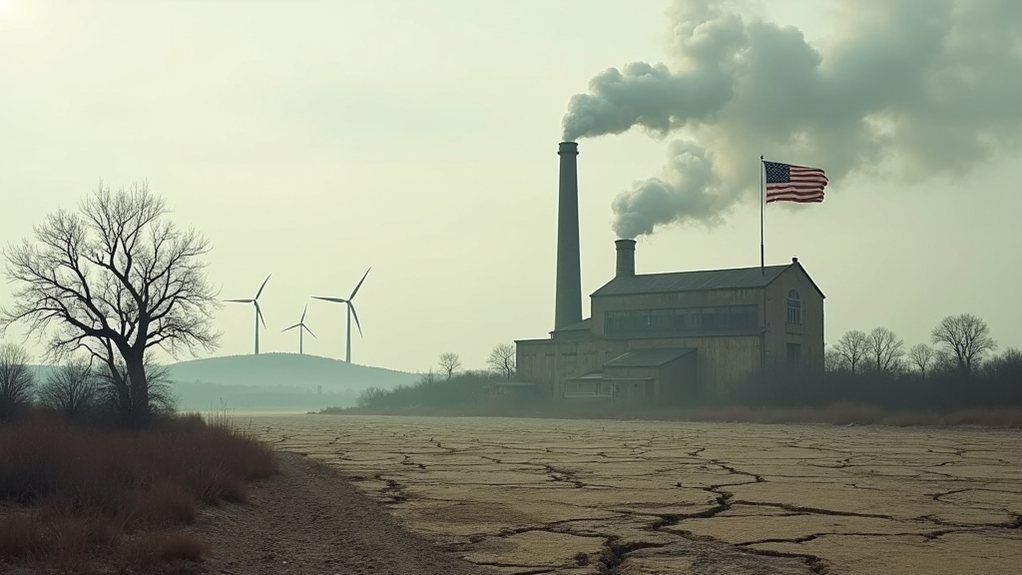

The United States’ exit from the Paris Climate Agreement represents a seismic shift in global climate policy, prioritizing economic interests over international responsibility. Critics argue this move could lead to job losses and a decline in GDP, complicating global emissions tracking. Meanwhile, developing nations may face challenges in achieving climate goals without U.S. support. Other countries, however, are stepping up, eyeing greener commitments. So, what might this mean for our planet’s future? There’s more to unravel!
Quick Overview
- The US withdrawal from the Paris Agreement was driven by a focus on economic interests and a desire to reclaim national sovereignty.
- Critics argued that the agreement placed undue burdens on American workers and taxpayers, potentially leading to job losses.
- The exit complicates global emissions tracking and may hinder developing countries’ climate goals due to reduced US funding.
- Following the withdrawal, other nations are expected to strengthen their climate commitments independently and focus on equitable transitions.
- The US departure raises concerns about the effectiveness of future international climate collaborations and funding for climate initiatives.
Key Reasons Behind the US Withdrawal From the Paris Agreement
When the United States decided to bid adieu to the Paris Climate Agreement, it wasn’t just a casual wave goodbye; it was a strategic maneuver laden with a buffet of reasons that catered to the nation’s economic appetites and sovereignty cravings.
Critics argued the agreement imposed an unfair burden on American workers and taxpayers, jeopardizing hundreds of thousands of jobs and trillions in GDP. The US withdrawal also sought to reclaim its sovereignty by prioritizing domestic issues over international commitments, viewing the Paris Agreement as a one-sided deal that stifled energy competitiveness. This move aimed to boost economic growth without the strings of costly globalist agendas, as compliance with the agreement would result in loss of jobs and GDP. The decision diminished emphasis on climate mitigation measures in favor of short-term economic priorities.
How Will the US Withdrawal Affect Global Climate Commitments?
As the United States steps back from the Paris Climate Agreement, the ramifications ripple across global climate commitments like a stone tossed into a serene pond.
The withdrawal complicates global emissions inventories, leaving gaps that hinder accurate greenhouse gas tracking. Without US funding, developing countries may struggle to meet their climate goals, akin to trying to bake a cake without enough flour. This exit will likely reduce financial resources for climate science and policy, further exacerbating these challenges. Moreover, the U.S. omission from future IPCC reports could significantly impact the global climate strategy by limiting the effectiveness of international collaboration.
Additionally, uncertainty in carbon markets may raise prices for others while allowing the US more emission space. This exit might delay vital reductions in emissions, casting a cloud of doubt over the world’s ability to meet Paris targets. The move also weakens collective commitments seen at recent climate forums, including outcomes tied to COP29 commitments.
Global Reactions and Future Climate Actions
How might the global community respond to the United States’ withdrawal from the Paris Climate Agreement?
Reactions vary, with the UN reaffirming its commitment to the agreement and expressing concern over the potential global impact. Meanwhile, groups like the BlueGreen Alliance lament the unilateral retreat, fearing harm to workers and environmental progress. Surprisingly, other nations have not followed the US lead, with countries like India and China pushing forward on coal phase-out initiatives without American involvement. As the US charts a complicated path for future climate policy, the world watches, wondering how this will reshape international climate cooperation. The UN has emphasized the importance of collective action to achieve climate goals despite the U.S. departure. This situation reflects denial of widely accepted climate science that has characterized the Trump administration’s approach to environmental policy. Advocates call for creating equitable transitions that protect workers and vulnerable communities as part of a sustainable response.