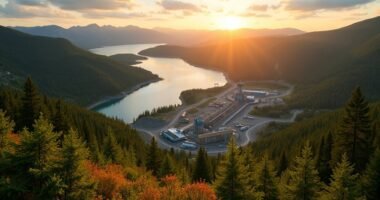
The UK mining blueprint is transforming quarries into vibrant biodiversity havens, showcasing how former mining scars can evolve into flourishing ecosystems. By embracing passive restoration, these areas foster wildlife and enhance local habitats without breaking the bank. Community involvement plays an essential role, empowering locals to rehabilitate land through practices like reforestation and crop cultivation. It’s like turning a barren wasteland into a thriving garden party where everyone’s invited. Curious how this all happens? There’s more to uncover!
Quick Overview
- Passive restoration in quarries allows ecosystems to recover naturally, enhancing biodiversity with minimal human intervention.
- Site-specific assessments aid in effective monitoring, ensuring targeted restoration and conservation efforts in mining areas.
- Community involvement is crucial, empowering locals to drive rehabilitation initiatives and align efforts with their aspirations.
- Transforming post-mining sites into vibrant habitats complements protected areas, boosting regional biodiversity and ecosystem health.
- Active engagement and creative strategies can turn barren landscapes into productive agricultural hubs, promoting sustainable practices in the mining sector.
How to Transform Mining Quarries Into Biodiversity Sanctuaries?
Transforming mining quarries into biodiversity sanctuaries sounds like the plot of a feel-good movie, but it’s a reality that’s gaining traction in environmental circles. Through passive restoration, these sites can spontaneously rebound, letting nature work its magic with minimal human intervention. Imagine a place where ecosystems thrive again—no heavy machinery required! Unmanaged ecological pathways allow species to waltz back in, promoting rich biodiversity patterns. This approach not only cuts costs for quarry operators but also creates a vibrant habitat for wildlife, contributing to the goal of restoring 20% of EU land by 2030. Ecosystem rehabilitation focuses on reestablishing the essential ecological functions that support diverse plant and animal communities in these former industrial sites. By fostering partnerships among researchers and communities, we can ensure that these transformations are sustainable and beneficial for all stakeholders involved.
Top Strategies for Boosting Biodiversity in Mining Areas
Mining areas, often seen as barren scars on the landscape, hold untapped potential for biodiversity recovery. By implementing site-specific assessments, mining companies can monitor and restore ecosystems effectively. Avoidance strategies and mitigation hierarchies guarantee that biodiversity loss is minimized from the outset. Additionally, the Good Practice Guidance provides practical reference tools for companies to enhance their biodiversity management strategies.
Active restoration techniques, like introducing target species and enhancing soil conditions, pave the way for thriving habitats. Creating stepping stone networks can connect fragmented landscapes, promoting wildlife movement. Moreover, increased emphasis on biodiversity during mining operations is anticipated post-COP 15, encouraging companies to adopt more sustainable practices. Corporate impact assessment methodologies help identify critical areas requiring preservation before mining activities commence.
When post-mining sites complement protected areas, they can genuinely contribute to regional biodiversity. Ultimately, these strategies transform mining scars into vibrant havens for nature—proof that recovery is possible!
How Communities Can Drive Biodiversity Recovery in Mining Areas?
Communities wield the power to reshape the narrative around biodiversity recovery in mining areas, turning what was once viewed as desolation into vibrant ecosystems.
Through active engagement, residents identify needs and drive land rehabilitation initiatives, like revitalizing mined areas with crops such as maize and cocoa. This participatory approach not only empowers local farmers but also transforms barren landscapes into productive agricultural hubs. Land rehabilitation is viewed as a partnership with local communities, ensuring that efforts align with their aspirations. Moreover, as mining indirectly contributes to deforestation, communities can focus on reforesting efforts to mitigate this impact.
By advocating for biodiversity-inclusive policies and monitoring impacts, communities guarantee their voices are heard. Establishing marine protected areas near coastal mining operations can help preserve ocean ecosystems that may be affected by runoff and sedimentation.
Ultimately, these collaborative efforts can turn mining scars into thriving habitats, proving that with creativity and determination, nature can reclaim its rightful space.