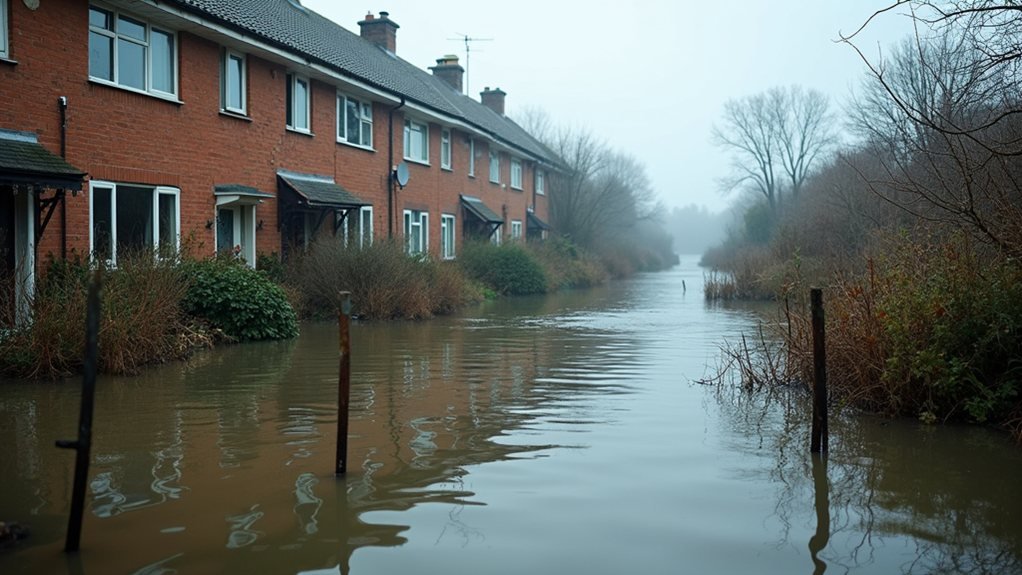

Climate change is turning the tide on flooding risk for UK homes. Projections warn that by 2050, many could face floods every 1-in-2 to 1-in-8 years, pushing some homes toward abandonment. Rising sea levels and heavier rainfall are the culprits, leaving homeowners in a rather soggy predicament. But fear not! There are ways to prepare and protect properties from the deluge. Stick around to learn how to build resilience against nature’s waterworks.
Quick Overview
- Projections indicate that by 2050, one in four homes in the UK could be at risk of flooding due to climate change.
- Rising sea levels and more intense rainfall are increasing the likelihood of flooding, especially in coastal areas.
- The Thames Estuary faces significant flood risks, with 60-70% of these risks attributed to coastal factors.
- Homeowners may need to consider abandoning properties if flooding risks outweigh the feasibility of effective mitigation measures.
- Community collaboration and sustainable water management are crucial in reducing long-term flood impact and preventing property abandonment.
How Climate Change Affects Flood Risks for UK Homes
As climate change continues to reshape the world around us, it’s not just polar bears and icebergs that are feeling the heat; UK homes are also bracing for a wetter future. Projections suggest that by 2050, one in four homes could be at risk of flooding, up from one in five. Thanks to the National Flood Risk Assessment (NaFRA), we have sharper insights into these risks. Factors like rising sea levels and intense rainfall are game-changers, with an alarming 800,000 more properties now vulnerable than previously thought. The new tidal dataset from the Ordnance Survey will be crucial for understanding these risks and managing coastal flooding more effectively. Additionally, the updated national flood risk information includes climate change allowances, which will help in anticipating future flooding scenarios. It’s like Mother Nature is redoing the floor plan, and it’s not looking good for homeowners. Alongside these measures, improving sustainable water management at community and household levels can reduce long-term flood impacts.
The Increasing Risk of Flooding for Homes
Flooding is no longer just a rainy-day concern for UK homeowners; it’s becoming a looming reality that many must face head-on.
With projections estimating that 1-in-2 to 1-in-8 years floods could occur in eastern England by 2050, the risk is escalating rapidly. 69% of GDP is located within 50 km of the coast, highlighting the economic stakes involved in this unfolding crisis.
The Thames Estuary is particularly vulnerable, with 60-70% of flood risk attributed to coastal factors. Recent extreme rainfall has already prompted numerous flood warnings, showcasing the urgency of the situation. As properties face rising risks—especially in coastal regions—homeowners may find themselves in a precarious position, where their homes become liabilities rather than sanctuaries. The 39 consecutive days of rain recorded in the UK underscores the severe and persistent challenges ahead.
Natural solutions such as rain gardens and pervious pavements can help reduce runoff and mitigate urban flooding risks.
What Can Homeowners Do to Prepare for Flood Risks?
While the thought of preparing for potential flooding might seem overwhelming, homeowners can take proactive steps to safeguard their properties against this increasingly common threat. Installing non-return valves can keep unwanted water at bay, while raising electrical sockets guarantees they won’t short-circuit during a deluge. Additionally, homeowners can apply for the Homeowner Flood Protection Grant to help cover the costs of essential flood-proofing measures. Replacing wooden floors with concrete and sealing exterior walls can be as protective as a superhero’s cape. Homeowners can also discuss flood protection methods with neighbors to share the costs of barriers. Furthermore, they can sign up for flood warnings, assemble a flood kit, and even collaborate with neighbors on shared barriers. With a dash of planning and some smart modifications, homes can be ready to weather the storm—literally! Communities can work with local authorities to assess risks and prioritize mitigation projects.