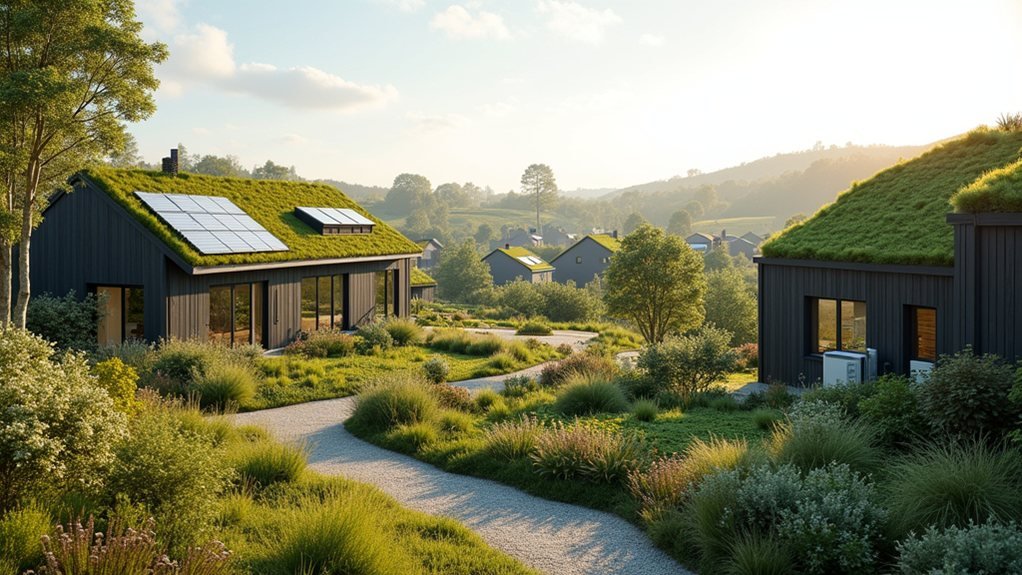

The UK Future Homes Standard, rolling out by December 2026, is a game-changer for new homes. Think less gas and more electric heating, with heat pumps and solar panels dishing out the power. It promises a 75-80% drop in carbon emissions for a greener future. While builders will face higher costs, homeowners could see energy bills shrink by up to £1,000 a year. Stick around to discover how this affects both homeowners and builders!
Quick Overview
- The Future Homes Standard aims to reduce carbon emissions by 75-80% by transitioning to all-electric homes and eliminating gas boilers.
- Full implementation of the new sustainability regulations is targeted by December 2026, with strict adherence required by 2028.
- New homes will be mandated to include clean heating systems, solar panels, and enhanced insulation as part of the sustainability standards.
- Homeowners can expect annual energy bill reductions of £500–£1,000 while enhancing property values through energy-efficient upgrades.
- Builders will face higher upfront costs but will benefit from increased demand for sustainable building practices and improved reputations.
What You Need to Know About the Future Homes Standard
What does the future hold for home construction in the UK? The Future Homes Standard aims to revolutionize building practices, slashing carbon emissions by 75-80% compared to older standards.
Say goodbye to gas boilers; the future is all-electric, with heat pumps taking center stage. Enhanced insulation and triple glazing will keep homes snug as a bug, while solar panels and battery storage become standard, perfect for your energy needs. Implementing green building ratings can further enhance the sustainability credentials of these future-ready homes. This initiative is crucial as buildings account for approximately 40% of the UK’s annual energy use. With new homes required to achieve better fabric efficiency, compliance will ensure that homes are more sustainable than ever.
With strict air quality measures, homes will be healthier too. It’s like upgrading from a clunky flip phone to the latest smartphone—smarter, greener, and ready for a sustainable future!
Timeline for the Future Homes Standard
The timeline for the Future Homes Standard is like a carefully choreographed dance, with each step building toward a greener future for the UK’s housing sector. The government aims for full implementation by December 2026, kicking off a shift period where existing projects can continue under older regulations. In 2025, expect a flurry of activity: consultations, new methodologies, and final regulations. By 2028, it’s game time—builders must adhere strictly to the new standards. With homes becoming gas-free and solar panels becoming the norm, the Future Homes Standard is poised to transform how the UK constructs its living spaces. This transition represents a critical step in the nation’s broader commitment to clean energy adoption and reduction of carbon emissions from residential buildings. This includes making solar PV a requirement for most new homes, ensuring sustainability is at the forefront of development. The transition will also feature a 12-month Transitional Arrangement Period allowing some flexibility for projects initiated before December 2026.
How the Future Homes Standard Affects Homeowners and Builders?
As homeowners and builders gear up for the Future Homes Standard, which promises to reshape the landscape of UK housing, they find themselves steering through a new set of expectations and opportunities.
Homeowners can expect energy bills to drop by £500–£1,000 annually, while builders face higher upfront costs due to tougher regulations. With mandatory clean heating systems and solar panels now standard, compliance will be key. The Warm Homes Plan aims to alleviate high energy bills and improve energy efficiency, aligning with the Future Homes Standard’s objectives. While existing homes aren’t forced to upgrade, those that do could see enhanced property values. Moreover, well-insulated homes are expected to lower energy costs by up to 30% annually, making the investment even more appealing. Much like soil regeneration practices in sustainable agriculture, these building standards aim to preserve resources for future generations.
Essentially, it’s a balancing act of costs today for energy savings tomorrow – a classic case of spending smart for a sustainable future.