
Climate change is shaking up the UK food system like a game of agricultural Jenga. Unpredictable weather zaps harvests, raising food costs and exposing farmers to economic stress. The Sustainable Farming Incentive and Environmental Land Management try to help, but smaller farmers often feel overlooked in this policy puzzle. With mounting reliance on imports from climate-vulnerable countries, food security feels like a ticking time bomb. Let’s explore how these challenges can be tackled effectively in farming and policy.
Quick Overview
- Climate change exacerbates inequality in the UK food system, disproportionately affecting smaller farmers and low-income communities.
- Policies like the Sustainable Farming Incentive aim to support environmentally friendly practices but may limit access for smaller agricultural operations.
- Increased reliance on imports from climate-vulnerable countries heightens food security risks, particularly for marginalized populations.
- Infrastructure resilience investments are essential to mitigate food supply disruptions caused by climate impacts on agriculture.
- Sustainable farming practices and crop diversification can help address food system vulnerabilities and combat rising food costs due to climate change.
How Climate Change Affects UK Food Production
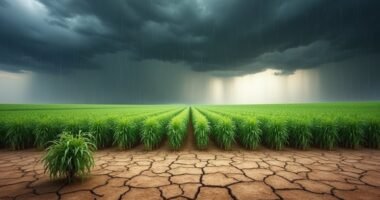
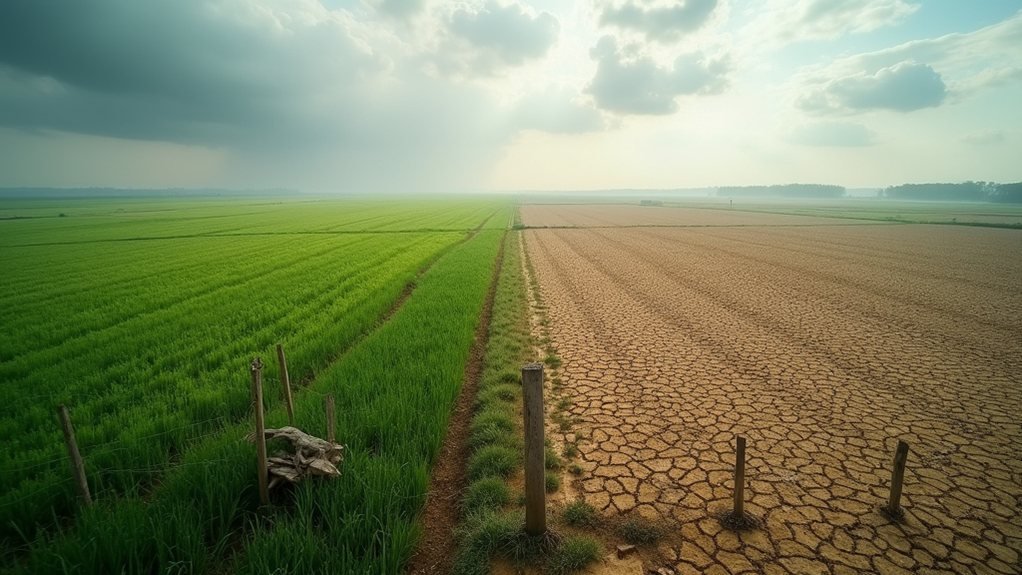
As climate change casts its shadow over the UK’s food production landscape, farmers find themselves maneuvering a maze of unpredictable weather and shifting agricultural challenges. Long-term, soil health preservation through crop rotation and organic amendments can stabilize yields amid climate volatility. Flooding and droughts threaten not just yields but livelihoods, leaving England with its second-worst harvest on record. While warmer winters may extend growing seasons, it’s a double-edged sword. The potential increase in crop variety is overshadowed by impending declines in essentials like vegetables and legumes. Increased flooding adds another layer of complexity to the situation, straining both crop and livestock productivity. Add in the risk of collapsing supply chains from climate-stressed countries, and it’s clear: the UK’s culinary future hangs by a thread, entangled in weather’s cruel game of chance. The reliance on imports from climate-vulnerable nations jeopardizes food security as weather disruptions become more frequent and severe.
Critical Policies for Adaptation in Sustainable Farming Practices
In the domain of sustainable farming, resilience becomes not just a buzzword but the cornerstone for maneuvering the challenges posed by climate change. Policy design should also recognize that soil health underpins long-term productivity and resilience. The Sustainable Farming Incentive (SFI) aims to revamp practices, capping payments and focusing on essential environmental management actions. Emerging strategies like Environmental Land Management (ELM) encourage collaborative local efforts, albeit raising eyebrows about accessibility for smaller farmers. Additionally, integrating innovative techniques, such as gene editing, promises higher crop yields and resilience. This aligns with the necessity for enhanced domestic production to improve food security in the face of climate challenges. The new SFI changes include annual payments capped at £100,000, which could significantly impact funding availability for farmers. It’s a whole-farm approach, combining economic viability with eco-friendliness—essential in the quest for sustainable agriculture that promotes both productivity and planetary health.
Boosting Food System Resilience to Climate Change
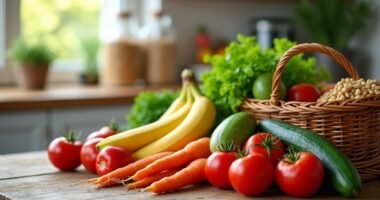
With the UK projected to face an additional £2.6 billion in food costs by 2050, it’s time to buckle up. Increasing dependency on climate-vulnerable imports like tomatoes and bananas only adds to the risk. In this context the assessment stresses that the cost of inaction could amount to £2.6 billion in additional food costs. Climate change is already a risk to the UK food sector as highlighted by the UK Food Security Report 2021.
A robust strategy includes enhancing infrastructure resilience and diversifying domestic crop production. Clever genetic improvements could yield climate-proof varieties, while shifting dietary habits may offset some threats, making food security not just a wish, but a smart investment in our future. Investing in infrastructure resilience now can reduce exposure to climate-linked price shocks and support local livelihoods.