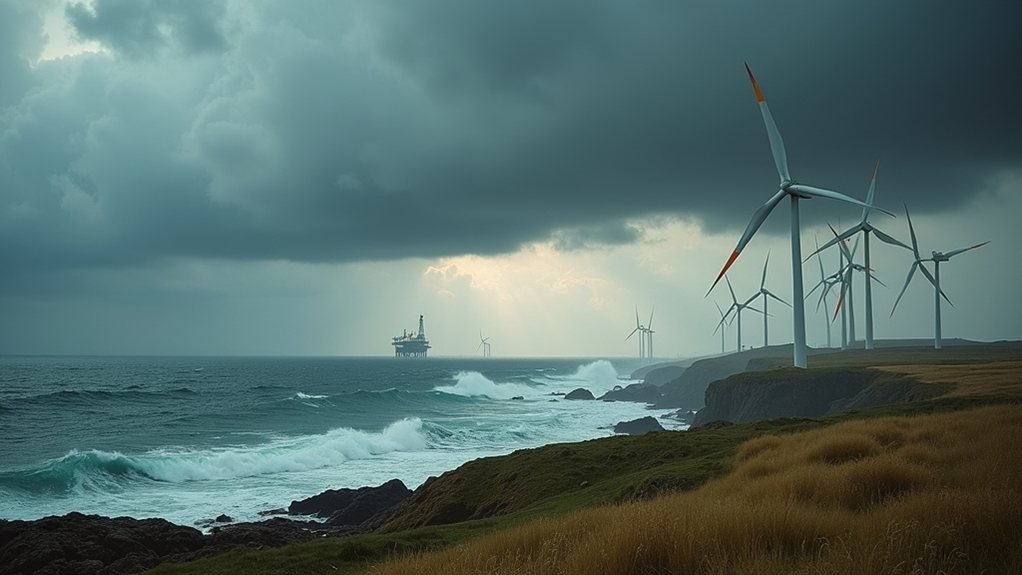

The Iran conflict has sent shockwaves through global energy markets, hitting the UK hard. With oil prices soaring above $100 a barrel and gas prices doubling, households are feeling the pinch. This turmoil threatens to inflate energy bills and squeeze budgets. To combat this, the UK is pushing for a shift towards renewable energy sources and enhancing energy diversity. While the stakes are high, the path to a more secure energy future looks promising—discover the brighter solutions ahead!
Quick Overview
- The Iran conflict has caused oil prices to exceed $100 per barrel, impacting the UK’s energy costs significantly.
- UK gas prices have doubled, leading to increased household energy bills and financial strain on consumers.
- Disruptions in the Strait of Hormuz threaten 20% of global oil supplies, contributing to market volatility.
- There is an urgent need for the UK to transition to renewable energy sources to reduce dependence on fossil fuels.
- The UK aims for 95% of electricity to be low-carbon by 2030, focusing on energy diversification and security initiatives.
What the Iran Conflict Means for UK Energy Prices
How might the conflict in Iran reshape UK energy prices, one wonders? As tensions intensify, oil prices have soared, with Brent crude skyrocketing to over $100 per barrel.
This surge, fueled by disruptions in the Strait of Hormuz—responsible for 20% of global oil supplies—has left analysts predicting inflation to nudge upward by 0.8%.
Meanwhile, gas prices in the UK have doubled, leaving households bracing for substantial bill hikes.
It’s like trying to dodge a fireball in a game of dodgeball; the stakes are high, and the fallout will ripple through wallets, affecting purchasing power and everyday expenses.
This crisis underscores the urgent need for the UK to accelerate its transition to renewable energy sources and implement strategies to cut carbon emissions across all sectors to reduce dependence on volatile fossil fuel markets.
How Supply Disruptions Affect UK Energy Prices
Even as the world spins on its axis, the unpredictable nature of supply disruptions can throw energy markets into a tizzy.
When tensions arise in critical areas like the Strait of Hormuz, every ripple can send gas prices soaring, which, in turn, can hike up UK electricity costs—98% of the time dictated by gas prices.
Tensions in key regions can send gas prices soaring, directly impacting UK electricity costs 98% of the time.
Suddenly, businesses feel the pinch as energy bills spike, and standing charges surge, reminiscent of a surprise bill at an otherwise pleasant dinner.
Weather forecasts and geopolitical dramas dance together, making markets volatile.
Ultimately, the UK’s electricity system remains tightly strapped to gas, for better or worse.
Organizations can conduct materiality assessments to identify which energy security and supply chain risks are most relevant to their operations and sustainability strategy.
Practical Solutions for Strengthening the UK’s Energy Security
The UK’s energy landscape is on the brink of transformation, driven by the pressing need to bolster energy security in a world rife with supply disruptions.
With ambitious goals like 95 percent of electricity being low-carbon by 2030 and the establishment of Great British Nuclear, the country is set to embrace innovative technologies.
Initiatives such as the Floating Offshore Wind Manufacturing Investment Scheme and carbon capture systems promise greener energy solutions.
Meanwhile, modernizing the transmission network will reduce project timelines.
Diversifying the energy mix through renewable energy sources like solar, wind, and hydro can further reduce dependence on volatile international fossil fuel markets.