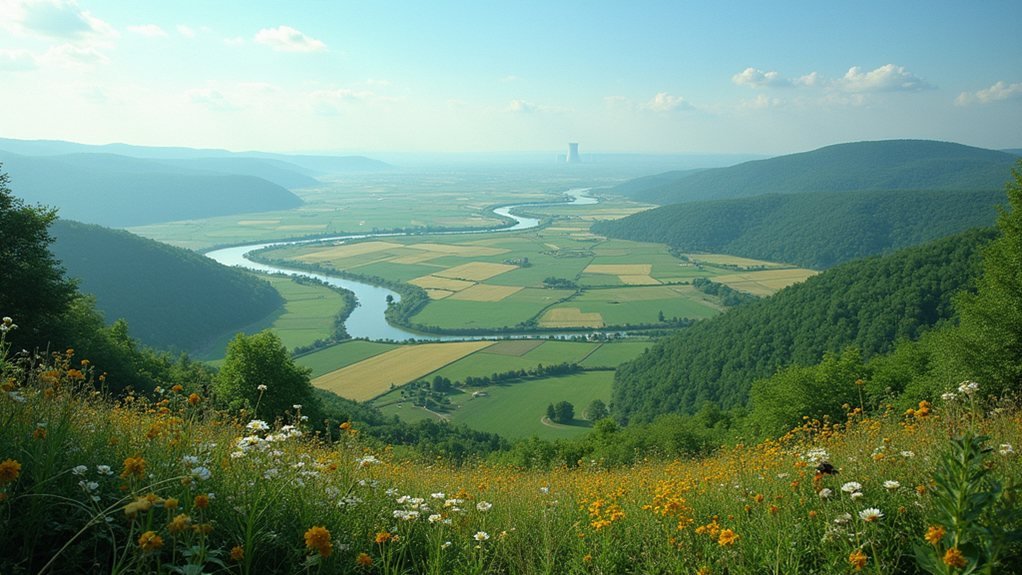

Ecosystem collapse poses serious threats, especially for the UK’s food security and overall national stability. As climate change wreaks havoc on agricultural productivity, food prices skyrocket, hitting low-income families hardest. This isn’t just about hungry bellies; it’s a ticking time bomb for national security. Critical ecosystems need urgent protection; think of them as nature’s safety net. If these ecosystems fail, we all feel the pinch. Curious about the intricate links between biodiversity and security? There’s more to uncover.
Quick Overview
- The UK’s national security framework now considers ecosystem collapse a significant risk, impacting food security and prices.
- MI5 and MI6 recognize geopolitical instability arising from resource competition as a national security threat.
- Climate change contributes to food insecurity by causing yield fluctuations and increasing prices, affecting vulnerable communities severely.
- Protecting critical ecosystems is essential for national security, with ambitious conservation goals set for 2030.
- Healthy biodiversity supports ecosystem services, which are vital for economic resilience and food stability in the UK.
How Ecosystem Collapse Impacts Food Security?
As climate change continues to reshape our world, the impact of ecosystem collapse on food security becomes an increasingly pressing issue. Sustainable practice and soil stewardship are essential to resilience, ensuring long-term productivity even as climates shift, with soil health underpinning robust harvests.
Land degradation and extreme weather events disrupt agricultural productivity, like a bull in a china shop—chaotic and damaging. With climate variability accounting for 30% of global yield fluctuations, farmers face uncertainty similar to flipping a coin for dinner. In fact, 1.4 million people globally are currently facing catastrophic levels of food insecurity, underscoring the dire consequences of a failing ecosystem. Moreover, the degradation of major global ecosystems poses a serious threat to UK food security, making it imperative to prioritize their restoration.
When production dips, food prices can soar, locking low-income families out of essential staples. In short, a failing ecosystem directly translates to dinner table turmoil, where millions face hunger, proving that a healthy environment is integral to a secure food future.
The Implications of Ecosystem Collapse on UK National Security
Ecosystem collapse may sound like a plot twist in a dystopian novel, but for the UK, it’s becoming a very real chapter in the national security narrative.
Ecosystem collapse transforms from fiction to reality, intertwining with the UK’s national security challenges.
This underscores the importance of biodiversity conservation and proactive habitat protection across the UK.
As key ecosystems degrade, water insecurity and food shortages loom large, putting pressure on supply chains and driving up global food prices. This scenario could trigger geopolitical instability as nations scramble for dwindling resources, much like kids fighting over the last slice of pizza. With global biodiversity loss posing a national security risk, the urgency for cohesive strategies intensifies. The report identifies 6 ecosystems of strategic importance that must be protected to maintain national security.
With economic impacts looming, the UK’s prosperity hangs in the balance. If nature suffers, so too does national security—an inconvenient truth that demands urgent attention and concerted action.
How to Protect Critical Ecosystems for National Security
To secure the future of the UK’s national security, proactive measures in protecting vital ecosystems are essential. Protecting keystone species stabilizes food webs and supports resilient economies keystone species. This means expanding protected sites to safeguard 30% of land and ocean by 2030—think of it as nature’s version of a security blanket. Meanwhile, sustainable farming integrates biodiversity into food production, creating a win-win for dinner plates and pollinators alike. Funding is significant; redirecting harmful subsidies could fill the $700 billion gap in conservation. With strong governance and accountability, the UK’s ecosystem protection acts like a fortress, ensuring that both nature and national security can thrive in harmony—without a single drone in sight. Moreover, establishing ambitious recovery targets through the NBSAP will create a robust framework for achieving these ecological goals. Importantly, biodiversity loss must be addressed urgently, as it poses a direct threat to ecosystem services essential for human societies.