
Biodiversity loss might sound like a slow-moving crisis, but it’s like a hidden trapdoor in the UK’s national security landscape. Disrupted ecosystems can lead to water shortages and food insecurity, turning resource competition into potential conflicts faster than you can say “crop failures.” With over 90% of crop varieties disappearing, the stage is set for disaster. The UK needs a game plan for preserving biodiversity, serving up a healthier planet—and while you’re on this journey, there’s so much more to uncover!
Quick Overview
- The UK Climate Security Report highlights biodiversity loss as a silent threat to national security, linking it to MI5 and MI6 concerns.
- Disrupted ecosystems can lead to water insecurity, impacting major rivers and increasing geopolitical tensions.
- The report underscores that food security is at risk due to genetic erosion and reliance on a few crop varieties.
- Protecting biodiversity is essential for sustaining agriculture and mitigating climate-related risks to national stability.
- Investment in ecosystem restoration and sustainable agriculture is crucial for long-term security and resilience against climate change impacts.
How Does Biodiversity Loss Threaten UK National Security?
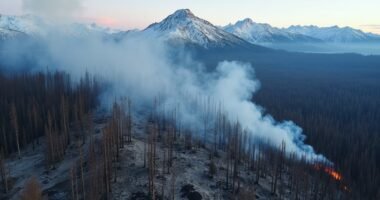
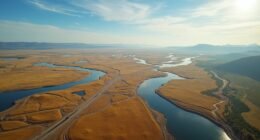
As the world becomes increasingly interconnected, the loss of biodiversity emerges as a silent yet formidable threat to UK national security. Disrupted ecosystems can lead to water insecurity, as the collapse of crucial regions like the Himalayas affects water supplies for major rivers. Meanwhile, the degradation of boreal forests alters precipitation patterns, leaving the UK vulnerable to geopolitical tensions over scarce resources. This situation is exacerbated by the warning that biodiversity loss could lead to cascading risks threatening food security and international stability. Moreover, increased competition for remaining resources may further escalate existing conflicts and initiate new ones. Imagine the scramble for water resembling a high-stakes game of musical chairs, where the music stops and chaos reigns. Ultimately, biodiversity loss isn’t just an environmental issue; it’s a potential catalyst for instability that could ripple across the globe. Protecting habitats and promoting ecosystem restoration are essential strategies to reduce these risks and bolster long-term security.
What Risks Does Biodiversity Loss Pose to Food Security?
Biodiversity loss is not just an environmental issue; it’s a looming threat that casts a shadow over food security, making it a topic worth discussing.
With over 90% of crop varieties vanished in the last century, reliance on just a handful of grains leaves agriculture vulnerable. Imagine a world where a single pest could wipe out our maize—like losing Wi-Fi during an important meeting! This genetic erosion threatens our ability to adapt to climate change and market shifts. As diets homogenize, people face micronutrient deficiencies, proving that variety isn’t just the spice of life; it’s essential for survival. Notably, the strong upward trend in biodiversity loss embodied in global staple food trade highlights the urgent need for action to protect our food systems. The loss of biodiversity threatens the ecosystem services essential for meeting basic food needs, further exacerbating the food security crisis. Preserving ecosystem services such as pollination and soil fertility is critical to sustaining agricultural productivity.
What Actions Can the UK Take to Combat Biodiversity Loss?
While the clock ticks down on Earth’s biodiversity, the UK finds itself at a crucial crossroads, facing the pressing question of how to effectively combat this growing crisis.
By adopting the Kunming-Montreal Global Biodiversity Framework, the UK can commit to protecting 30% of land and ocean by 2030. A coherent national strategy should align with science-based targets to ensure measurable progress and accountability.
Investing in sustainable agriculture and soil health will bolster food production while safeguarding ecosystems. Healthy ecosystems are essential for resilience against the compounded threats posed by climate breakdown and nature loss. Furthermore, the degradation of global ecosystems poses an increased risk to the UK’s food security and economic stability.
Additionally, closing the $700 billion funding gap for biodiversity through green finance can fuel innovation.
It’s like giving nature a financial boost—because who wouldn’t want to invest in a thriving planet?
After all, biodiversity is the ultimate life insurance.