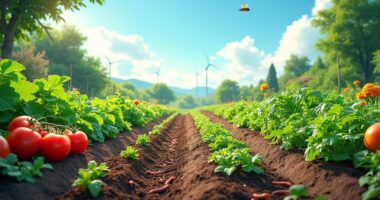
Toronto’s Climate-Smart Agriculture Network is buzzing with enthusiasm as local farmers jump on the low-emission bandwagon. They’re adopting clever practices like conservation tillage and cover cropping, which not only nurture the soil but also slash greenhouse gas emissions. Think of it as turning their farms into eco-friendly superheroes. These strategies also boost farmers’ income and strengthen food security. The exciting part? This is just the tip of the iceberg on climate-smart innovations waiting to be explored.
Quick Overview
- The Climate-Smart Agri-Food Network, based in Toronto, promotes low-emission farming practices among farmers and stakeholders.
- Conservation tillage and cover cropping are popular methods adopted by farmers to enhance soil health and reduce greenhouse gas emissions.
- Bayer’s PRO Carbono initiative is helping increase carbon sequestration in agricultural practices across the network.
- Farmers implementing climate-smart practices can achieve nearly 20% higher annual income per hectare while maintaining low emissions.
- The network’s investment of $30 million aims to support the adoption of innovative, sustainable farming techniques that protect the environment.
Overview of the Climate-Smart Agri-Food Network in Toronto
In the vibrant city of Toronto, the Climate-Smart Agri-Food Network (CSAFN) is like the cool kids’ club for anyone interested in transforming agri-food systems to be more eco-friendly.
Anchored by the Climate-Smart Data Collaboration Centre, this network unites academics, policymakers, and businesses, all focused on low-emission practices. Think of it as a collaborative potluck where everyone brings their best data dishes to share. The network promotes soil health practices that are essential for maintaining long-term agricultural productivity while minimizing environmental degradation. With a treasure trove of training opportunities and resources, CSAFN equips members to make informed decisions on climate-smart innovations. This initiative, which was launched with a $30 million investment, aims to reduce the carbon footprint of Canada’s food production systems. In light of the fact that Canada’s agrifood sector contributes over 136 MT annually, it’s the ultimate recipe for creating a sustainable, resilient agri-food ecosystem that’s ready for the future.
Adoption of Low-Emission Practices by Farmers
Farmers today are increasingly embracing a variety of low-emission practices that not only benefit the environment but also enhance their bottom lines. Techniques like conservation tillage and cover cropping are becoming popular, acting like nature’s own moisturizer for the soil. These methods cut down on greenhouse gases while boosting soil health. Additionally, initiatives like Bayer’s PRO Carbono are helping farmers increase carbon sequestration while maintaining agricultural productivity. The global adoption of these practices could lead to a significant reduction in emissions by millions of tonnes annually. Understanding soil biology is essential for implementing sustainable farming methods that promote long-term fertility. Optimized nitrogen management is like giving plants their daily vitamins, reducing harmful emissions. Improved manure management guarantees that livestock contribute less to the methane party. With practices gaining traction globally, farmers are not just cultivating crops; they’re cultivating a greener future—one low-emission technique at a time.
Economic and Environmental Benefits of Climate-Smart Agriculture
Climate-smart agriculture (CSA) isn’t just a trend; it’s a game-changer for both the economy and the environment.
By adopting CSA practices, farmers can see nearly 20% higher annual income per hectare, improving food security and nutrition. CSA helps smallholder farmers adapt to climate change impacts, creating a more resilient agricultural system. It’s like turning every crop into a VIP guest at a banquet! Without mitigation, emissions from food systems will increase with growing production.
Environmentally, CSA cuts emissions substantially—think of it as giving Mother Nature a much-needed spa day.
With practices like no-till farming and cover crops, soils become carbon sinks, while reducing greenhouse gases. These methods promote sustainable food distribution by reducing the carbon footprint associated with food production from farm to table.
In short, CSA is where smart farming meets a healthier planet, creating a win-win situation for all involved!