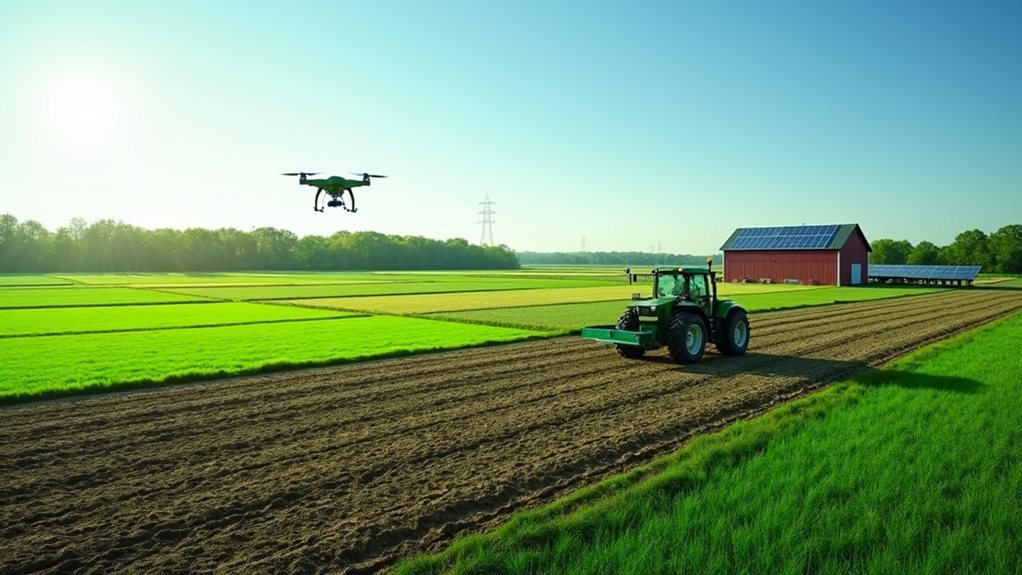

Toronto is leading the charge in precision agriculture, using cutting-edge technology to redefine sustainable farming. Think GPS-guided tractors that plant with the precision of a surgeon; these innovations cut greenhouse gas emissions and improve yields. With drones swooping in to detect crop issues like an airborne detective, farmers can manage resources wisely. The benefits are clear: healthier soil and reduced waste. Curious about how these advancements continue to shape food production? There’s more to explore!
Quick Overview
- Toronto’s precision agriculture integrates GPS-guided tractors, enhancing field efficiency and reducing overlap in planting.
- Sustainable farming technologies, such as variable-rate application, optimize fertilizer use and reduce greenhouse gas emissions.
- Sensor technology in Ontario monitors soil conditions in real-time, improving water management and crop yield.
- Minimal tillage practices preserve soil health and promote farmland as effective carbon sinks.
- Adoption challenges include high costs and data privacy concerns, but emerging training programs support farmers in utilizing innovative technologies.
The Role of Precision Agriculture in Reducing Canada’s GHG Emissions
In the grand arena of agriculture, precision farming is emerging as a superhero, caped in data and armed with technology, ready to tackle the formidable foe of greenhouse gas emissions in Canada.
Precision farming is the hero agriculture needs, wielding data and technology to combat greenhouse gas emissions in Canada.
By optimizing fertilizer use, farmers can slash nitrous oxide emissions, a major culprit of greenhouse gases.
With techniques like variable-rate application, they can apply just the right amount—think of it as a perfectly tailored suit for crops.
Advanced sensor technology allows real-time monitoring of soil conditions, enabling farmers to make data-driven decisions that maximize efficiency while minimizing environmental impact.
Plus, soil management practices help farmland become a carbon sink, reducing emissions while enhancing productivity. Sustainable BMPs also play a crucial role in addressing deteriorating soil health, ensuring that precision agriculture isn’t merely a trend; it’s a game-changer in the fight against climate change. Moreover, the Paris Agreement stresses increasing adaptation to climate impacts without threatening food production.
Innovative Technologies Transforming Farming Practices in Ontario
Farmers in Ontario are experiencing a technological renaissance, and it’s not just about upgrading their coffee machines for the early morning hustle.
GPS-guided tractors are revolutionizing the fields, ensuring no overlap in planting—think of it as a well-choreographed dance of machinery.
With variable rate technology, fertilizers are applied smartly, boosting yields by up to 15%. Additionally, corn yields are expected to rebound in 2026, which highlights the importance of adapting technology for future growth.
Drones, those high-tech birds, fly over crops, scouting for health issues faster than a farmer’s trusty dog.
These practices prioritize soil health through minimal tillage techniques that preserve essential microorganisms and reduce erosion over time.
Meanwhile, soil moisture sensors keep irrigation in check, saving water like a pro while protecting precious lakes. ARIO Commitments focus on aligning research with the latest innovative technologies, ensuring Ontario’s farmers are embracing innovation, making agriculture smarter and more sustainable.
Challenges and Opportunities in Adopting Precision Agriculture Solutions
While the allure of precision agriculture solutions dazzles many, the road to adoption is often paved with challenges that require careful navigation.
High costs for fancy tech—think GPS-guided tractors and drones—can leave small farms feeling as if they’re stuck in a game of Monopoly without enough cash. The precise application of inputs like water and fertilizer can significantly reduce waste, yet it often requires significant initial investment. With precision agriculture technologies becoming more accessible, farmers may find innovative ways to integrate these tools into their operations without breaking the bank.
Add to that the maze of data privacy concerns and a shortage of skilled workers, and it’s easy to see why some farmers hesitate. Yet, with emerging training programs and supportive policies, the opportunity for sustainable farming practices beckons. Environmental tracking systems offer vital data about soil conditions and pollution levels, helping farmers make more informed decisions about their land.
After all, who wouldn’t want to farm smarter, not harder?