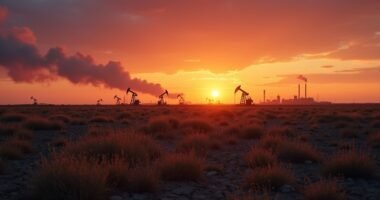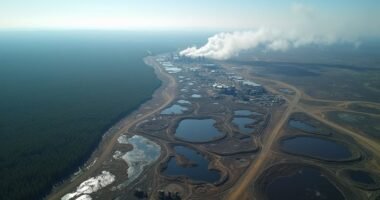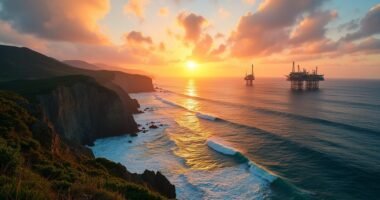

The Tony Blair Institute emphasizes the need for a policy shift regarding North Sea oil and gas drilling by 2026. As production plummets, with a staggering 45% decrease projected by 2024, opportunities for economic revival through exploration licenses become ever more enticing. However, the balance between energy needs and environmental risks is delicate. It’s like walking a tightrope over a shark tank – thrilling yet dangerous! Curious about how these factors interact? Stay tuned for more insights.
Quick Overview
- The Tony Blair Institute suggests reevaluating North Sea drilling policies to balance economic recovery with environmental sustainability by 2026.
- Increased exploration could mitigate the projected 94% import dependency of the UK by 2050, enhancing energy security.
- The Institute emphasizes the need for environmental assessments to safeguard marine biodiversity amid expanding drilling activities.
- Shifts in regulatory priorities towards renewable energy pose challenges for fossil fuel investment and long-term planning in the North Sea.
- The ongoing decline in production highlights the urgency for a comprehensive energy strategy that includes reviving exploration licenses responsibly.
Understanding the Decline in North Sea Oil and Gas
Understanding the decline in North Sea oil and gas production is like piecing together a complex puzzle where the pieces are all shifting underfoot. Transitioning energy systems through carbon emission reduction strategies is crucial to address this decline sustainably.
Production has plummeted, dropping 45% from 2015 to 2024. By 2035, the UK Continental Shelf (UKCS) is set to see a staggering 78% reduction, as aging infrastructure and geological challenges take their toll. The once-proud reserves are dwindling, with costly enhancements needed for mature fields. Furthermore, import dependency is expected to rise to 94% by 2050 as priorities shift toward renewable energy. As UK North Sea oil production has declined sharply, the fiscal instability surrounding investment decisions is accelerating this trend.
And let’s not forget regulatory pressures tightening the purse strings, as priorities shift toward renewable energy. It seems the North Sea’s golden era might be ebbing away, taking energy self-sufficiency with it.
What Are the Economic Effects of Reviving Exploration Licenses?
What if reviving exploration licenses could be the lifeline the North Sea oil and gas sector has desperately been waiting for?
As job numbers plummet—a staggering one-third decline in the past decade—58% of Scottish voters advocate for fuller development to secure employment. The recent licensing ban has prompted a renewed debate about the necessity of exploration to support the economy. Evaluating the environmental impact across the product lifecycle can help balance economic benefits with sustainability. With billions of recoverable barrels at stake, many view the sector’s economic impact positively. Reviving exploration could attract essential investment, countering the Energy Profits Levy’s dampening effect. Furthermore, domestic production would help alleviate concerns about higher lifecycle emissions from imports and enhance energy security.
Imagine stimulating growth while easing reliance on pricey imports! It’s like hunting for treasure in your backyard; without action, that gold might just fade into memory.
How Do We Balance Energy Needs and Environmental Risks?
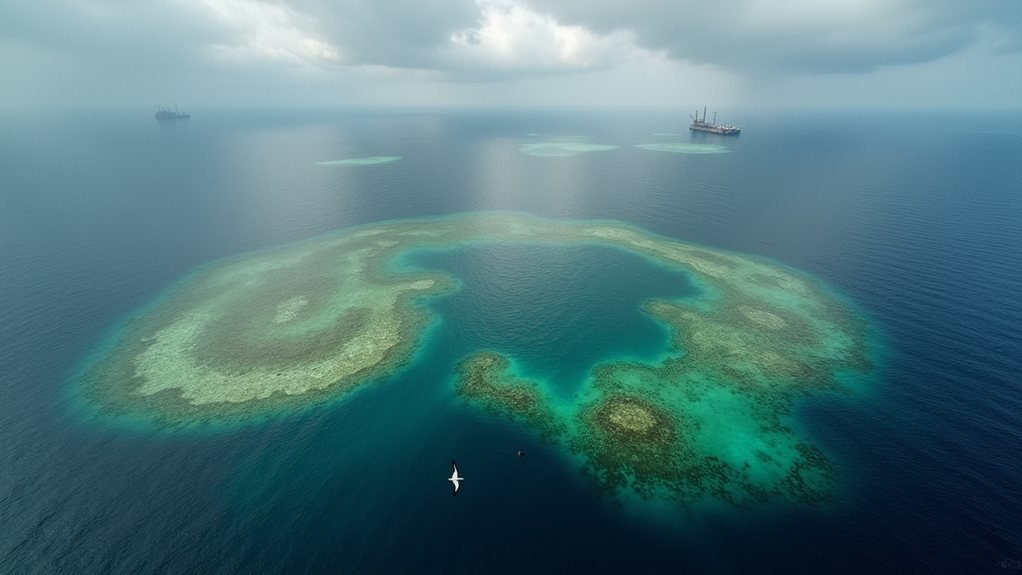
Balancing energy needs with environmental risks feels like trying to walk a tightrope stretched over a shark-infested pool—daring, precarious, and just a little thrilling. As the UK aims for energy security with North Sea oil production projected at 5.3 million barrels daily by 2026, environmental concerns loom large. Nearly half of the UK’s protected marine areas clash with drilling licenses, risking wildlife such as puffins and porpoises. Moreover, effective marine protection strategies are essential to mitigate these conflicts and preserve ocean biodiversity. Furthermore, UK oil and gas licences overlap with around 13,500 square kilometres of protected marine space, raising questions about the sustainability of current policies. Simultaneously, climate experts warn that expanding fossil fuel production is a gamble against the 1.5°C warming limit. Consequently, the challenge lies in nurturing energy needs without sacrificing the planet’s pulse—an intricate dance indeed. Approving Rosebank oil field could lead to CO2 emissions that rival those of 73 low-emitting countries.