
Sustainability is making waves as renewable energy capacity skyrockets. In 2024 alone, we saw a whopping 725 GW added, with solar power gleefully leading the charge—talk about shining bright! Electric vehicle sales surged 25%, while smart tech is giving sports stadiums a green makeover. Even islands, grappling with high fossil fuel reliance, are inventively pursuing marine energy. It’s an electrifying time, and there’s plenty more for those curious about how these trends are transforming our world!
Quick Overview
- Global renewable energy capacity increased by 725 GW in 2024, with solar power leading the expansion.
- Electric vehicle sales surged by 25%, surpassing 16 million units in 2024, reflecting a shift toward electric mobility.
- Over 300 new sports stadiums are set for sustainable renovation by 2025, utilizing timber and recycled materials to minimize carbon footprints.
- Community microgrids, like those in Puerto Rico, demonstrate innovative solutions for energy reliability in island regions heavily reliant on fossil fuels.
- Battery storage capacity nearly doubled in 2024 to support renewable energy availability beyond peak usage times.
Renewable Energy Milestones
As the world races towards a greener future, it’s hard not to feel a thrill at the monumental strides being made in renewable energy.
In 2024 alone, global renewable capacity surged by approximately 725 GW, with solar power leading the charge—think of it as the rock star of the energy concert. Wind and solar combined produced 17% of U.S. electricity in 2024. Solar module prices plummeted to about $0.09 per watt, making it a steal! Additionally, EV sales grew by 25 percent, totaling more than 16 million vehicles sold, showcasing the rapid shift towards electric mobility. Battery storage nearly doubled, ensuring that sunny days can power our nights. The transition to sustainable technologies faces policy challenges that require coordinated global action to overcome carbon dependency.
In 2024, renewable energy soared by 725 GW, with solar power shining brightest in the green revolution!
With these advancements, projections suggest that by 2030, we could add around 1,000 GW of low-emission power annually—now that’s a bright future!
Island and Coastal Energy Projects
How can island and coastal communities navigate the turbulent waters of energy independence? By embracing innovative solutions!
With over 80% of their energy often reliant on imported fossil fuels, many small islands face sky-high electricity costs and unstable grids. Rural towns like Deer Isle in Maine experience frequent power outages that threaten public safety and local economies. Electricity costs average 10 times higher than on mainland areas, creating significant economic burdens for these communities.
Enter community microgrids, like the one in Adjuntas, Puerto Rico, which kept the lights on during Hurricane Fiona.
Meanwhile, marine renewables like wave and tidal energy can offer an ocean of possibilities—literally!
These coastal communities could significantly reduce their carbon footprint by implementing solar power systems that harness abundant sunlight resources while decreasing dependence on imported fuels.
Sports and Commercial Infrastructure Sustainability
What if the arenas where fans cheer and athletes compete could also champion sustainability?
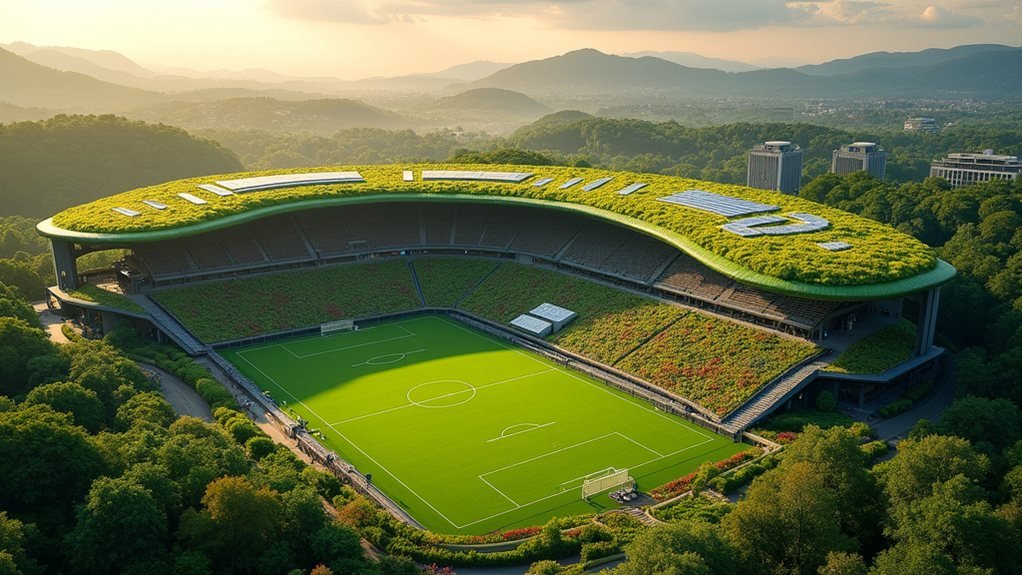
With over 300 sports stadiums set for renovation or construction by 2025, sustainability is becoming the name of the game.
Timber and recycled materials are stepping up to reduce carbon footprints, while venues like Eco Park aim to be the “world’s greenest” stadium. Green sports infrastructure initiatives, like those seen in the Paris 2024 Olympics, demonstrate how existing structures can be repurposed for eco-friendly events.
Energy efficiency reigns supreme, with Climate Pledge Arena leading as a net-zero certified venue, having achieved world’s first Zero Carbon-certified arena status through innovative practices.
Modular construction techniques using cross-laminated timber significantly reduce both construction time and carbon emissions while offering excellent structural performance for sports venues.
Smart technology, from AI HVAC systems to real-time energy dashboards, optimizes operations.
Water-saving turf systems and waste management strategies are the icing on this eco-friendly cake, making sports greener than ever.