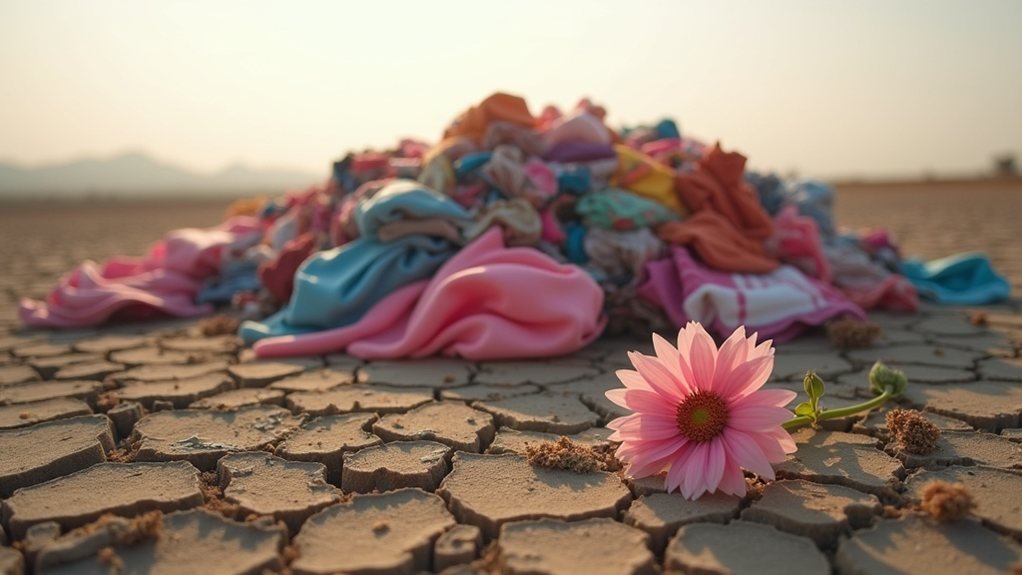

Shein’s shoppers contribute to a fast fashion conundrum, blissfully unaware of the environmental disaster brewing beneath their £20/month shopping habits. With an eye-watering 26.2 million metric tons of CO₂ emissions in 2024, the brand tops the pollution charts. Fast fashion’s allure lies in affordability and fleeting trends, often leading to impulse buys. Yet, as consumers become more eco-conscious, the winds of change are blowing through the industry. There’s much more to this shifting tide that’s worth exploring.
Quick Overview
- Shein’s rapid growth in fast fashion has led to a significant increase in emissions, highlighting environmental neglect among its shoppers.
- Consumers are drawn to Shein’s low prices, often spending around £20 a month, despite the environmental consequences.
- The fast fashion cycle fosters a culture of disposability, where consumers prioritize affordability over sustainability and quality.
- Increasing awareness of ESG issues is prompting a shift towards sustainable practices in the fashion industry, affecting future consumer behavior.
- Regulatory pressures and consumer demand for transparency are reshaping brand strategies, emphasizing the need for accountability in fast fashion.
Shein Emissions: Environmental Impact and Trends
As the world continues to grapple with climate change, the fashion industry faces scrutiny for its environmental footprint, with Shein leading the charge in fast fashion emissions. In 2024, Shein’s emissions soared to 26.2 million metric tonnes of CO₂e, a staggering 23.1% increase from the previous year. Most of this pollution stems from their supply chain, with 95.2% classified as Scope 3 emissions—think of it as the fashion industry’s dirty little secret. Notably, Shein was identified as the biggest polluter among 42 fashion brands. Moreover, the company commands about half of the U.S. fast-fashion market, amplifying its environmental impact. Evaluating fast fashion brands like Shein requires methodical assessment of environmental performance throughout their complex global supply chains. While Shein pledges renewable energy use and promises a net-zero goal by 2050, the harsh reality remains: fast fashion’s carbon footprint resembles the exhaust of four coal power plants.
Why Shoppers Are Drawn to Fast Fashion?
What makes shoppers so irresistibly drawn to fast fashion? It’s the siren call of affordability! With garments often costing mere pennies to make but marked up by 500%, consumers relish snagging luxury-like items without breaking the bank.
A thrilling 74% of women adore this shopping rush, especially Millennials at 81%. Fast fashion’s rapid updates, every two weeks, keep wardrobes fresh and exciting, while social media influencers amplify demand like a megaphone at a concert. Notably, the industry’s relentless pace contributes to the staggering statistic that the fashion industry generates over 100 billion garments annually, fueling the desire for more. Moreover, many consumers prioritize cost over quality when making their purchases, further driving the fast fashion cycle. This consumption pattern creates significant environmental challenges that impact our planet’s resources and ecosystems.
Impulse buying? Nearly half of all purchases fall into this category, where one item every five days feels almost like a necessity in today’s vibrant fashion landscape.
How ESG Trends Are Reshaping Fast Fashion?
In the ever-evolving world of fashion, the winds of change are blowing stronger than ever, thanks to the rising influence of Environmental, Social, and Governance (ESG) trends.
As the industry grapples with a staggering 944 million metric tons of greenhouse gas emissions, brands face mounting pressure to adopt sustainable practices. Apparel sector emissions increased by 7.5% in 2023, marking the first rise since 2019, underscoring the urgent need for change. Additionally, the global industry value of fashion stands at USD 1.3 trillion, highlighting the immense impact that sustainable practices could have on the economy.
Enter circular economies and recycled materials, like Patagonia’s commitment to 98% recycled content. The fashion industry is increasingly adopting continuous reuse principles to eliminate waste through intentional product design.
Patagonia sets the standard with its bold pledge of 98% recycled content, championing circular economies in fashion.
Regulatory forces are tightening, making greenwashing a risky game.
With consumers more savvy, brands must embrace transparency or risk losing market share—and not just their cool factor.
The stakes are high, and the fabric of fast fashion is changing.