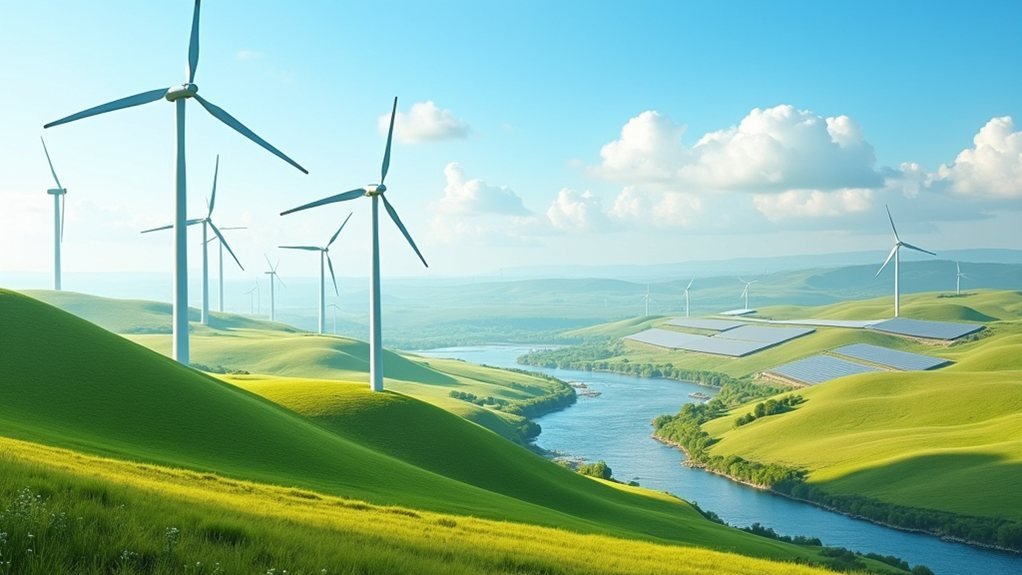

The UK has hit a remarkable milestone in renewable energy, generating a whopping 152TWh by 2025, which accounts for 47% of its electricity. This leap emphasizes a shift toward cleaner power sources. Wind and solar have been the superheroes here, with wind contributing 27% and solar 12% during peak periods. However, challenges like connection queues and regulatory hiccups still linger. Curious about how the UK plans to tackle these and capitalize on its energy revolution?
Quick Overview
- UK renewable energy generation reached a record 152TWh in 2025, supplying 47% of the nation’s electricity.
- Wind energy contributed 27% and solar energy 12% during peak months, showcasing significant growth.
- The year 2025 marked the UK’s first calendar year without coal-generated electricity, highlighting a major transition.
- Solar capacity hit 21GW and wind capacity reached 33GW by Q3 2025, indicating strong infrastructure development.
- Despite challenges, ambitious targets and investments signal the UK’s commitment to leading in renewable energy.
Overview of Renewable Energy Trends in the UK
As the UK strides confidently into the renewable energy arena, one might say it’s like watching an underdog team finally find its rhythm—except this team is powered by wind, sun, and a sprinkle of biomass magic.
By 2025, renewables generated a record 152TWh, supplying 47% of the nation’s electricity. Wind and solar are the stars, contributing 27% and 12% respectively during peak spring months. Additionally, the first calendar year without coal-generated electricity marks a significant milestone in the UK’s transition to renewable energy. With gas-fired generation rising to 91TWh, the energy landscape is evolving to meet growing demand. Renewable installations increasingly include solar and wind alongside supportive technologies like storage to improve grid reliability.
Despite rising electricity demand, renewables tripled from 43TWh in 2015 to 127TWh.
Amid rising electricity demand, renewables surged from 43TWh in 2015 to a remarkable 127TWh, showcasing a green revolution in action.
With ambitious targets set for capacity growth, the UK is truly embracing its green potential, turning the tide in the battle against carbon emissions.
Major Milestones in Solar and Wind Energy Growth
With the UK’s renewable energy sector blossoming like flowers in spring, the country has reached some impressive milestones in solar and wind energy growth that are worth celebrating. By Q3 2025, solar capacity soared to 21GW, while wind capacity climbed to 33GW, showcasing a robust 4% year-on-year increase. Solar generation increased by 32% in the first half of 2025, even hitting a record 19TWh, brightening the energy landscape. Meanwhile, wind power peaked at 23.8GW, meeting over half of Great Britain’s demand for a thrilling half-hour. As global fossil stagnation marks a significant shift towards cleaner energy sources, policies pave the way for future growth, and the UK is clearly on track to meet its ambitious renewable energy targets. This momentum is supported by expanding renewable technologies and evolving policy frameworks aimed at long-term sustainability.
Current Challenges Impacting Renewable Energy Adoption
While the UK’s renewable energy sector is making strides, it faces a series of challenges that could throw a wrench in the works.
Connection queues are longer than a queue for a popular theme park ride, limiting renewable deployment.
Regulatory hurdles slow down projects, making planning permissions feel like a game of hopscotch. Water management challenges in industry are also becoming increasingly significant as climate change threatens resource availability. Additionally, inflationary pressures and constrained electricity grid capacity impact costs and supply, complicating the situation further.
Supply chain disruptions can make even the simplest heat pump rollout feel like herding cats.
With policy uncertainty looming, it’s like trying to predict the weather in April—unpredictable!
Addressing these issues is vital for a bright renewable future, ensuring that the UK doesn’t miss the sustainability boat. A growing global focus on COP29 commitments is driving international collaboration and could influence UK policy and investment decisions.