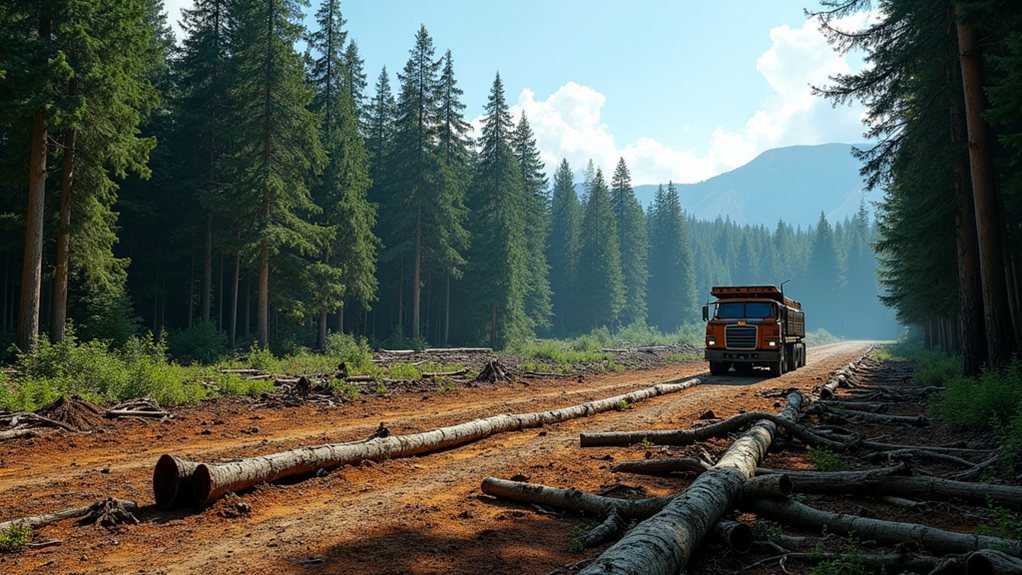

The Trump administration’s push for faster timber production in the Illinois National Forest has sparked significant concern. With an aim to ramp up output by 25%, critics worry about the impending deforestation and its environmental toll. This logging frenzy threatens crucial habitats and could release invasive species like an uninvited party crasher. Add legal challenges and public outcry into the mix, and it’s a recipe for environmental drama. Curious about how this unfolding story might impact local ecosystems?
Quick Overview
- The Trump administration’s executive order mandates a 25% increase in timber output, fast-tracking logging in the Illinois National Forest.
- Streamlined permitting processes by the U.S. Forest Service raise concerns about environmental degradation and habitat loss.
- Legal challenges and public opposition are mounting against accelerated logging plans, highlighting transparency and environmental justice issues.
- Logging threatens sensitive ecosystems, including habitats for oak-hickory specialists and cavity-dependent birds, exacerbating biodiversity loss.
- The implementation of sustainable practices is crucial to balance economic growth with conservation and mitigate environmental impacts.
Accelerated Timber Production Policies
As the sun rises on a new era of forestry management, the recent push for accelerated timber production policies in the Illinois National Forest has sparked both excitement and concern. With an executive order demanding a 25% increase in timber output, the government aims to boost domestic jobs and reduce reliance on foreign lumber. Secretary Rollins’ emergency memo empowers the U.S. Forest Service to streamline permitting, cutting through red tape faster than a lumberjack with a chainsaw. But while this initiative promises economic growth, it raises the question: at what cost to the environment? The implementation of sustainable practices could help balance resource extraction with conservation goals. Additionally, the removal of forest protections threatens biodiversity and worsens climate crises. Furthermore, the abundance of domestic timber resources available could help mitigate some of these environmental concerns. Only time will reveal the true impact of these policies.
Environmental and Ecological Risks
While the allure of increased timber production dances enticingly on the horizon, the environmental and ecological risks lurking in the shadows of this initiative deserve a closer look.
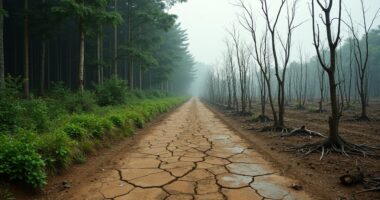
Logging threatens habitats, sending oak-hickory specialists packing and leaving cavity-dependent birds high and dry. The loss of old-growth trees isn’t just a sad sight; it disrupts nature’s delicate balance, allowing invasive species to crash the party. Additionally, IDNR lands sequester over 144,000 tons of carbon annually, which could be significantly diminished by logging activities. The logging of 70 acres above a waterway flowing into Bell Smith Springs could exacerbate these risks.
Soil compaction? It’s like putting a heavy weight on a sponge—goodbye, water retention!
With reduced biodiversity and carbon storage, the forest becomes less a carbon sink and more a recipe for climate chaos. Implementing conscious consumption practices could help offset the environmental damage caused by such aggressive deforestation initiatives.
Legal Challenges and Public Opposition
Legal challenges and public opposition have surged like a tidal wave in response to the logging plans that threaten Illinois National Forest.
Legal battles and public outcry intensify against logging threats to Illinois National Forest, sparking a fierce conservation movement.
The Center for Biological Diversity has filed a FOIA lawsuit to disclose secretive logging documents, while Earthjustice rallies public comments to defend the 2001 Roadless Rule.
This rule acts like a superhero cape, shielding pristine forests from logging and road construction. Emergent logging plans cover 110 million acres of national forest, intensifying the urgency of the situation. Environmental advocates are extensively quoted and represented, while the U.S. Forest Service has not provided direct quotes to address criticisms.
Advocacy groups are mobilizing citizens, transforming them into eco-warriors armed with comments that become legal ammunition.
With NEPA categorical exclusions fast-tracking logging, the stakes are high.
The fight highlights environmental justice concerns as communities near the forest face disproportionate environmental burdens while losing access to natural resources.
The battle for transparency and conservation continues, as nature’s defenders unite.