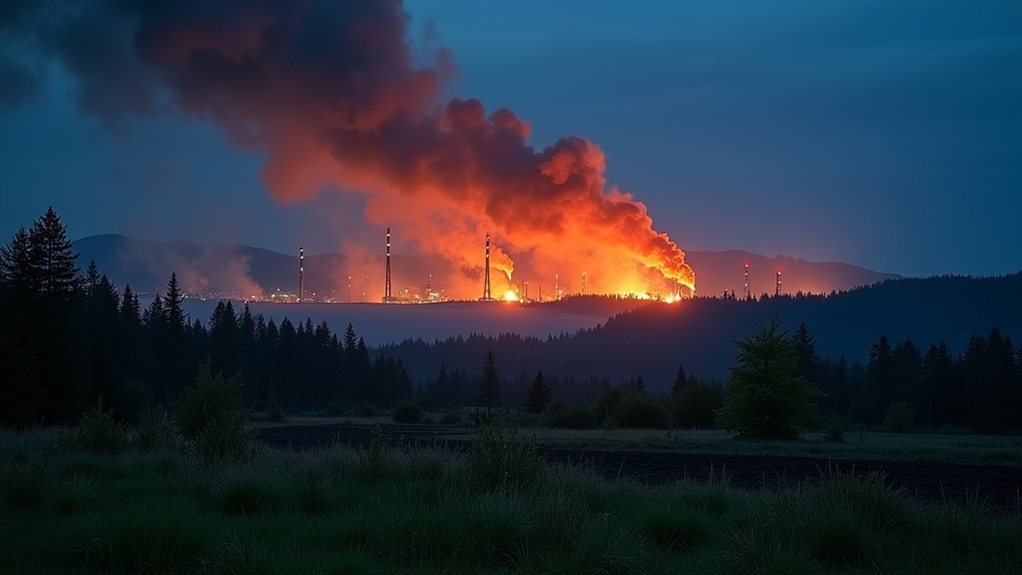
In Kitimat, the LNG Canada flaring incident feels like a blockbuster with dire consequences. Picture an overprotective mom smearing frosting everywhere—except here, it’s greenhouse gases and the frosting is black smoke! Experts caution about health and air quality, likening it to nature’s cry for help. With flaring rates skyrocketing and community unrest bubbling, regulatory heads have been called to the stage. Plunge into this gripping saga to uncover more intriguing details.
Quick Overview
- Experts stressed the urgency of resolving flare tip integrity issues to mitigate environmental impact.
- Calls for comprehensive environmental assessments to identify and address flaring risks have increased.
- Health experts highlight the need for enhanced public health protections due to the flaring emissions.
- Continuous monitoring of flaring emissions is recommended to prevent further health and safety concerns.
- Strengthening transparency and communication between LNG Canada and the community is deemed critical.
The Flaring Incident at LNG Canada: What Went Wrong?
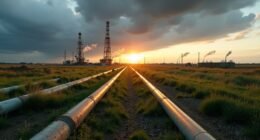
In the intriguing world of fossil fuels, where flares are more than just bright lights in the sky, something went awry at LNG Canada—a tale best summed up as “a flare for the dramatic.” A little problem with a big impact arose in late 2024 when an integrity issue with the flare tip turned routine gas flaring from an unnoticed whisper to a headline-grabbing shout. Before proceeding with a new project, thorough environmental impact assessments are typically essential to evaluate potential effects, but such processes might not always predict unexpected technical failures like the one experienced here. Gas volumes skyrocketed, with peaks 15 times normal levels, exceeding legal limits. Visible black smoke and noise were reported by surrounding neighborhoods, amplifying concerns and drawing further scrutiny to the situation. As this situation continued, the community was left with significant noise and visual disturbances, which led to heightened anxiety and unrest among residents. Like a sitcom landlord walking in at the wrong moment, the BC Energy Regulator stepped in, demanding daily updates, but compliance remained elusive.
What Experts Are Saying About Environmental and Health Impacts
Envision this: the air around LNG Canada is abuzz with the fallout of an environmental conundrum, a bit like when your favorite band’s amplifier short-circuits mid-concert. The experts paint a vivid picture of flaring emissions akin to an overprotective mom dolloping extra frosting on an already sweet cake. Dr. Sally Harvie spotlights the compounded health risks from rampant greenhouse gases, while Dr. Laura Minet likens excessive flaring to the concert opener far outshining the main act. Air pollution types such as particulate matter and sulfur dioxide significantly contribute to the health concerns voiced by experts. As observers chew over sticky black smoke and SO2 spikes, the real serenade becomes the call for stronger public health protections. Recent reports have indicated that more than 30 noise complaints have arisen due to flaring events, underscoring the community’s struggle with ongoing disturbances. With integrity issues plaguing the flare stack at LNG Canada, actual flaring levels have surpassed what has been reported, intensifying concerns over both environmental and health impacts.
What Kitimat Residents Are Experiencing: Community Concerns and Regulatory Responses
Picture Kitimat as a sleepy town, where the tranquil hum of nature is punctuated by the not-so-dulcet tones of flare stacks at full throttle. Residents are serenaded by roaring flames and black smoke, sometimes mistaken for a dramatic special effects show. The surprise? It’s real. Complaints roll in faster than a snowball down a hill, with neighbors documenting alarms over mysterious black residue and unsettling light shows. Careful evaluation is crucial for developing mitigation strategies to address the flaring and its associated impacts. Flaring rates reach staggering heights, much like a rock band’s speaker on overdrive. Despite these challenges, flaring emissions account for approximately 40% of annual black carbon deposits in the Arctic, heightening environmental and health concerns for the community and beyond. Residents report visible pollution with black smoke and constant flaring light, as average flaring from July 1 to Nov. 30, 2025, was 205,000 cubic metres daily – significantly higher than initial projections. Meanwhile, community meetings juggle questions like a circus act, working to appease residents amidst regulatory juggling and transparency challenges.