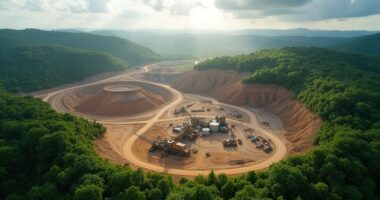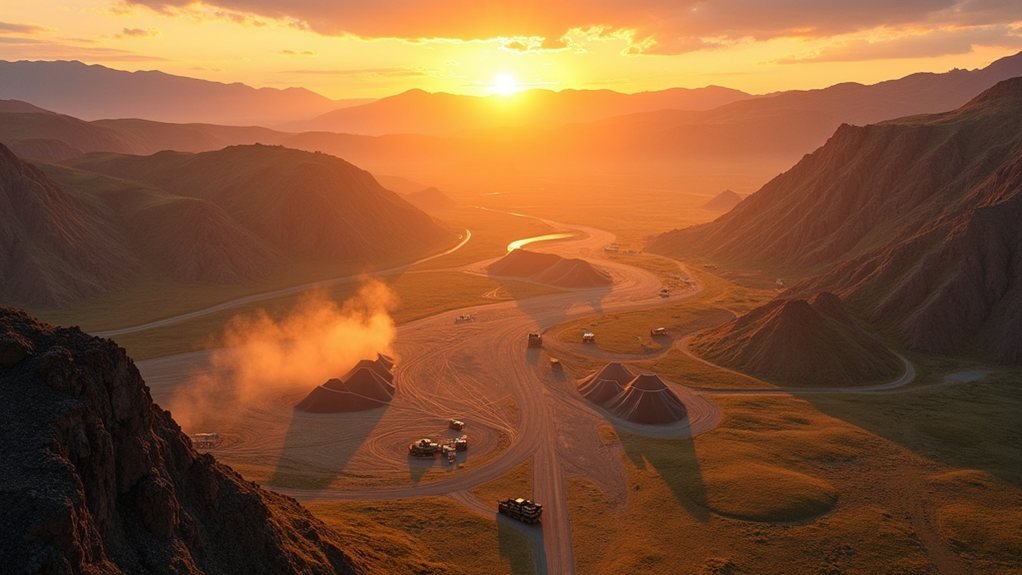

Interior Secretary Burgum is nudging Montana’s mining industry into high gear, aiming for a prosperous 2026. This growth hinges on the Stillwater West Project, promising a bounty of nickel and copper. With new jobs sprouting up and community voices being heard, the local economy stands to gain substantially. Strategic investments and policy tweaks are set to enhance the mining landscape. So, gear up; the future looks bright and buzzing for Montana’s miners! Curious about what’s next?
Quick Overview
- Secretary Burgum advocates for federal policy reforms to support mining growth, enhancing employment opportunities in Montana’s tech and mining sectors.
- Anticipated increased drilling efforts in Montana are expected to uncover critical minerals, boosting the mining industry’s growth by 2026.
- Strategic investments totaling $17 million aim to expand mining employment, with current mining jobs at 4.3 thousand workers in the state.
- The Stillwater West Project is projected to contribute significantly to local economies and provide substantial job opportunities over its 10-20 year lifespan.
- Analysts predict a 2.2% annual growth in the mining industry, positioning Montana as a leading hub for mining advancements by 2026.
The Economic Impacts of the Stillwater West Project on Local Communities
The Stillwater West Project stands to have a monumental impact on local communities, potentially reshaping the economic landscape of the area like a master chef flipping a pancake. Its development must also consider the preservation of biodiversity to ensure the long-term health of the local ecosystem.
With 1.6 billion pounds of nickel, copper, and cobalt waiting to be uncovered, local jobs are anticipated to surge. The partnership with Glencore adds a dash of credibility, attracting more attention to this mineral feast. Additionally, the project’s location near Sibanye-Stillwater’s active East Boulder mine suggests that the development will benefit from established infrastructure and expertise in the region. Importantly, the project’s polymetallic nature promises to deliver a diverse mix of metals critical for clean energy and technology, enhancing its value proposition.
Plus, the prospect of a 10-20 year mine life suggests stability—a critical ingredient in any successful recipe. As the project rolls forward, local economies could experience a robust boost, making everyone feel like they’ve hit the jackpot.
Ways Secretary Burgum Drives Montana’s Mining Expansion
Secretary Burgum is stepping onto the mining stage with a flair that could rival a magician pulling rabbits out of hats. His approach also emphasizes waste reduction by prioritizing prevention and reuse within mining operations to support sustainability.
By advocating for federal policy reforms and initiatives like the Inflation Reduction Act, he enhances essential mineral production, crucial for domestic supply chains. In addition, he backs the Hard Rock Mining Impact Act, giving communities a voice in the permit process. Recent data shows that mining employment in Montana has reached 4.3 thousand workers, reflecting his effective commitment to the industry. With strategic investments attracting $17 million, the flourishing mining employment, now at 4.3 thousand, showcases his commitment. Notably, the industry is projected to see a 2.2% annual growth in market size from 2020 to 2025.
Advocating for federal reforms, he boosts essential mineral production vital for robust domestic supply chains.
With the right mix of incentives and regulatory streamlining, Montana’s mining sector is set to sparkle brighter than ever—no sleight of hand required.
What’s Next for Montana’s Mining Scene in 2026?
Excitement bubbles beneath the surface of Montana’s mining scene as it gears up for a transformative 2026. Recognizing the value of natural capital could enhance how these new resources are accounted for economically.
With increased drilling efforts expected to reveal millions in critical minerals, resource zones are ripe for expansion. A hefty CA$8.78 million raised in funding, plus government grants, primes the sector for groundbreaking developments. The upcoming mineral resource estimate integrates recent drilling, geological models, and insights that highlight the area’s potential for significant discoveries. Notably, the nonferrous metal refining sector in Montana, which significantly contributes to the state’s GDP, stands to benefit from these advancements.
As the employment landscape improves post-2026, newly predicted projects promise economic growth reminiscent of past mining booms.
With analysts eyeing a juicy 253% return from exploratory advancements, Montana’s mining industry appears set to shine brighter than ever, like a freshly polished gem in the rough.