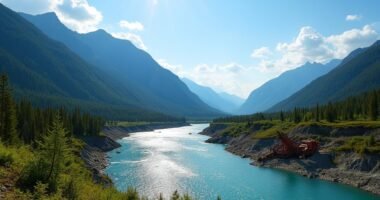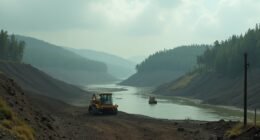
The Gitxaala Nation’s legal challenge shines a spotlight on British Columbia’s free entry mining system, demanding fair consultation before mineral claims. As the province grapples with DRIPA’s requirements, Indigenous rights and resource management vie for attention, creating an interesting tension. Think of it as a game of tug-of-war between tradition and development! With a new framework on the horizon for 2025, it’s a pivotal moment where voices of Indigenous communities could reshape mining practices. Stay tuned for what unfolds!
Quick Overview
- Gitxaala Nation’s legal challenge emphasizes the need for consultations before mineral claims, reflecting Indigenous rights in BC’s mining sector.
- The new Mineral Consultation and Coordination Framework will be implemented in March 2025, impacting the free entry system for mining.
- DRIPA mandates that First Nations, including Gitxaala, must be consulted for mining activities, creating uncertainty in mineral claims.
- Delays in processing and limited funding hinder Gitxaala’s full participation in consultations and resource management discussions.
- Integrating Indigenous ecological knowledge into mining practices promotes sustainable resource extraction and respects Gitxaala rights in BC.
Gitxaala Nation’s Legal Challenge to BC’s Mining System
In the intricate dance of legal rights and responsibilities, the Gitxaala Nation’s legal challenge to British Columbia’s mining system embodies a compelling quest for justice. Launched in October 2021, it demanded consultation before mineral claims were made in their territory, smacking of a legal twist that could rival any courtroom drama.
The British Columbia Supreme Court ruled in September 2023 that the province’s system breaches constitutional obligations, while the Court of Appeal took a further swing at inconsistencies with UNDRIP. This legal saga isn’t just about minerals; it’s about recognizing Indigenous rights in a landscape where the stakes couldn’t be higher. The outcome of this case could inform broader conservation strategies that balance resource extraction with the protection of Indigenous territories and marine ecosystems along British Columbia’s coast.
DRIPA’s Impact on Mining and Indigenous Rights
Amidst the swirling complexities of resource management, DRIPA (Declaration on the Rights of Indigenous Peoples Act) emerges as a game-changer for mining practices in British Columbia and beyond. This pivotal legislation, enforced by a B.C. Court of Appeal ruling, mandates that mining activities can no longer bypass First Nations consultations.
While aimed at honoring Indigenous rights, the law casts a shadow of uncertainty over mineral claims, causing investors to reconsider their bets in B.C. With mining associations crying foul, the debate between Indigenous rights and economic concerns grows heated.
The tension reflects broader questions about how environmental burdens are distributed across different communities, particularly when resource extraction impacts Indigenous territories. Can balance be struck, or will this tug-of-war continue indefinitely?
Transitioning to a Fair Consultation Framework in Mining
Mining in British Columbia is entering a new chapter, and it’s not just about finding shiny rocks anymore.
With the upcoming implementation of the Mineral Consultation and Coordination Framework in March 2025, prospectors must now apply for claims, paving the way for monthly notifications to First Nations. This marks a shift towards fair consultations, enabling Indigenous voices to shape mining activities in their territories.
Prospectors will soon navigate a new landscape of mining, with Indigenous voices gaining a key role in decision-making.
However, challenges persist, from prolonged processing timelines to funding limitations for First Nations.
Despite hiccups, the framework encourages transparency and aims to foster a collaborative mining environment—because nobody wants another episode of “Guess What’s Under the Rock.” Drawing on traditional ecological practices, Indigenous communities can contribute invaluable knowledge about sustainable land stewardship to inform responsible resource extraction decisions.