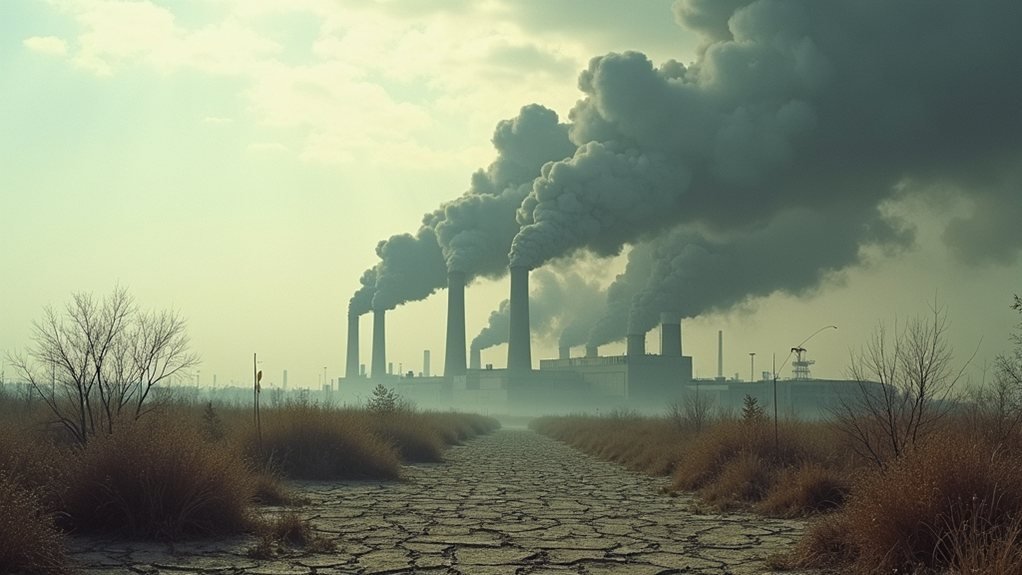

The EPA’s recent repeal of climate protections, including the critical Endangerment Finding, has sparked a legal showdown. States and advocacy groups, led by California’s Attorney General, are gearing up to challenge this rollback as illegal. They argue the EPA’s decision lacks scientific merit and undermines public health. With greenhouse gases like a prominent character in this drama, the stakes are high. Stay tuned to see how this legal battle unfolds and shapes future climate policy.
Quick Overview
- A coalition of states and advocacy groups plans to sue the EPA over the illegal repeal of climate protections tied to the Endangerment Finding.
- The lawsuits, spearheaded by California’s Attorney General, challenge the EPA’s authority under the Clean Air Act regarding greenhouse gases.
- Critics argue the repeal undermines decades of environmental protections and hinders effective climate policy implementation.
- Legal challenges assert the EPA’s decision is influenced by bias rather than adhering to objective scientific standards.
- The outcome of these lawsuits could significantly impact future national regulations on greenhouse gas emissions and climate change mitigation efforts.
Understanding the EPA’s Repeal of Climate Regulations
In a move that feels like a plot twist straight out of a climate change thriller, the EPA has taken the unprecedented step of repealing crucial climate regulations that have been in place for over a decade. This action rescinds the 2009 Endangerment Finding, which deemed greenhouse gas (GHG) emissions from vehicles a threat to public health. Surprisingly, the EPA’s Administrator Lee Zeldin labeled this the largest deregulatory action in U.S. history. This shift focuses on the Clean Air Act’s legalities rather than ongoing debates about climate science, leaving many to wonder what this means for the future of air pollution standards. Understanding air pollutants and how they are measured will be crucial in assessing the impacts of this policy change. As a result of this repeal, federal greenhouse gas emission standards for motor vehicles might face significant challenges moving forward, potentially impacting the transportation sector’s ability to effectively reduce emissions.
What the Repeal Means for Climate Policy?
Though one might think a regulatory repeal would merely shuffle the paperwork in a bureaucratic filing cabinet, the recent rollback of significant climate policies by the EPA signifies far more than that.
This shift dismantles essential federal vehicle greenhouse gas standards and leaves power plants and methane emissions in limbo. Moreover, the EPA’s planned changes to methane regulations support an ongoing commitment to regulating these harmful emissions, even amidst legal challenges. This legal reasoning could have major implications for future power plant emissions standards and their regulation.
States now face the intimidating task of maneuvering through these murky waters alone, risking a patchwork of policies that could vary wildly. Businesses in these states are increasingly forced to undertake climate risk management to navigate these varied regulatory environments effectively.
As transportation remains the largest contributor to heat-trapping emissions, the consequences for public health and our planet could be disastrous—like replacing a fire extinguisher with a balloon at a parade.
Key Legal Challenges Post-Repeal
Legal battles are heating up as a coalition of states and advocacy groups gears up to challenge the EPA’s recent rollback of critical climate protections. These lawsuits, spearheaded by California’s Attorney General and joined by youth climate advocates, aim to question the EPA’s authority under the Clean Air Act. They highlight previous Supreme Court rulings, asserting that greenhouse gases are indeed pollutants. Critics argue that the agency’s process was flawed, influenced by bias rather than objective science. Many investors and stakeholders have increased pressure on companies to address environmental, social, and governance factors, which adds context to these regulatory battles. As cases maneuver through the courts, the future of greenhouse gas regulations hangs in the balance, bringing uncertainty for climate advocates and polluters alike. The repeal also narrows agency perspective on global GHG emissions regulation. Furthermore, the EPA contends that the Clean Air Act does not explicitly mention GHGs or climate change, which limits its regulatory authority.