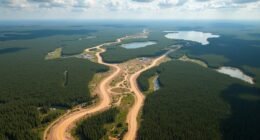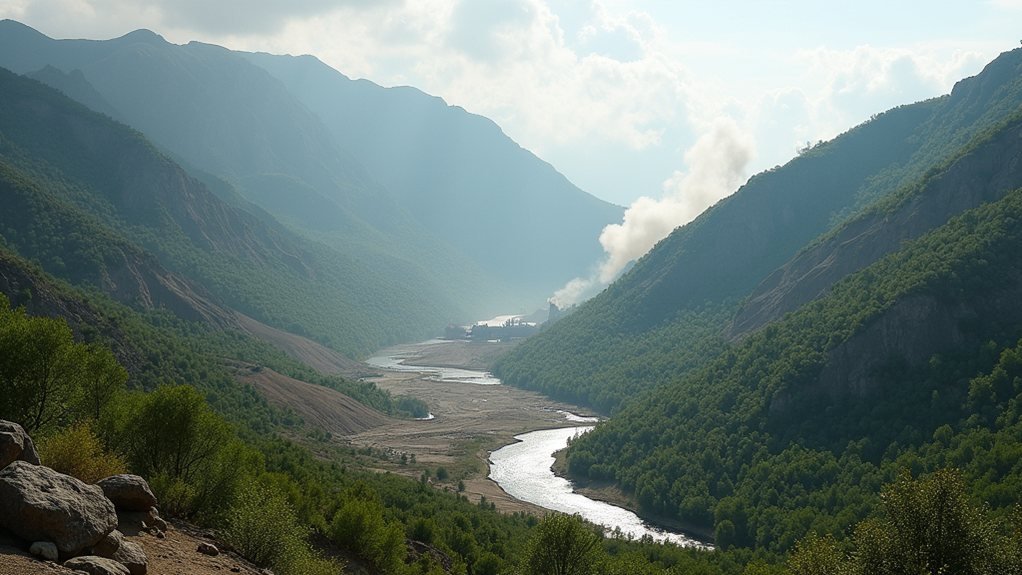
Environmental groups are sounding the alarm over newly issued mining permits for the Tranquil Creek watershed, claiming they ignore First Nations’ consent and trample on Indigenous rights. These permits might as well come with a neon sign saying, “Habitat destruction ahead!” Salmon habitats are at risk, and the local culture faces economic upheaval. It’s a classic case of development vs. preservation. Curious about what’s next in the tug-of-war over land rights and ecological integrity?
Quick Overview
- Environmental groups are actively challenging newly issued mining permits due to disregard for First Nations’ consent in unceded territories.
- The BC government’s expedited permitting for critical minerals raises tensions regarding Indigenous rights and ecological preservation.
- Mining operations threaten vital salmon habitats, highlighting the urgent need for habitat protection amid economic interests.
- Organizations like Canopy and Friends of Clayoquot Sound emphasize the importance of Free, Prior, and Informed Consent in decision-making processes.
- The cycle of exploitation in Indigenous territories calls for reforms to prioritize environmental and cultural sustainability, addressing community impacts.
The Controversial Tranquil Creek Permits: An Overview
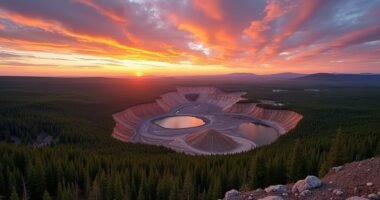
As the sun sets over the stunning Clayoquot Sound, a tranquil beauty masks a brewing storm of controversy surrounding the newly issued mining permits for the Tranquil Creek watershed.
Issued to Imperial Metals, these permits allow multiple drill sites and helipads in unceded Tla-o-qui-aht territory, igniting opposition from the First Nation.
They argue mining is non-permissible in their unceded Tribal Park and challenge the province’s disregard for their land rights.
The BC NDP’s swift permitting process prioritizes critical minerals, but critics wonder: at what cost?
As the stakes rise, the balance between progress and preservation hangs in the air like a thick fog.
Environmental advocates emphasize that sustainable forest management practices could provide alternative economic benefits while maintaining the ecological integrity of the watershed.
Response From Environmental Organizations: Voices for Change
Despite the government’s recent permit approvals, environmental organizations have united with a fervent determination to challenge this decision, echoing a powerful discontent that resonates far beyond Clayoquot Sound.
The coalition of groups, including Canopy and Friends of Clayoquot Sound, insists the permits signify a troubling shift towards prioritizing mining interests over Indigenous rights—a bit like choosing junk food over a nourishing meal.
They stress that mining in the sacred Tranquil Creek watershed threatens crucial salmon habitats, boldly demanding the BC government cancel these permits.
Their stance? True reconciliation can’t come from digging deeper holes in the ground; it must be rooted in respect.
The environmental groups emphasize that habitat protection is essential not only for salmon populations but for maintaining the broader ecosystem integrity that Indigenous communities have stewarded for generations.
How Mining Affects Indigenous Rights and Communities?
Mining’s impact on Indigenous rights and communities is a complex issue that unfolds like an intricate web, where every tug in one direction affects the entire structure.
Land disturbances and pollution disrupt not just the earth, but spiritual ties to sacred sites.
Land disruptions from mining not only scar the earth but sever deep-rooted spiritual connections to sacred sites.
Picture a mixed salad where mining churns everything up, leaving wilted greens and sour dressing.
As industries rush forward, often sidelining Free, Prior, and Informed Consent (FPIC), communities face economic instability and livelihood loss—like suddenly switching the lights off at a dance party.
While site rehabilitation and improved waste management practices exist, these solutions are rarely implemented before irreversible damage occurs to Indigenous territories.
Ultimately, the cycle of exploitation continues, threatening both culture and environment, demanding urgent reform and respect for Indigenous voices.