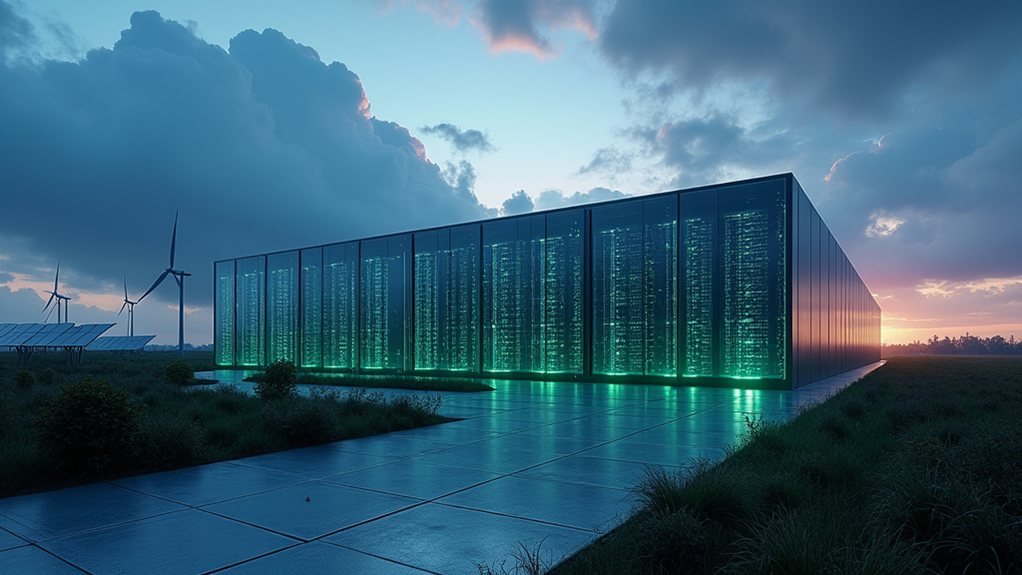

Ed Miliband, like a seasoned weatherman of the climate world, warns us about data centers—those digitized behemoths of electricity that, without a shift to renewable energy, could evolve from data harvesters to carbon factories by 2026. Amidst a future so unpredictably wired, akin to a cat dancing on a keyboard, the stakes revolve around leveraging AI and smart grids to balance demand and reduce emissions. Curiosity begs: what path will data centers tread next?
Quick Overview
- Ed Miliband highlights the need for sustainable data center practices to mitigate climate impact.
- Future demand for data centers is uncertain due to fluctuating power needs and technological advancements.
- Miliband underscores the importance of regulating data center energy consumption amid rising AI workloads and emissions.
- Transitioning to renewable energy is essential to address the environmental challenges posed by data centers.
- Sustainable data center strategies can reduce emissions and support global carbon reduction goals by 2026.
Understanding Data Centre Climate Impact
Imagine, if you will, data centers as the unsung, power-hungry heroes of the digital age, quietly humming away in the background while tirelessly keeping the internet alive.
Consuming a staggering 415 TWh annually, these technological behemoths represent 1.5% of global electricity demand. However, their carbon footprints aren’t small. Responsible for 0.5% of global CO2 emissions, their indirect emissions rise with growing electricity consumption. With the implementation of carbon emissions reduction strategies, businesses can significantly mitigate the environmental impact of these energy-consuming giants. The expansion of AI technologies is predicted to drive the demand for electricity in data centers even higher, potentially reaching 35-50% of power usage by 2030. Significant as they are, these centers exacerbate water scarcity by using vast amounts of water for cooling, especially in climate-affected regions.
The United States exemplifies this drama, with over 105 million tons of CO2e emitted in 2023 alone. Expanding centers drive 10% of global electricity demand growth. A serious, energy-guzzling tour de force, indeed.
Planning a Renewable Energy Transition for Data Centres
As we untangle the web of data centers’ climate impact, it’s clear that an innovative approach to energy sourcing is on the horizon. Onsite power generation is stepping into the spotlight, with nearly 40% of U.S. data centers expected to embrace this by 2030—an impressive leap from a mere 13% last year. Think of it as data centers going off the grid—the hip way! Cutting energy bills, slashing emissions, and dodging blackouts—all benefits wrapped in a renewable bow. With AI lending a helping hand by predicting energy needs, the future is bright, renewable, and surprisingly well-cooled by Lenovo’s ingenious water system. A smart grid infrastructure can further enhance the integration of renewable energies by allowing real-time energy flow management. Data centers placed in clean power regions can significantly aid in the decarbonisation efforts, supporting a sustainable energy future. Moreover, by partnering with local grids through demand response programs, data centers can help reduce peak load and provide additional stability to the power system.
Data Centre Demand: Future Uncertainties
While the future of data centers seems as crowded with uncertainties as a rush-hour subway, one thing is crystal clear: demand is skyrocketing like a comet on espresso. Data centers don’t just sip energy—they guzzle it, with global power needs expected to soar from 860 TWh in 2025 to 1,587 TWh by 2030. In this digital symphony, AI acts like the overexcited conductor, driving expansions and potentially consuming 44% of power by 2030. The impact of AI workloads is significant, with a forecasted annual data construction growth rate of 17% between 2025 and 2028. To effectively reduce carbon emissions, employing strategies like enhancing energy efficiency and transitioning to renewable energy sources can help mitigate the environmental impact. However, overprovisioning risks linger like a forgotten umbrella, leading to financial puddles. Regional grid constraints and speculative demands keep the sector as unpredictable as a weather forecast.