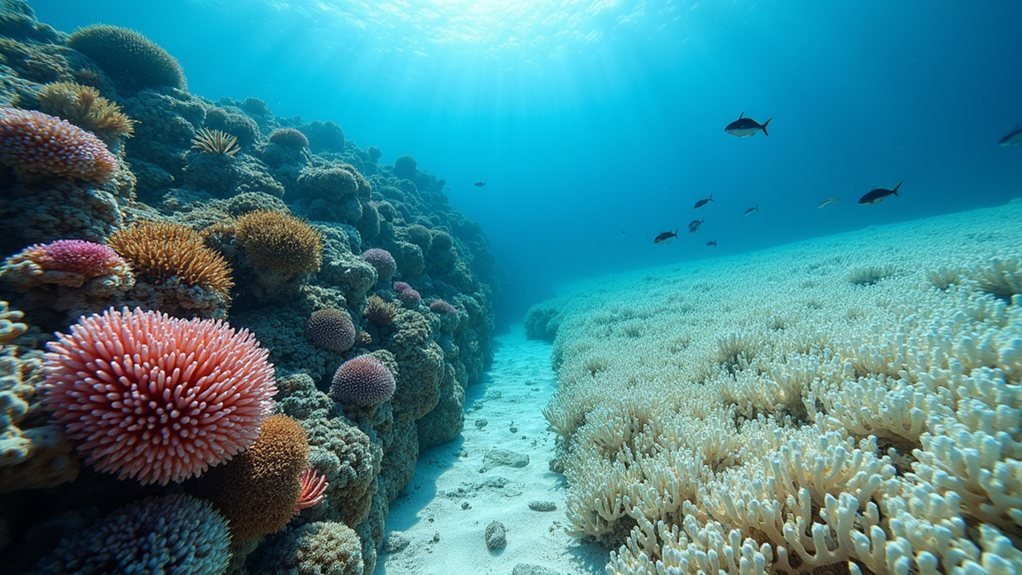

Coral reefs are inching closer to a catastrophic collapse by 2026. This moment is like a lit fuse, thanks to rising sea temperatures and pollution. When corals get stressed, they ditch their colorful algae pals, leading to bleaching. These reefs aren’t just pretty; they house 25% of marine life! To combat this crisis, experts recommend Marine Protected Areas and better wastewater management. Curious about what can be done to save these underwater wonders? Stick around!
Quick Overview
- Coral reefs are predicted to reach critical bleaching thresholds by 2026, marking a significant climate tipping point for marine ecosystems.
- Rising sea temperatures and frequent marine heatwaves are primary drivers of coral bleaching, threatening reef survival.
- Effective Marine Protected Areas (MPAs) are essential for safeguarding reefs against overfishing and pollution, enhancing resilience.
- Innovative restoration techniques, such as outplanting heat-tolerant corals, can help combat the predicted coral crisis.
- Improved water quality and invasive species management are crucial for supporting coral health and ecosystem biodiversity.
The Urgent Need to Protect Coral Reefs
As the ocean’s vibrant cities of coral face an increasingly dire future, the urgency to protect these underwater ecosystems has never been more pressing. The Gulf of Aqaba’s resilient reefs stand against extreme heat, yet pollution and coastal development threaten their survival. Coral reefs provide habitats for marine life, making their conservation crucial for overall ocean health. In stark contrast, the Caribbean Sea showcases diverse resilience strategies. Experts from six countries gather, discussing pathways to safeguard these reefs, highlighting the importance of Marine Protected Areas (MPAs) and innovative restoration techniques. With commitments to prioritize climate-resilient reefs, the world is at a pivotal moment—like a superhero team assembling to save the day, they must act swiftly and decisively! As recent progress in coral restoration shows, over one million heat-tolerant corals can be planted annually to combat the crisis. Effective ocean conservation often combines protected areas with sustainable fisheries and pollution reduction to improve reef survival.
Understanding Climate Change’s Impact on Coral Bleaching
While coral reefs may seem like the ocean’s bustling metropolises, their vibrant communities are under siege from climate change-induced coral bleaching. This phenomenon occurs when corals, stressed by rising sea temperatures, evict their symbiotic zooxanthellae algae, leading to a ghostly white appearance.
Imagine kicking out your roommates during a heatwave! Elevated temperatures, especially above seasonal maxima, trigger oxidative stress, damaging the algae’s photosynthetic machinery. Corals primarily derive energy from zooxanthellae, which makes their survival even more precarious as marine heatwaves become more frequent. As a result, coral bleaching occurs more frequently in regions with high intensity and frequency of thermal-stress anomalies, these colorful ecosystems face unprecedented challenges. If the trend continues, projections suggest that by 2030, many reefs will exceed critical bleaching thresholds, risking their survival and the rich biodiversity they support. Conservation efforts that protect ecosystem services and habitat connectivity are essential to bolster reef resilience.
Effective Strategies for Coral Reef Recovery
Revitalizing coral reefs requires a multifaceted approach, much like a well-orchestrated symphony where every instrument plays its part to create harmony.
Effective Marine Protected Areas (MPAs) act as sanctuaries, shielding reefs from overfishing and pollution, while innovative coral restoration techniques, like outplanting and larval interventions, boost biodiversity. Establishing well-designed sustainable fisheries within MPA networks helps balance economic use with ecosystem protection. Engaging local communities in conservation efforts is crucial to ensure sustainable practices are upheld and supported. Furthermore, protecting these ecosystems is essential as coral reefs provide habitats for 25% of all marine life.
Improving water quality through better wastewater management acts like an invigorating shower for stressed corals. Additionally, tackling invasive species is akin to a neighborhood watch program—removing nuisances to protect the locals.