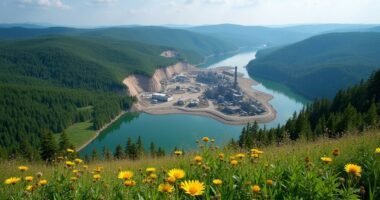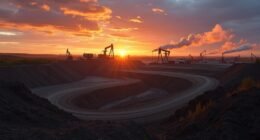

The Conference Board Non-Energy Mining Outlook 2026 showcases the pivotal role of minerals like copper and lithium in the energy shift. With electricity demand skyrocketing, copper’s super conductivity is key for renewables, especially electric vehicles. Meanwhile, lithium’s star is rising, driven largely by the battery craze. However, supply challenges loom due to geopolitical factors and import dependencies. It’s a mineral mix of opportunity and risk, hinting at the need for innovative solutions to guarantee a stable future. Keep an eye out for what’s next!
Quick Overview
- Non-energy mining sectors are expected to face supply challenges due to increased demand for critical minerals essential for energy transition technologies.
- Geopolitical factors will influence the availability and trade of critical minerals, impacting the non-energy mining outlook.
- Investment in domestic mining and recycling technologies is crucial to reduce reliance on imports and ensure resource security.
- The rising demand for electric vehicles and energy storage systems will significantly drive the need for lithium and other battery metals.
- Regulatory complexities and compliance issues will continue to pose challenges for the non-energy mining industry through 2026.
Copper’s Role in Energy Transition
Copper, often dubbed the unsung hero of the energy change, is poised to play a starring role in the electrifying future ahead.
Copper is the unsung hero set to shine in our electrifying future.
With global electricity consumption expected to surge by nearly 50% by 2040, this versatile metal is essential for building the infrastructure needed to meet that demand. Electrification is expected to increase global electricity consumption significantly, further emphasizing copper‘s critical role.
Think of copper as the ultimate team player; it’s vital for electric vehicles, which use four times more copper than traditional cars.
Furthermore, offshore wind and solar installations can’t function without copper’s superior conductivity. The metal’s importance in renewable energy technologies represents a sustainable alternative to carbon-intensive energy sources.
As society shifts towards renewable energy, copper’s importance will only grow, making it the MVP of the energy transformation.
Key Trends Driving Lithium and Battery Metal Demand
As the world enthusiastically embraces the electric future, a surge in demand for lithium and battery metals is creating quite the buzz in the mining sector.
With electric vehicles (EVs) zooming from 10 million to 16 million on roads, the need for lithium skyrockets—70% of it is gobbled up by EV batteries! Additionally, energy storage systems are the new rock stars, supporting renewable energy efforts. The shift toward renewable energy sources offers significant environmental benefits while reducing dependency on finite resources. Heavy-duty electric trucks, with their larger appetites for lithium, are also revving up demand. As solid-state batteries emerge, the market is set to shift, keeping lithium’s spotlight bright in the electrifying future ahead. The current global lithium stocks are estimated at 350,000 tonnes LCE, which is insufficient for long-term growth. Furthermore, the global lithium metal battery materials market is projected to grow significantly, reaching USD 32.48 billion by 2035.
Challenges in Critical Minerals Supply?
Steering through the challenges of critical minerals supply feels a bit like trying to solve a Rubik’s Cube while blindfolded—complex, frustrating, and with a looming sense of urgency. Mismatched timing between shifting demand and lengthy mining lead times creates a perfect storm of price volatility. With most supplies concentrated in a few countries, the U.S. finds itself heavily reliant on imports. Additionally, this reliance is underscored by the fact that the U.S. depends on imports for 12 critical minerals essential for its economy and energy systems. China’s dominance in rare earths further complicates the landscape, as it creates substantial dependency risks for the U.S. Add in regulatory complexities and the tangled web of compliance issues, and it’s a recipe for chaos. Implementing waste hierarchy principles could help mitigate some of these supply challenges by emphasizing prevention and reuse over disposal of critical mineral-containing products. As geopolitics reshapes trade flows, the race to secure a stable supply of critical minerals becomes not just important, but essential for future progress.