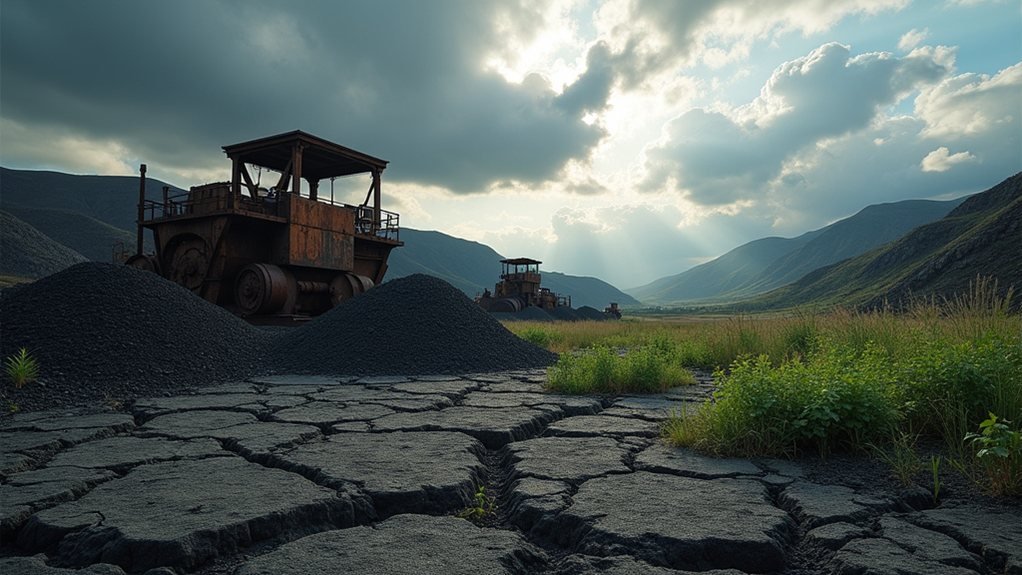

A recent court ruling has shed light on the dubious net-zero claims made by the Whitehaven Coal Mine, revealing a significant oversight in ignoring downstream emissions—those sneaky gases released when coal burns. This ruling doesn’t just expose flaws; it sets a new standard for fossil fuel projects by demanding thorough environmental assessments. As community scrutiny grows, the stage is set for a fresh chapter in climate accountability. Stay tuned, as the ripple effects of this decision continue to unfold.
Quick Overview
- The High Court ruled that claims of net-zero emissions for the Whitehaven Coal Mine were “legally flawed” due to omitted downstream emissions.
- Developers must now prove that coal extraction will not increase greenhouse gas emissions, shifting legal expectations for fossil fuel projects.
- Downstream emissions, which account for a significant portion of total emissions, are now required in Environmental Impact Assessments (EIAs).
- The ruling emphasizes the need for comprehensive assessments of the entire lifecycle of fossil fuels, enhancing accountability for developers.
- Increased community scrutiny and legal challenges are anticipated as public awareness of misleading sustainability claims rises post-ruling.
Assessing the Court’s Ruling on Whitehaven Coal Mine’s Net-Zero Claims
While one might expect a straightforward victory for fossil fuel projects to be a given in today’s climate discussions, the recent High Court ruling on Whitehaven Coal Mine’s net-zero claims delivered anything but.
The court found the mine’s claims “legally flawed,” citing the omission of downstream emissions from coal combustion—an oversight as glaring as a missing ingredient in a recipe. The judgment emphasized that developers must prove their coal won’t increase greenhouse gas emissions, debunking the substitution myth. Businesses looking to achieve genuine carbon neutrality should focus on implementing reduction strategies before turning to offsets. Additionally, the ruling was influenced by the fact that the government withdrew its defense in July 2022, highlighting the legal vulnerabilities surrounding the project. Moreover, the court’s decision vindicated the stance of Friends of the Earth and SLACC regarding the unlawfulness of the planning permission.
The court deemed the mine’s claims legally flawed, highlighting the critical oversight of downstream emissions from coal combustion.
Fundamentally, the court served notice: coal extraction needs to genuinely align with climate goals, not just tick boxes with fancy offsetting schemes.
What Are the Broader Implications of the Ruling for Future Fossil Fuel Projects?
This landmark decision imposes stricter Environmental Impact Assessment (EIA) requirements, demanding thorough evaluations of greenhouse gas emissions. Developers can no longer rely on dubious net-zero claims or flimsy carbon offsetting strategies. It’s like trying to sell a car without knowing its fuel efficiency—simply unacceptable! With increased community scrutiny and potential legal challenges, the fossil fuel industry faces a tougher road ahead. This ruling reinforces the critical importance of conducting proper assessment procedures before any project implementation to identify potential environmental harm. Ultimately, this ruling could signal a pivotal shift in prioritizing genuine climate commitments over convenient, yet misleading, claims of sustainability. The ruling emphasizes the importance of considering downstream greenhouse gas emissions in the assessment process, which could lead to more comprehensive evaluations in future projects. Furthermore, the judgement represents a precedent for future fossil fuel project assessments, reinforcing the need for robust environmental evaluations.
Importance of Downstream Emissions in Fossil Fuel Projects
Understanding the importance of downstream emissions in fossil fuel projects is essential, especially now that regulations are tightening around environmental assessments.
Downstream emissions, or those lovely Scope 3 emissions, account for a staggering 67-95% of total emissions from oil projects. That’s right—most of the climate impact comes after the fuel leaves the well!
Downstream emissions represent a jaw-dropping 67-95% of total oil project emissions—climate impact starts after the well!
The UK Supreme Court now mandates that these emissions be assessed in Environmental Impact Assessments (EIAs), turning the spotlight on the entire lifecycle of fossil fuels. Measurement methods for these emissions are critical to ensure accurate reporting and compliance with new standards. This legal shift means that planning authorities must now face the music of combustion emissions, ensuring informed decisions and a greener future. This requirement to consider downstream emissions will likely influence regulatory frameworks in the UK and beyond.