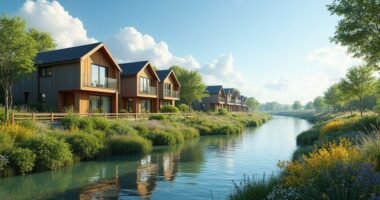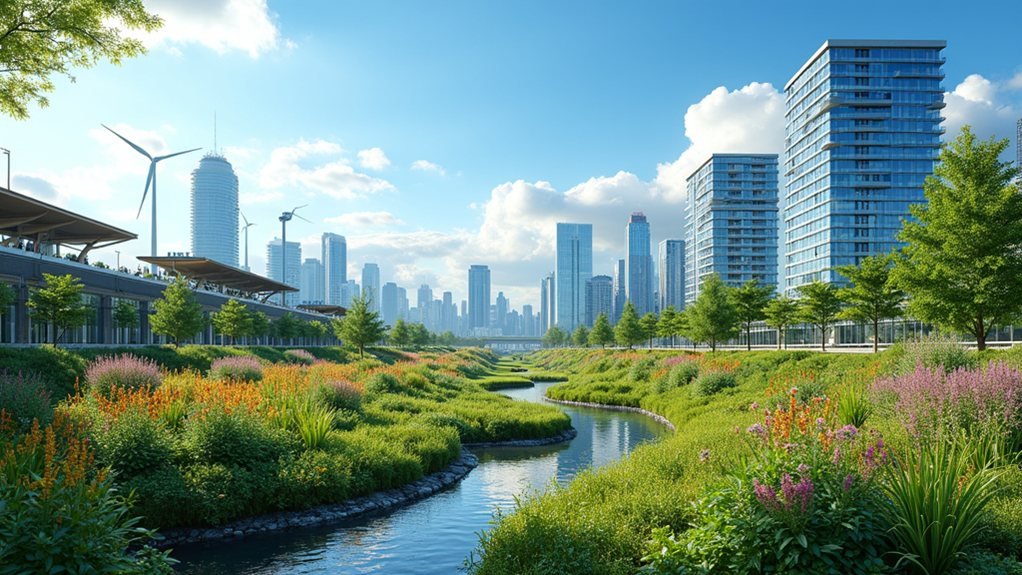

Canadian cities are revolutionizing green construction with exciting eco trends for 2025. Net-zero building codes are setting the stage, demanding up to 60% more energy efficiency. Then there are deep retrofits, giving aging homes a much-needed facelift while slashing energy use by half. Not to forget nature-based designs, turning urban areas into buzzworthy ecosystems. Together, these trends are not just bricks and mortar; they’re a promise for a greener, more resilient future. Stick around to uncover even more transformative ideas!
Quick Overview
- Canadian cities are implementing net-zero building codes, targeting a national model of net-zero by 2030 for improved energy efficiency and sustainability.
- Advanced energy efficiency measures, including sustainable materials and ventilation systems, enhance indoor air quality and reduce environmental impact in urban developments.
- Deep retrofits and electrification initiatives aim to reduce energy use by 50%, with a focus on upgrading aging buildings to meet climate goals.
- Nature-based designs, such as bioswales and rain gardens, support stormwater management and foster biodiversity while combating urban heat.
- Federal and municipal support drives the adoption of green construction practices, emphasizing the urgent need for investment in sustainable urban living.
Net-Zero Building Codes Transforming Urban Landscapes
How do net-zero building codes reshape urban landscapes across Canada?
These codes act like a roadmap, steering cities towards energy efficiency and sustainability.
With the National Building Code introducing tiers, buildings must now hit performance targets, transforming the construction game.
Think of it as a fitness challenge for structures; they need to be 60% more efficient just to qualify for the top tier!
Provinces adapt these codes, like Ontario’s 2025 rollout, ensuring local flair while aiming for national model net-zero by 2030.
This shift not only enhances city aesthetics but also promotes a greener lifestyle, making urban spaces not just livable, but lovable.
Incorporating advanced ventilation systems ensures that buildings not only save energy but also maintain healthy indoor air quality for residents.
The emphasis on sustainable materials throughout the building lifecycle reduces environmental impact while creating healthier living spaces.
Deep Retrofits and Electrification Paving the Way for Sustainability
As cities across Canada aim for sustainability, deep retrofits and electrification emerge as the dynamic duo transforming aging buildings into energy-efficient powerhouses. These retrofits promise a staggering 50% reduction in energy use, playing a starring role in slashing greenhouse gas emissions. However, with only about 5% of homes upgraded to this standard, the challenge is substantial. Energizing the scene, electrification complements these upgrades, swapping out fossil fuels for heat pumps, which are like the superheroes of heating. Effective thermal insulation is proving crucial to these efforts, maximizing energy savings and improving occupant comfort in retrofitted structures. With federal support and ambitious municipal targets, the quest for greener urban living is well underway, though it’s clear the path is still long and winding. To meet net-zero goals, over 11 million homes must still undergo retrofits, emphasizing the urgent need for increased action and investment. This is particularly pressing as the CGHG program cancellation has left many homes unretrofitted, highlighting the importance of sustained efforts in the sector.
Nature-Based Designs Enhancing Urban Resilience
In the vibrant tapestry of urban development, nature-based designs are emerging as the unsung heroes of resilience in Canadian cities.
These green solutions—think bioswales and permeable landscapes—capture stormwater, reducing pressure on sewers while saving cities millions. Vancouver’s St. George Rainway, for instance, cleans about 17,000 cubic meters of rainwater annually, showcasing its impact on stormwater management.
Nature-based designs, like bioswales, efficiently manage stormwater, easing sewer burdens and saving cities millions annually.
Rain gardens serve as beautiful natural filtration systems that remove pollutants while adding aesthetic value to urban spaces.
But it’s not just about water; these designs foster biodiversity, offering homes to pollinators and birds. They also combat urban heat, creating cooler, healthier spaces, while also contributing to climate-informed decisions that enhance service reliability.
Fundamentally, nature-based designs are like eco-friendly superheroes, ready to tackle climate challenges and make cities not just livable, but thriving!