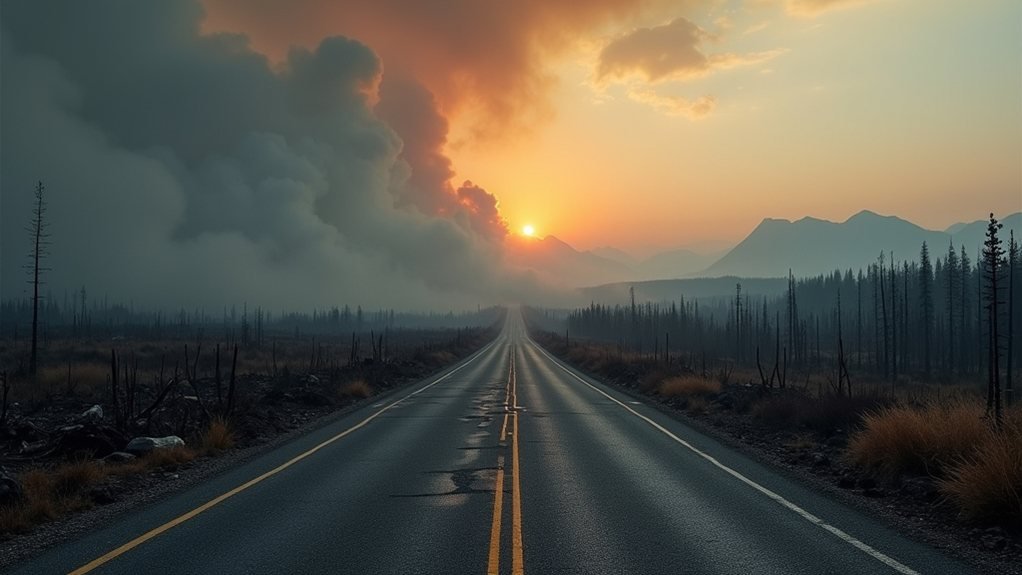

Canada’s wildfire crisis, fueled by climate change, is estimated to cause over $25 billion in economic damage. The scorching temperatures in provinces like Saskatchewan set the stage, while excessive fires burnt millions of hectares, disrupting communities. This led to job losses and increased costs for goods, as smoke-related health expenses skyrocketed. The urgent need for climate science funding is evident, as understanding these trends is essential for effective wildfire risk management. Curious about how these wildfires reshape our economic landscape?
Quick Overview
- The economic impact of the 2025 wildfires in Canada could approach $25 billion due to extensive damage and disruptions.
- Saskatchewan experienced extreme temperatures, leading to intensified wildfire conditions and consequent economic losses.
- Manitoba faced significant GDP losses estimated at 2.4%, alongside evacuations affecting 21,000 residents.
- Insured damages from wildfires highlight escalating risks across various sectors, necessitating urgent climate science funding cuts reconsideration.
- Long-term preparedness and investment in wildfire prevention are crucial as climate change exacerbates risks and economic challenges.
How’s Climate Change Fueling Wildfire Risks in Canada?
As if the heat wasn’t enough, climate change has taken the fiery risk of wildfires in Canada and cranked it up to eleven. Proactive mitigation measures help address root causes and build resilience against such events. In 2025, Saskatchewan experienced shocking temperature anomalies, with highs soaring to over 33°C (91°F). This wasn’t just bad luck; climate change made such extremes at least five times more likely. With an “Omega Block” weather pattern contributing to persistent drought, conditions became a veritable tinderbox. In addition, desiccated vegetation created ideal fuel for fires, as “zombie fires”—those stubborn holdover ignitions—emerged, making flames leap like a cat startled by a cucumber. These factors have led to dangerous wildfire conditions that are expected to become more frequent and severe with the ongoing impact of climate change. Moreover, over 33,000 evacuations occurred due to wildfires, highlighting the urgent need for better emergency response systems. Consequently, climate change isn’t merely a nuisance; it’s a wild card in the wildfire deck.
What Economic Effects Are Resulting From Canada’s 2025 Wildfires on Communities?
Wildfires have a way of turning landscapes into both literal and metaphorical ashes, and Canada’s 2025 wildfire season was no different.
With over 5,000 fires scorching 8.3 million hectares, communities grappled with staggering economic repercussions. Manitoba faced the brunt, as 21,000 residents fled, impacting 2.4% of the province’s GDP. The total area affected by wildfires was more than quadruple the 10-year average of 930,000 hectares. The consequences of these wildfires are evident in the significant insured damages reported, which reflect the escalating risks posed to various sectors.
Disruptions in forestry processes and export halts meant not just smoke in the air but also fewer jobs and higher prices. Health costs skyrocketed too, with Ontario’s smoke alone costing a staggering $1.28 billion.
This underscores the importance of carbon emissions reductions across sectors to strengthen resilience.
Fundamentally, wildfires left communities not just smoldering, but economically charred as well.
What’s Next for Wildfire Risks in Canada?
With climate change continuing to crank up the temperature, Canada finds itself bracing for another challenging wildfire season. As dry conditions persist, areas like southern Alberta and British Columbia are on high alert. The 2025 wildfire season saw over 6,000 fires, igniting discussions about risk management. Fortunately, strategic investments like the $285 million Wildfire Resilient Future Initiative aim to bolster prevention efforts. These trends underscore the need for integrated policy responses that consider environmental justice in affected communities. As of November 19, 2025, there are 6,125 active fires burning across the U.S. and Canada, highlighting the urgent need for continued preparedness. In response to the second worst wildfire season in Canada’s history, new policies are balancing immediate threats against future risks, allowing communities to better prepare for what’s next. However, as climate trends worsen, it may feel less like summer vacation and more like a perpetual fire drill. Just smoke and mirrors? Not quite.