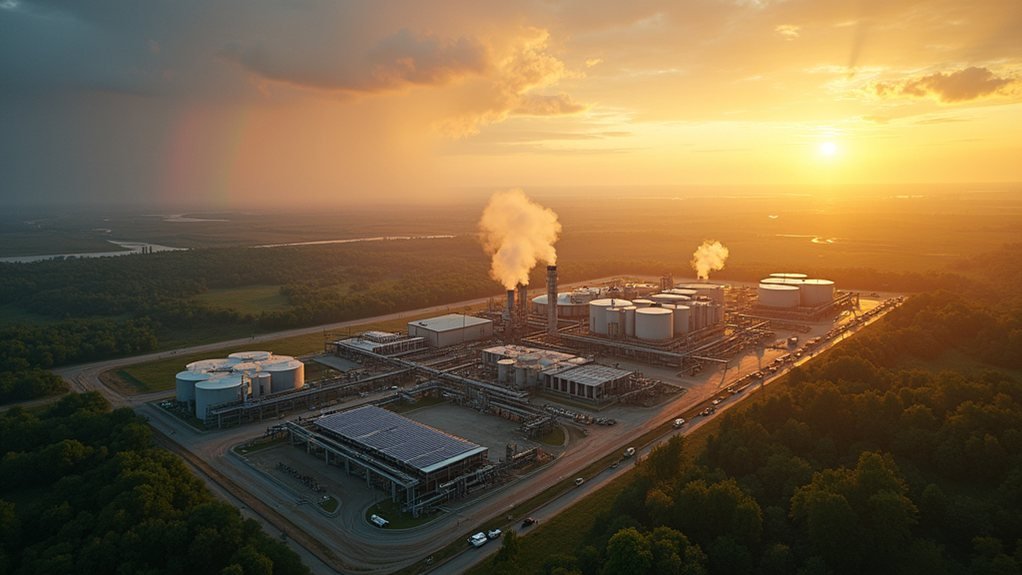

Canada is setting ambitious goals, aiming to slash methane emissions from the oil and gas sector by a whopping 75% by 2030. These regulations are not just environmental do-goodery – they’re tackling a gas that’s 84 times more potent than CO2 over two decades. Picture a world where leaks are sealed, natural gas is recovered, and emissions become a competitive advantage. With new jobs and a boost to the economy, it’s an eco-friendly power play. Curious to uncover more?
Quick Overview
- Canada targets a 75% reduction in methane emissions in the oil and gas sector by 2030 from 2012 levels.
- The regulations focus on sealing leaks and eliminating methane venting by implementing prescriptive and performance-based approaches.
- Measures are expected to economically recover $2.2 billion worth of natural gas while creating 34,000 jobs.
- Finalized regulations mandate strict compliance and monitoring systems to achieve a 72% methane emission reduction.
- These regulations are part of Canada’s broader commitment to the Global Methane Pledge and sustainable environmental practices.
What’s Driving Canada’s Methane Targets?
While the quest to reduce methane emissions might not sound like the stuff of thrilling adventure novels, Canada is tackling it with the gusto of a hero on a mission to save the planet.
Anchored by international commitments like the Global Methane Pledge, Canada is determined to slash emissions by 30% below 2020 levels by 2030. Methane is over 84 times more potent than carbon dioxide on a 20-year scale, making its reduction crucial for climate change mitigation. By employing methods like forest management, Canada is also exploring innovative ways to capture other greenhouse gases. The 2030 Emissions Reduction Plan targets a 40% reduction in emissions below 2005 levels by 2030, offering a strategic framework for Canada’s commitment to sustainable environmental practices.
Driven by the Global Methane Pledge, Canada aims to cut 2020 emissions by 30% by 2030.
They’re not stopping at pledges; they’ve set a 75% reduction target for the oil and gas sector below 2012 levels.
It’s like Canada’s in a high-stakes race, with regulatory wrenches in hand, ready to tighten bolts and seal leaks until methane is tamed.
Why Do New Regulations Matter to You?
New regulations on methane emissions might seem about as exciting as watching paint dry, but the truth is they’re poised to paint a brighter economic picture for Canada.
Imagine creating 34,000 new jobs just by tightening a few bolts on those pesky oil rigs. It’s like finding a $20 bill in an old jacket pocket; except here, it’s $2.2 billion worth of wasted natural gas that gets recovered. Plus, these new federal rules, which are among the lowest-cost greenhouse gas abatement measures at $48/tCO₂e, enhance Canada’s competitive edge in the global energy market. With methane having over 80 times the warming power of carbon dioxide over 20 years, these measures are not just economically beneficial but also crucial for the environment. Investing in sustainable technologies for managing emissions not only helps protect marine life but also furthers efforts in addressing threats to ocean health.
The rules, projecting a $23.9 billion net economic benefit, are sure to cause high-fives in provinces like Alberta, where corporate tax revenues and royalties will feel the love.
Talk about a win-win situation!
How Can Oil and Gas Facilities Comply?
Securing compliance with the new methane regulations is like playing a strategic game of chess where each move requires thoughtful execution. Oil and gas facilities must navigate two pathways: prescriptive or performance-based. The prescriptive path bans venting methane by 2030. Imagine trying to plug every leak like whack-a-mole! An important aspect of the performance-based approach involves strictly adhering to international standards for measuring and reporting emissions across different scopes. Alternatively, the performance-based route sets emission intensity limits. Facilities enforce robust monitoring akin to a vigilant security camera. Of course, flaring’s out—now it’s enclosed combustion only. Pneumatic devices must ditch emissions like mothballing an old engine. A comprehensive recordkeeping and reporting system also ensures that facilities maintain clarity like a crystal ball. Compliance, a calculated gamble ensuring sustainability. The finalized regulations aim for a 72% reduction in methane emissions by 2030, emphasizing the importance of adhering to these pathways to achieve environmental targets.