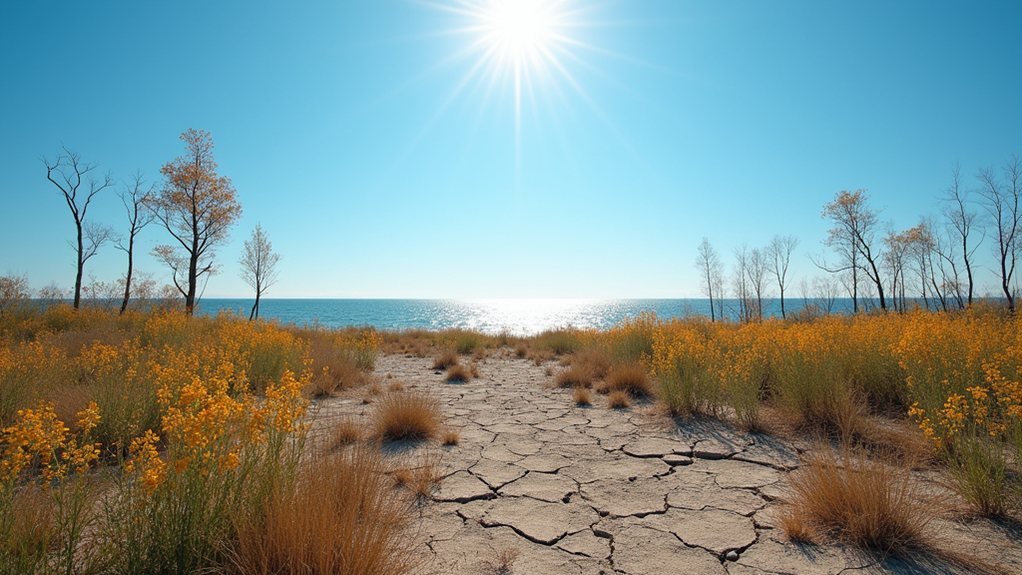

Canada is gearing up for 2026, predicted to be its hottest year on record. With temperatures expected to climb 1.44 °C above pre-industrial levels, the country is in for a wild ride. Northern Canada might even see a jaw-dropping rise beyond 2.0 °C! This heat blast spells trouble for everything from crops to critters, stressing the need for smart heat response plans. Stay tuned, because there’s plenty more to unpack about preparing for this sizzling future.
Quick Overview
- The global mean temperature is predicted to reach 1.44 °C above pre-industrial levels by 2026, marking a significant increase.
- Canada is expected to experience temperatures exceeding 2.0 °C, especially in Northern regions, highlighting severe climate impacts.
- There is a 99% chance that 2026 will surpass all previous years’ temperatures, indicating unprecedented warming trends.
- Hydrological changes will lead to reduced water availability, affecting agriculture and wildlife across Canada.
- Proactive community actions, such as heat response plans and water conservation measures, are essential for coping with extreme heat events.
What the 2026 Temperature Forecast Reveals About Climate Change Trends
As the world gears up for what is predicted to be the hottest year on record in 2026, one can’t help but wonder if Mother Nature has taken a cue from a particularly hot summer sale—only instead of discounts, she’s serving up rising temperatures.
This forecast, predicting a global mean temperature of 1.44 °C above pre-industrial levels, signals a troubling trend. With a 12% chance of exceeding the Paris Agreement threshold of 1.5 °C, the data underscores relentless climate change. The impacts of climate change are already visible, as evidenced by the provincial snowpack at 111% of normal as of February 1, suggesting that while some areas may experience unusual weather patterns, the broader trend remains concerning. In British Columbia, coastal areas are experiencing a lack of winter, with Vancouver on track for the warmest winter on record, highlighting the variability in regional climates.
If this were a race, humanity would be running a marathon, yet somehow, we keep picking up speed instead of slowing down. Continued warming is driven largely by rising concentrations of greenhouse gases in the atmosphere, which trap heat and alter the climate system.
How the 2026 Temperature Forecast Affects Canadian Climate?
The forecast for 2026 is set to bring more than just record-breaking heat; it promises to reshape Canada’s climate in ways that could leave even the most seasoned meteorologist scratching their head.
Get ready for 2026: a year of unprecedented heat and climate twists that’ll baffle even the experts!
With temperatures potentially soaring above 2.0 °C in the North, ecosystems will feel the heat, threatening permafrost and altering growing seasons. Think of it like a snowman in July—melting away! Additionally, there is a 99% chance that 2026 will be hotter than all years before 2023, emphasizing the urgency of climate action. Recent temperature extremes in Canada have shown how quickly weather patterns can shift, underlining the unpredictability of the coming years. Understanding the difference between reducing drivers of climate change and preparing for impacts is essential for effective responses, which is why mitigation vs. adaptation strategies must both be considered.
Meanwhile, hydrological shifts mean less water for everyone, from farmers to fish. As Canada warms faster than a microwave meal, the implications for wildlife and infrastructure are staggering.
Buckle up; 2026 is shaping up to be a wild ride!
How to Prepare for Extreme Heat in Canada in 2026
Preparing for extreme heat in Canada in 2026 will require more than just a fan and a popsicle; it’s about adopting a proactive mindset to navigate the sizzling challenges ahead. Installing air conditioning in at least one room and using thermal curtains will keep interiors cooler. Vulnerable populations, such as the elderly, must be prioritized with community heat response plans. As 2026 is predicted to be among the hottest years on record, monitoring indoor temperatures and ensuring backup power sources for cooling equipment are essential. With greater than 99% chance that 2026 will be hotter than all years prior to 2023, Canadians can plan ahead. Embrace these strategies, and you’ll be ready to turn down the heat—without melting like a popsicle on a summer sidewalk! Communities should also implement water conservation measures to ensure reliable supplies during prolonged heat and drought.