
Canada’s mining sector faces serious human rights issues, with Canadian companies often neglecting Indigenous rights and environmental protections. Think of it like a game where the rules favor developers, leaving communities in a tough spot. Reports show forced evictions and violence linked to mining operations. The government’s accountability? Well, it’s like a bad referee—failing to enforce the rules. Urgent reforms are needed to align practices with human dignity and ecosystem health. Curious about what those changes could look like?
Quick Overview
- Canadian government continues to fast-track mining project approvals, ignoring Indigenous rights and community impacts, undermining accountability.
- Reports of widespread human rights abuses by Canadian mining companies persist, including forced evictions and violence against communities.
- Environmental degradation from mining operations disproportionately affects Indigenous lands, threatening ecosystems and community livelihoods.
- Existing investment frameworks prioritize profit over human rights, lacking necessary safeguards for vulnerable populations.
- Enhanced regulations and oversight are urgently needed to hold mining companies accountable and protect Indigenous sovereignty.
Widespread Human Rights Violations in Canadian Mining
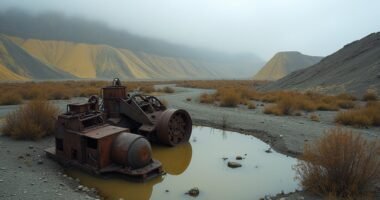
In the bustling world of Canadian mining, where the glitter of gold and the rush for resources can seem unquestionably appealing, a darker reality lurks beneath the surface. Forced evictions stir unrest among communities, like an unwelcome guest at a party.
Ivanhoe Mines’ actions in the DRC displaced 45 families with little more than hollow promises.
Meanwhile, women in Papua New Guinea face violence linked to Barrick Gold’s operations, their plight echoing unaddressed injustices.
Such grave human rights violations reveal a pattern among Canadian companies, leaving communities grappling for justice while environmental degradation continues to spread like an uncontrollable wildfire.
Companies must conduct comprehensive impact assessments to identify and address their effects on both local populations and ecosystems before operations begin.
Failures of Government Accountability for Human Rights
How can a nation that prides itself on human rights confront the stark reality of its accountability failures?
The Canadian government champions speedy project approvals, overshadowed by inadequate Indigenous rights safeguards. B.C.’s hastened permitting suggests a cafeteria-style approach to consultation, favoring developers over First Nations.
The Canadian government’s rush for project approvals risks sidelining Indigenous rights in favor of developer interests.
Meanwhile, investment funds roll out with a concerning lack of human rights conditions, prioritizing profit over people.
With the Major Projects Office focusing on investment certainty, the commitment to uphold Indigenous rights becomes mere rhetoric, leaving many wondering if Canada is truly the responsible miner it claims to be—or just a polished facade over deeper accountability issues. Comprehensive supply chain evaluation methodologies could help assess both environmental and social impacts of mining operations from extraction to export.
Urgent Reforms Needed: Safeguarding Indigenous Sovereignty and Environmental Justice
Amidst the clamor of governmental accountability failures, the call for urgent reforms is sounding louder than ever, particularly concerning Indigenous sovereignty and environmental justice.
Over 50% of shift minerals lie on Indigenous lands, wreaking havoc on ecosystems like muskeg, essential for carbon storage.
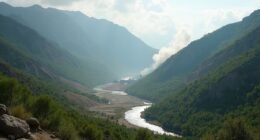
Mining operations in South America devastate water sources, land, and communities, often leading to violence against defenders.
The United Nations must step in, recommending binding treaties to protect human rights and recognizing the Rights of Nature.
Without respecting Indigenous sovereignty, society risks not only living in environmental chaos but also disregarding fundamental human dignity.
Canadian mining companies must be held accountable for environmental impacts across product lifecycles, from extraction to disposal, ensuring comprehensive assessment of damages inflicted on Indigenous territories.