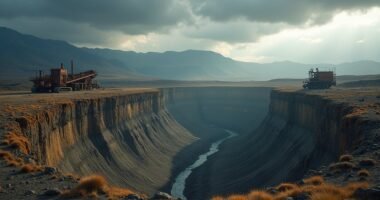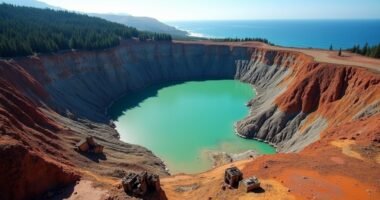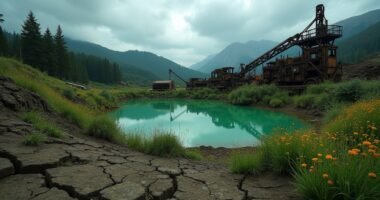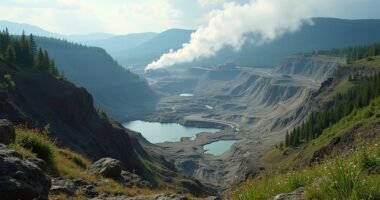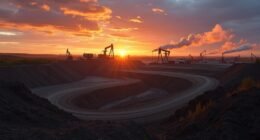
The mining rush in British Columbia is turning into a heavy weight on future generations’ shoulders. With cleanup costs soaring to a staggering $753 million shortfall, taxpayers could end up footing the bill for the mining mess. Pollution from mining operations doesn’t just vanish; it lingers for over a century, with toxic selenium leaching into ecosystems. Thankfully, there’s hope with greener mining practices on the horizon—curious how that could reshape the industry?
Quick Overview
- The B.C. mining industry faces a $753 million shortfall in cleanup costs, burdening taxpayers with financial liabilities for mine reclamation.
- Ongoing mining operations leave a legacy of pollution, threatening ecosystems and Indigenous cultures, with water treatment needed for over a century.
- Current lax policies allow mining companies to evade full responsibility for environmental damage, increasing future liabilities and contamination risks.
- Sustainable mining practices, like solar energy integration and eco-friendly methods, can mitigate environmental harm and align with community needs.
- Future generations will inherit polluted landscapes and costly cleanup challenges, necessitating innovative solutions for long-term sustainability in mining.
The Environmental Costs of B.C. Mining
While many might think of mining as a modern pursuit fueled by shiny metals and gleaming machinery, the reality is more akin to opening a treasure chest full of environmental challenges. British Columbia’s mining industry faces a staggering $753 million shortfall in cleanup costs, leaving taxpayers to shoulder the burden. With the infamous Mount Polley spill costing over $400 million in lost value, it’s clear that the stakes are high. Unlike Quebec and Alaska, B.C.’s lax policies allow companies to sidestep full responsibility, creating a toxic cocktail of contamination and financial liability that future generations will inevitably have to sip. The risk of non-remediation not only threatens the environment but also leads to perpetual liabilities that could haunt taxpayers for decades. This lack of accountability means that taxpayers face over $1.5 billion liability for mine reclamation costs. Implementing site rehabilitation techniques could significantly reduce environmental damage while ensuring mining companies take proper responsibility for restoring ecosystems after extraction activities end.
B.C. Mining Pollution and Its Impact on Future Generations
As mining operations in British Columbia continue to dig deeper into the earth, they leave behind a legacy of pollution that could haunt future generations like a bad ghost story.
Water treatment facilities must operate for over a century post-mining, battling stubborn selenium leaching that outlives many of us. Toxic gold mining along the British Columbia-Alaska border threatens critical ecosystems and the very fabric of Indigenous cultures reliant on these waters.
The infamous Tent Mountain mine, closed since the ’80s, still pumps out selenium at levels that would make your fish friends gasp. Current mining practices are equated to withdrawing retirement savings for short-term gain, further exacerbating the challenges faced by future generations.
Implementing the waste hierarchy principles in mining operations could significantly reduce the environmental burden by prioritizing waste prevention over disposal methods.
With costly cleanup efforts and ongoing contamination risks, the environmental toll raises questions: Who will pay the bill when the mining party’s over?
Future generations deserve better than a polluted legacy.
How Can We Make Mining Greener?
Mining may seem like a gritty business, but there’s a shining future where it can actually benefit the planet. By integrating renewable energy sources like solar and wind, mines can greatly cut down on greenhouse gas emissions—just ask Namibia’s B2Gold Otjikoto Mine, which runs on 30-40% solar power. Furthermore, implementing sustainable mining practices can help minimize environmental harm during gemstone extraction. Engaging with communities and fostering long-term social and economic development is essential to ensure that mining activities align with the needs of local populations. Water management and waste reduction techniques, such as recycling and dry stacking, can minimize environmental footprints. Plus, low-impact methods like underground mining and phytomining are eco-friendly game changers. Adopting soil conservation techniques from sustainable agriculture can help rehabilitate mined lands for future productivity.
With a sprinkle of innovation, mining can transform from a villain into a hero, ensuring a cleaner, greener future for generations to come.