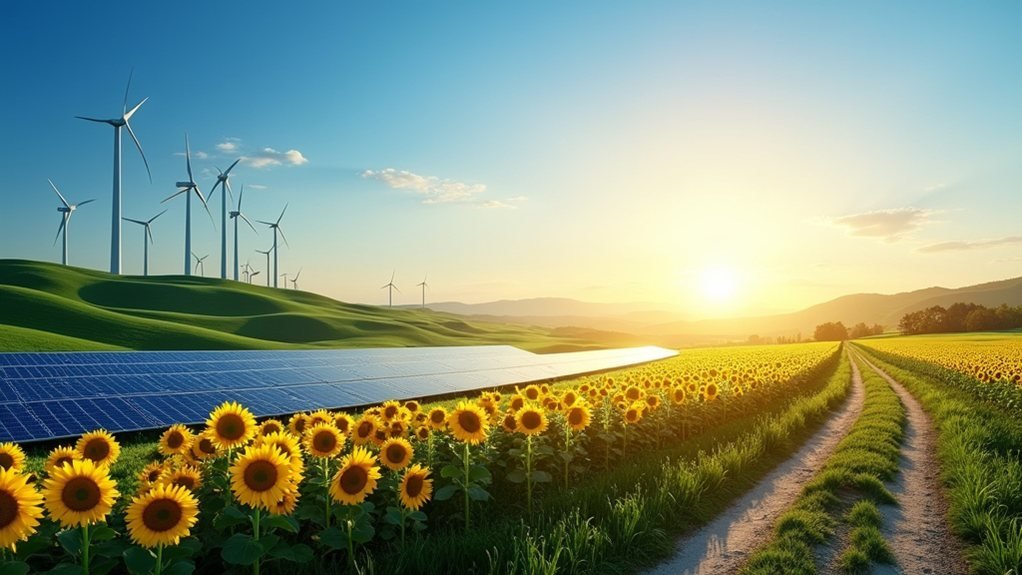

Global energy markets are dancing a new jig, shuffling away from LNG and towards wind and solar. With costs for solar panels plummeting by 75% since 2014 and wind energy becoming a budget-friendly powerhouse, it’s like renewables are bringing their A-game to the energy party. While LNG sulks in the corner, wind and solar are stealing the spotlight, promising a greener future powered by relentless innovation and efficiency. Curious about what comes next? Stick around.
Quick Overview
- Solar and wind are projected to provide over 50% of electricity generation by 2050.
- Advancements in renewable resources show economic benefits, challenging the relevance of LNG.
- Technological improvements have significantly reduced the costs of solar and wind energy.
- Renewable energy growth promotes diversification of energy sources, reducing dependency on LNG.
- Global commitments aim to triple renewable capacity by 2030, driving a shift toward wind and solar.
How Falling Costs and Efficiency Drive Renewable Growth Over LNG
Imagine this: the energy world is having a renaissance, and it’s all thanks to the irresistible allure of falling costs and increasing efficiency of renewable resources. Solar panels now dazzle with a 75% cost drop since 2014, like scoring a top-tier gadget in a flash sale. Wind doesn’t lag behind, flaunting price cuts of 60-62%. Meanwhile, battery storage prices have plummeted over 80%, doubling recycling habits. Governments worldwide are increasingly implementing renewable energy policies such as feed-in tariffs and tax incentives to accelerate the transition away from fossil fuels. As renewables clash with fossil fuel giants, their lower Levelized Cost of Energy (LCOE) makes them a no-brainer. The unsubsidized LCOE for wind has dramatically dropped from $135/MWh in 2009 to $43/MWh in 2018, further emphasizing the cost-effectiveness of renewables in comparison to traditional energy sources. With a learning rate of 15% for wind and 24% for solar, the continuous improvement in technology ensures that renewable energy sources remain competitive and affordable. Think of renewables as the budget-friendly buffet overtaking the pricey steakhouse menu of LNG.
Leading Regions in Renewable Energy Transition
While many countries are still steering their way through the energy change, a few regions are sprinting ahead, setting the pace in the global shift towards renewables. Denmark’s wind power, for instance, isn’t just a gentle breeze—it’s a hurricane of change, sourcing 88% of their power from renewables by next year. Meanwhile, Portugal is strutting coal-free since 2021, and Djibouti plans to be Africa’s lamp post for 100% renewables by 2035. Over in Latin America, Costa Rica’s energy scene is as pristine as its beaches—100% renewable, giving anyone considering a fossil-fuel fiesta serious wanderlust for green transformations. Solar energy, one of the fastest-growing renewable sources, offers reduced electricity costs alongside significant environmental benefits, making it an increasingly attractive option for regions looking to diversify their energy mix. In 2024, China dominated global lithium-ion battery production, generating 1,170 GWh, which accounted for 75% of the total. Iceland stands as a shining example by achieving complete reliance on renewable resources through hydro and geothermal energy, highlighting the vast economic and environmental benefits of such a transition.
What’s Next for Global Energy Markets?
As renewable energy champions like Denmark and Costa Rica strut their green skills on the global stage, the question echoing in conference halls and boardrooms is: what’s next for the world’s energy markets? The roadmap resembles a solar tea party featuring wind turbines as esteemed guests. Solar and wind aim to dominate over fossil fuels, promising a delightful 50%+ slice of the electricity pie by 2050. Meanwhile, clean energy accounted for 2.2% of total cross-border trade in goods in 2024, highlighting its growing significance in the global economy. Globally, CO₂ emissions have reached record highs, emphasizing the urgency for clean energy transitions to counterbalance these figures. Skeptics eyeing LNG alternatives may find their assets rusting like forgotten gym equipment. Meanwhile, energy storage is the unsung hero, managing power bursts like a caffeine-fueled student cramming for exams. At COP29, nations reaffirmed commitments to triple renewable capacity globally by 2030, signaling an unprecedented acceleration in the shift away from fossil fuel dependence. Optimism fuels this electric evolution.