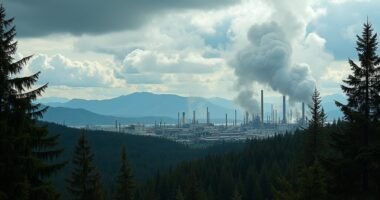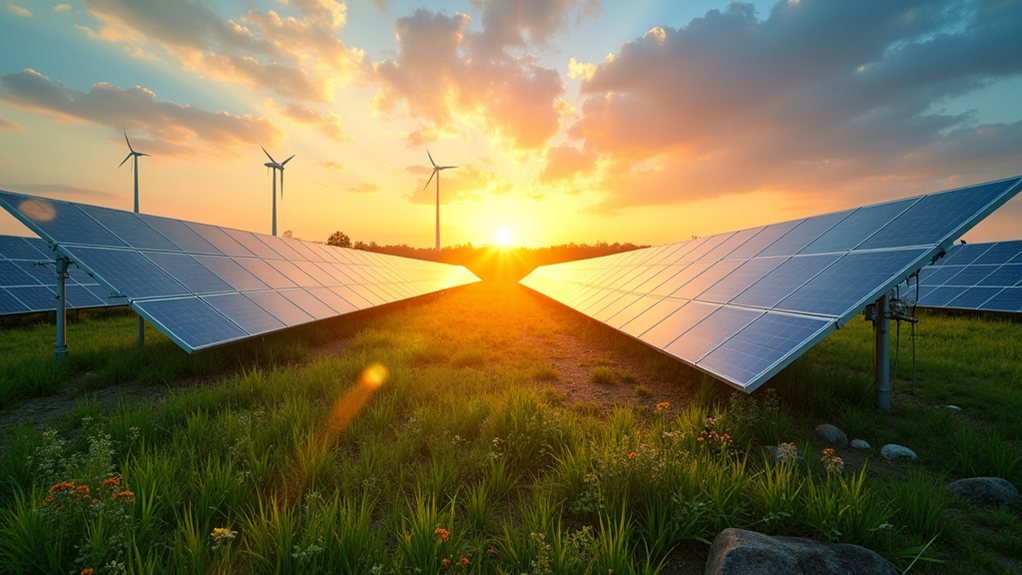

Canadian energy leaders are on a mission to break free from fossil fuel dependency, like a climber shaking off old habits to summit a greener peak. They’re charting the tricky trails of aging infrastructure and the complex dance of rules and regulations. With $60 billion in government backing and Indigenous leadership lighting the path, they’re crafting a cleaner energy landscape. It’s a mix of innovation and tradition, like solar panels meeting the wisdom of the ancients. Stick around, the energy story’s just beginning.
Quick Overview
- Canada’s transition to net-zero electricity by 2035 faces significant infrastructure and regulatory challenges.
- Natural gas serves as a transitional energy source in provinces heavily reliant on fossil fuels.
- Government initiatives and funding aim to decarbonize electricity with a $60 billion investment.
- Indigenous communities play a crucial role in leading green energy projects and initiatives.
- Advanced technology and smart grids are essential for supporting renewable energy and decreasing fossil fuel dependency.
Challenges and Progress in the Clean Energy Transition
Imagine standing at the crossroads of tradition and innovation where the Canadian clean energy progression unfolds in all its complexity. Canada’s commitment to achieving net-zero electricity by 2035 anchors its burgeoning renewable energy transformation. The journey is fraught with potholes, especially the aging infrastructure demanding a costly face-lift. Grid modernization is akin to turning an antique into a smart home, with provincial authority negotiations resembling diplomatic chess matches. Alberta’s rapid coal retirement shines like an overachiever at graduation, while provinces reliant on fossil fuels navigate the tricky change using natural gas as a stepping stone. Regulatory gaps are like tangled wires in need of unraveling to clear paths for net-zero ambitions. Technologies such as advanced energy storage systems are becoming essential tools in stabilizing grids that increasingly depend on variable renewable sources like wind and solar. Canada’s challenges are vast but so are the strides toward greener horizons. With Ontario’s electricity demand projected to grow by 75% by 2050, significant upgrades in transmission and smart grid technology are crucial to meet increasing electrification needs.
Strategies and Innovations in Canada’s Clean Energy Shift
At the forefront of Canada’s clean energy transformation, a symphony of strategies and innovations plays on, each instrument tuned to the harmonious melody of a greener future.
Picture government funding as the conductor, orchestrating a $60 billion crescendo to decarbonize electricity. The Energy Innovation Program scatters its notes across 12 projects, a melodic mix supporting infrastructure through tax credits and financing. Additionally, the program focuses on enhancing energy security and affordability, aligning with Canada’s efforts to strengthen its electricity grid. As Canada leads in carbon capture, use, and storage, the country builds on its reputation for sustainable development and human rights protections, facilitating a just transition to clean energy.
Meanwhile, CCUS development is jazzing up carbon capture tunes, aiming for a 2050 net-zero gig. Renewable energy, the rock star, riffing on wind, solar, and hydroelectric power supports the chorus with smart grids ensuring electrifying resilience. The IEA projects renewable energy capacity will triple globally by 2030, underscoring the urgency and opportunity for nations like Canada to accelerate their clean energy ambitions.
It’s a concert not to miss!
Indigenous Leadership in Clean Energy
Though it might not grab headlines like a celebrity scandal, Indigenous leadership in clean energy is creating shockwaves worthy of its own spotlight. With $40 million earmarked through the Low Carbon Economy Indigenous Leadership Fund, communities like the K’ómoks First Nation and Kinistin Saulteaux Nation are shaking up Canada’s energy scene more than a teenager at a rock concert. Projects span solar panels to electric vehicle chargers, turning traditional corners of the Great White North into green energy powerhouses. Despite capacity constraints and historical speed bumps, Indigenous communities are becoming major players, not just extras, on Canada’s clean energy stage. Importantly, Indigenous businesses experience significantly less access to market capital compared to non-Indigenous businesses, creating additional challenges to overcome. Many Indigenous-led energy initiatives are rooted in environmental stewardship ethics, reflecting a worldview that recognizes nature as deserving of care and protection rather than mere exploitation. In particular, the Sheshatshiu Innu First Nation recently received over $1.6 million for heat pump installations, significantly boosting energy efficiency and promoting renewable heating solutions within the community.